English
 中文简体
中文简体
Content
The Engineered Solution to Vibration Loosening and Surface Damage
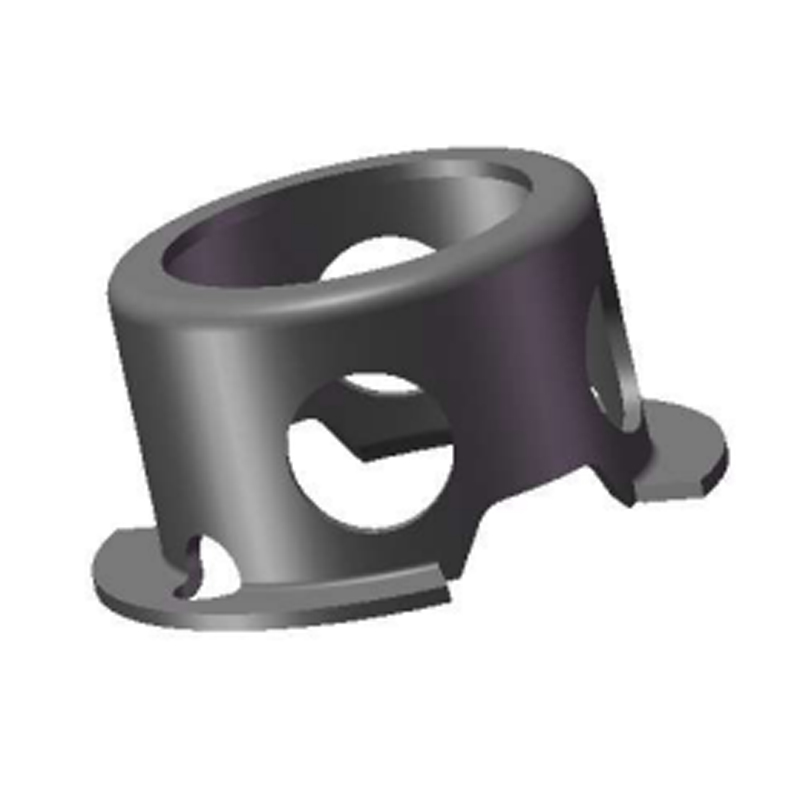
A butterfly washer solves two persistent fastening problems simultaneously: it prevents a bolted joint from loosening under dynamic load, and it protects the mating surface from being gouged or deformed. Its signature winged profile is not cosmetic; it is a functional geometry that converts a concentrated clamping force into a distributed, elastic spring load. When a bolt is torqued against these extended flanges, the wings flex slightly, storing energy that counteracts the micro-movements and embedment relaxation that cause standard flat washers to lose preload. This spring action makes the butterfly washer a primary defense against rotational loosening in vibration-intensive environments.
The Mechanical Principle of Winged Load Distribution
A standard flat washer increases the bearing surface but remains a rigid, passive shim. The butterfly washer is active. The wings create a larger effective diameter along one axis, specifically targeting the uneven or slotted surfaces common in stamped metal assemblies and construction struts. This redirection of force is quantifiable: for a standard M10 bolted joint, a butterfly washer can reduce the bearing stress on the mating surface by up to 40% compared to a standard M10 flat washer, assuming an identical tightening torque. This prevents the fastener head from sinking into softer materials like aluminum or plastic.
Elastic Deformation as a Locking Mechanism
The anti-loosening performance comes from the washer acting as a compression spring. When the joint is tensioned, the curved wings flatten elastically. Under service vibration, as the bolt attempts to rotate or the clamped parts settle, the stored spring energy in the wings maintains a residual clamp force. This effectively compensates for minor loss of preload that would cause a rigid flat washer to become loose immediately. The washer is thus a single piece that combines the functions of a flat washer, a spring lock washer, and a surface shield, eliminating the need for multiple components in a stack.
Material Selection for Specific Service Environments
The base material defines the joint's corrosion resistance, spring-back capacity, and suitability for the service temperature. Choosing the wrong material negates the functional geometry. The following list breaks down the most common materials and their direct application logic.
- Spring Steel (DIN 1.1231 / C67S): The standard choice for automotive and machinery. Heat-treated to HRC 42-48, it provides high fatigue strength for sustained dynamic spring loading. A zinc-plated and passivated finish is standard for indoor corrosion resistance.
- AISI 304 Stainless Steel: Required for marine, food processing, and chemical wash-down environments. The work-hardening during the forming process increases tensile strength, though the elastic modulus is slightly lower than carbon steel. Essential where galvanic corrosion or rust staining of the assembly surface is unacceptable.
- Aluminum Alloy (Al 5052): Used with aluminum mating surfaces to eliminate galvanic potential. The softer material naturally deforms to create a tight conformal seal, and is often anodized for electrical insulation and added surface hardness.
- Nylon 6/6: Selected for electronics and lightweight consumer goods. It provides complete electrical isolation and a non-marring surface for glass, polished metals, or painted finishes. Its spring-back is temperature-dependent, limiting use to applications below 85°C.
Application-Specific Performance Across Industries
The practical use of a butterfly washer is directly tied to a visible assembly condition: an oversized or slotted hole, a soft surface, or persistent vibration. The table below links the physical feature of the washer to the industrial problem it solves, and the actual failure prevented.
| Industry Sector | Application Example | Key Washer Function | Failure Prevented |
| Solar Mounting | Panel frame to rail slot | Bridge large slot; spring tension | Bolt slipping; frame cracking |
| Automotive Chassis | Strut tower brace fastening | Vibration isolation; surface protection | Paint gouging; torque loss |
| Furniture Assembly | Flat-pack cam lock and bolt | Load spreading on particle board | Board delamination; joint wobbly |
Even a well-designed butterfly washer fails if the assembly process ignores its geometry. The most common error is misalignment. The wing axis must be positioned to provide maximum coverage. Over a slotted hole, the wings must sit perpendicular to the slot to bridge it fully. When used for surface protection, the orientation must cover the area most likely to be marred. A second critical parameter is torque control. Because the butterfly washer is a spring element under the bolt head, there is additional rotational displacement during tightening as the wings flatten. This dynamic movement can cause an inexperienced operator to under-tighten the joint if they are reliant on feel alone. A calibrated torque wrench set to the joint specification, not a general rule, is essential.
Aesthetic and Functional Integration
The geometry of the butterfly washer often serves a dual purpose in exposed assemblies. The smooth, continuous curve of the wings provides a clean, finished appearance around the bolt head, free of the sharp, cut edges common on slit lock washers. In architectural glass clamping, polished stainless steel butterfly washers are intentionally chosen for their visual symmetry and the uniform, concentric ring they create around the fastener. This aesthetic integrity is paired with functional safety—the washer's smooth perimeter reduces the risk of snagging on clothing or causing injury during operation, a key design consideration for public-facing products and machinery.
Sizing, Standards, and Procurement Specifications
Butterfly washers are specified by their inner diameter to match the bolt size, and their outer wing span, which defines the bearing area. A standard commercial specification for an M8 butterfly washer might reference a wing width of 20mm and a central hole diameter of 8.4mm. When ordering, do not only specify "M8 butterfly washer." The full order specification should include: the dimensional standard reference, material grade, and protective finish. For example, "Butterfly washer, DIN 9021 style, M8, AISI 304, passivated" is a complete, auditable line item that ensures you receive the correct spring properties and corrosion resistance, preventing a critical mismatch on the production floor.