[email protected] +86-563-4186973 / +86-563-4186334 / +86-563-4186971


Internal circlips are installed in round holes to fix the axial movement of parts. The outer diameter of this type of retaining ring is slightly larger than the diameter of the assembly round hole. When installing, you must use circlip pliers. The mouth of the circlip pliers is inserted into the clamp hole of the retaining ring. The retaining ring is clamped to reduce its diameter and placed in the inner groove of the round hole. After releasing the circlip pliers, the elasticity of the retaining ring makes it expand naturally and fit tightly into the inner groove of the round hole, thereby achieving a fixing effect.
A drawing for a DIN 471 circlip arrives with "2B finish" written in the title block. The quote comes back quickly, the parts ship on time, and then inspection measures 0.6 µm Ra o...

A drawing that says only "steel hardened and tempered, 45–50 HRC" leaves three decisions open: which grade of steel, what tempering temperature the supplier actually held, and how...
A coastal wind site pulled a stainless circlip out of an aluminum gearbox bore after 14 months of service. The circlip still looked new. The aluminum groove behind it was covered ...
A 5 MW coastal solar tracker lost three bearing positions in its eighteenth month of service. The 304 stainless circlips holding each pillow block had pitted through along the gro...
Anhui Ningguo Dongbo Fastener Co., Ltd. is a China-based Internal Circlips manufacturer producing bore-mounted retaining rings for axial location of bearings, gears, covers and shafts. Our range covers DIN472 metric, M1308 JV reverse, DIN984 internal-tooth and M1302 JB beveled internal circlips, supplied as standard or customized parts in carbon spring steel and stainless steel.
Internal circlips seat in a machined groove inside a housing bore. The ring is compressed with circlip pliers, inserted into the groove and released, so its elasticity locks the assembly against axial movement. Dongbo produces these rings through a full-process system that includes raw-material precision rolling, tooling, stamping, heat treatment, surface treatment, ultrasonic cleaning, automatic optical screening and performance testing.
Our internal circlip family is organized by groove geometry and function, not only by nominal bore diameter. That lets us match the ring to the housing material, load direction, installation access and corrosion exposure of each application.
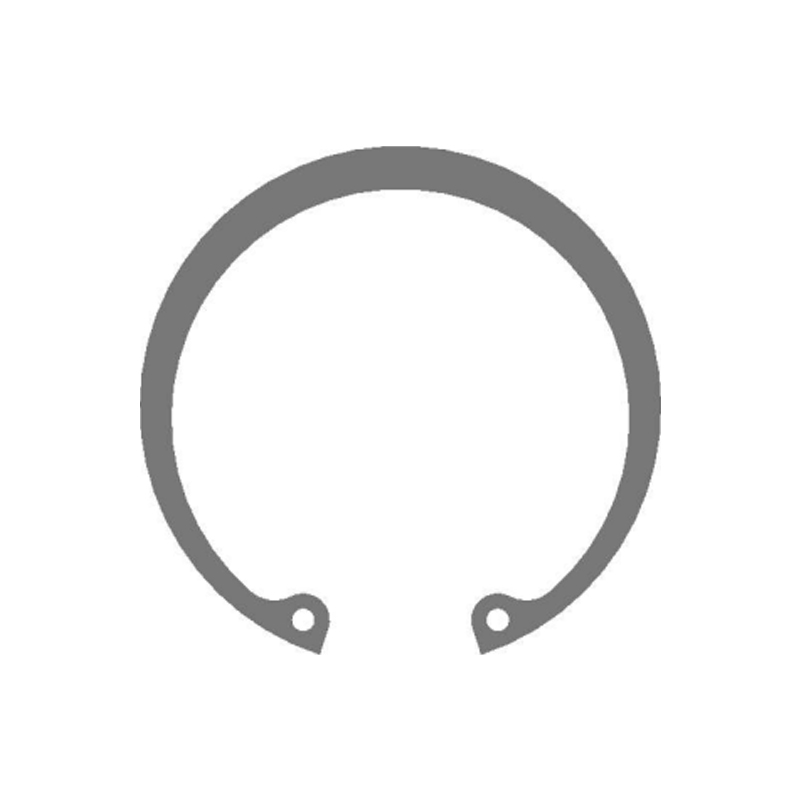
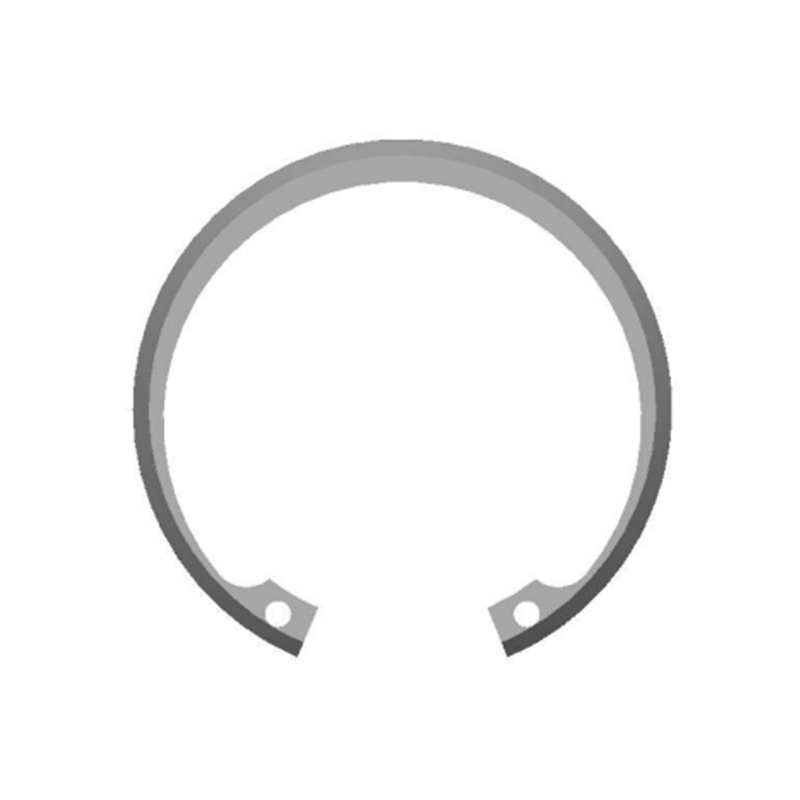
Standard metric internal circlip for machined bore grooves. Bore range from 8 mm upward, with thickness, outer diameter and groove capacity defined by the DIN472 table.
Reverse-bent internal ring for housings where the elastic deformation direction must be inverted to create preload and connection reliability.
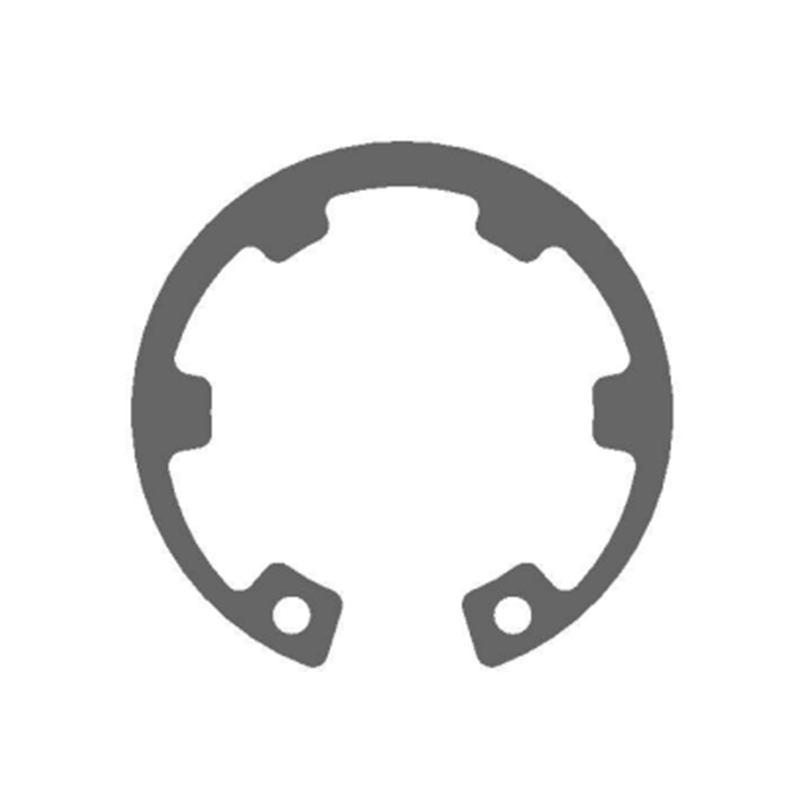
Internal retaining ring with inward teeth that add impact resistance and a defined axial spring force for bore assemblies.
15-degree beveled internal ring for bore applications where a chamfered groove or angled seating face is used.
Internal circlips are used wherever a component must be held axially inside a housing without a threaded fastener. Typical fitments include bearing outer rings in gearboxes and electric motors, gear clusters, pivot pins, cover plates, hydraulic and pneumatic housings, power-tool gearboxes and wind-turbine blade-to-hub connectors.
The correct ring is selected from the bore diameter, groove diameter and groove width, then checked against the axial load the assembly will see. Our published DIN472 and M1308 JV tables list nominal size, thickness, outer diameter, groove bearing capacity FN and retaining ring bearing capacity FR, so the ring can be matched to the load case rather than chosen by bore size alone.
We produce internal circlips in conventional carbon spring steel and stainless steel. Material grade is selected against the required elasticity, fatigue life, temperature and corrosion exposure of the housing.
Heat treatment and surface treatment are carried out in-house, which keeps hardness, elasticity and coating thickness under one production sequence.
For each internal circlip we control the nominal bore d1, thickness S, outer diameter d3, lug height a, shoulder width b, lug hole d5 and groove diameter d2. The load tables also give groove bearing capacity FN, ring bearing capacity FR, chamfer capacity FRg and, for DIN984, axial spring force FL and compensation clearance L.
| Product Type | Standard / Series | Typical Bore Range | Key Selection Data | Typical Fitment |
| DIN472 Metric | DIN472 | 8 mm and above | d1, S, d3, d2, FN, FR, FRg | Bearing and gear location in machined bores |
| M1308 JV Reverse | M1308 JV | 10 mm and above | d1, S, d3, b, d5, FN, FR | Preloaded bore connections with reversed deformation |
| DIN984 Internal Tooth | DIN984 | 16 mm and above | d1, S, d3, FN, FR, FL, L | Impact-resistant axial blocking in bore assemblies |
| M1302 JB Beveled | M1302 JB | Bore applications | d1, S, d3, 15-degree bevel geometry | Chamfered or angled groove seating faces |
When a standard DIN or M-series ring does not fit the groove, we develop internal circlips from customer drawings or samples. Custom work covers thickness, diameter, lug form, tooth profile, material grade, surface treatment, salt-spray requirement, color and packaging. We also produce special-shaped internal circlips and related stamped parts such as limit cages and brackets through our Product Customization service.
Bore-mounted rings are often specified alongside shaft-mounted rings in the same assembly. Our External Circlips range covers DIN471, DIN983, M1408 AV, N1402, DIN6799 and M1800 shaft rings, and our Snap Rings range covers M2300 SB, DIN5417 and M2400 SW heavy-duty anti-shift rings.
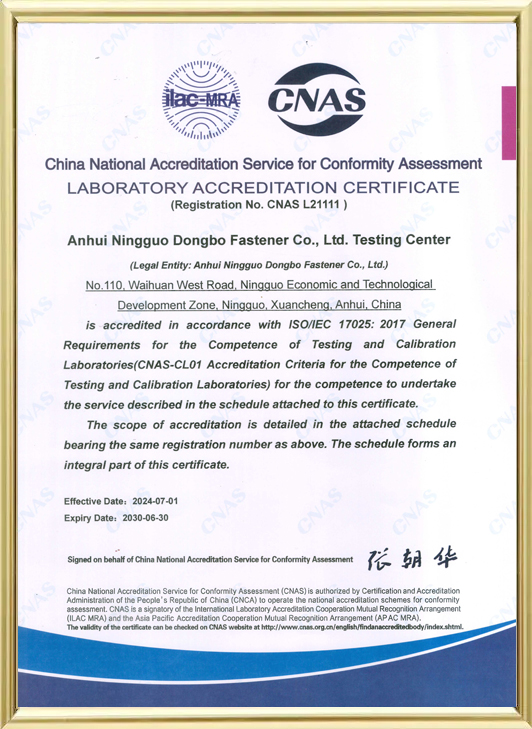
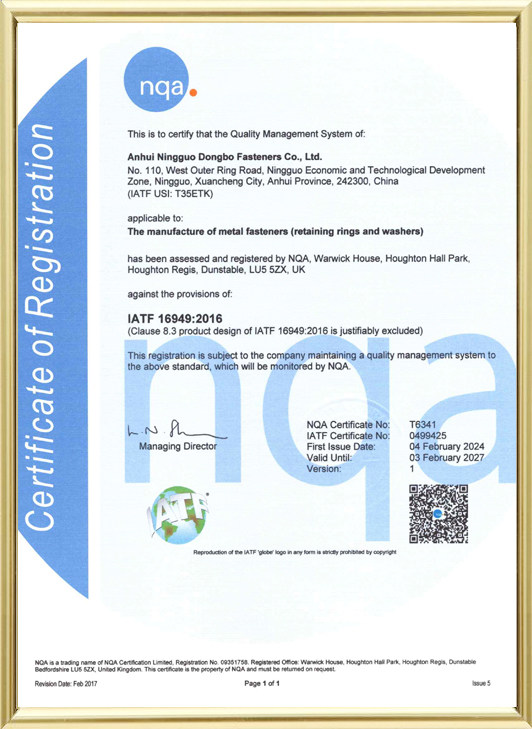
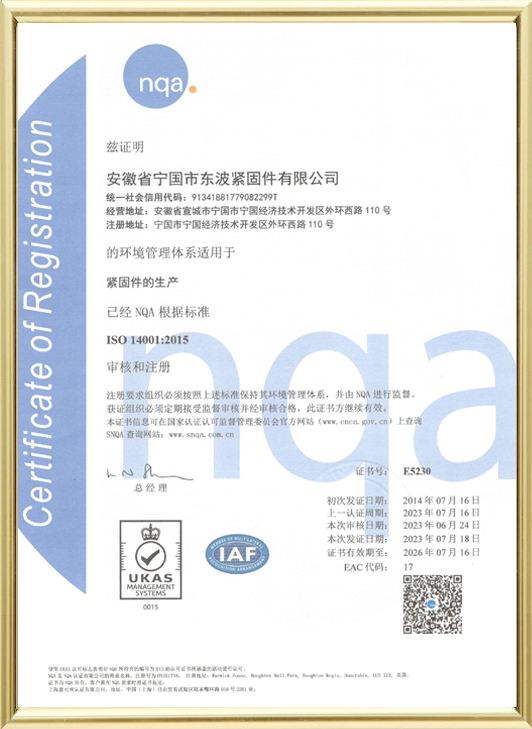
Dongbo operates under IATF16949, ISO14001 and CNAS-accredited testing. Inspection is applied after each production process, and finished internal circlips are checked against customer requirements and the applicable international or national standard. Our testing center covers material elements, mechanical properties, hardness and metallography, supported by multi-functional three-coordinate measuring equipment and electron microscope analyzers.
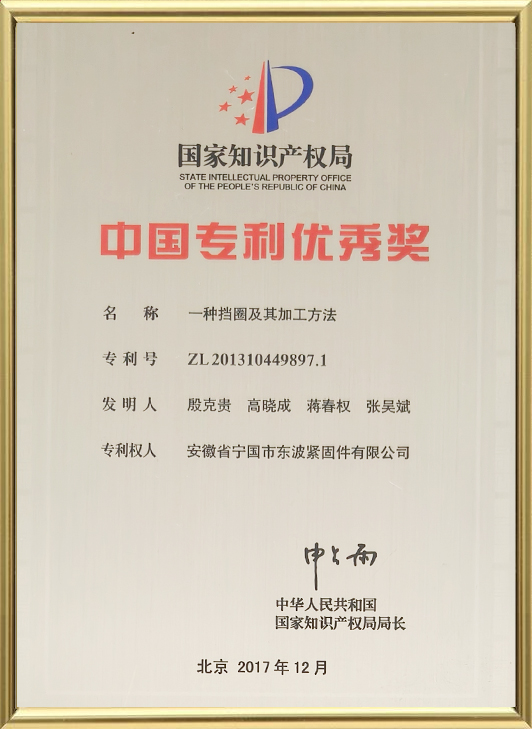
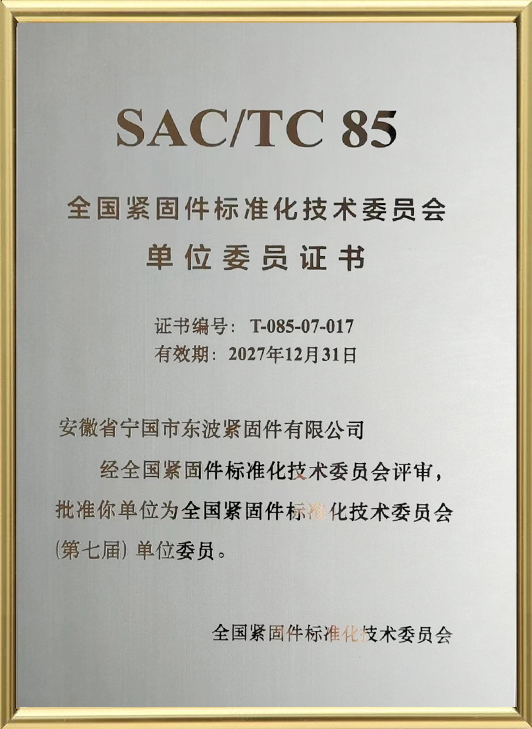
Standard retaining rings are produced with reference to DIN 471 and GB 894-2017 for material, dimensions, tolerances, mechanical properties and surface treatment. Dongbo has served as a member of the National Fastener Standardization Technical Committee and has led or participated in the formulation and revision of 13 national standards, including technical conditions for elastic retaining rings.
Internal circlips are installed with circlip pliers: the jaws engage the lug holes, the ring is compressed, positioned in the bore groove and released so it expands into place. The groove should be clean and free of burrs, oil or dust before fitting, and the installed ring should be checked for full seating in the groove.
Packaging options include bag, blister, masking paper or strip, oil paper or bundle, and special boxed repair kits. Barcode management and first-in-first-out principles support traceability from raw material through to the packed ring.
To prepare a suitable internal circlip proposal, we work from the housing and load data rather than a bore size alone. The following inputs let us confirm the ring series, material, coating and inspection scope.
| Project Input | What We Confirm |
| Bore diameter and groove dimensions | Nominal size d1, groove diameter d2 and groove width |
| Axial load and direction | Required FN, FR and FRg capacity, ring series and thickness |
| Housing material and operating temperature | Material grade, heat treatment and elasticity requirement |
| Corrosion exposure and salt-spray target | Surface treatment system and coating specification |
| Drawing, sample or standard reference | Dimensional tolerances, lug form and inspection criteria |
| Annual volume and packaging requirement | Production planning, packing format and delivery scope |
We produce DIN472 metric internal circlips, M1308 JV internal reverse circlips, DIN984 internal retaining rings with internal tooth and M1302 JB 15-degree beveled internal retaining rings for bore applications. Custom internal circlips are developed from drawings or samples when a standard series does not match the groove.
Standard materials include carbon spring steel 65Mn, C67S and C75S, and stainless steel 304, 2Cr13 and 1.4122. Surface treatments include phosphating, mechanical galvanizing, colored zinc, Dacromet, Geomet, electrophoresis, zinc-nickel plating and passivation, selected against the corrosion and salt-spray requirement.
Selection starts from the bore diameter and groove dimensions, then checks the axial load against the groove bearing capacity FN and ring bearing capacity FR. For DIN984 rings, axial spring force FL and compensation clearance L are also considered. We confirm the series, thickness and material from those inputs.
Yes. We develop and produce internal circlips according to customer drawings or samples, covering thickness, diameter, lug form, tooth profile, material, surface treatment, color and packaging. Special-shaped internal circlips and related stamped parts are also available.
Inspection is carried out after each production process, with finished rings checked against customer requirements and the applicable standard. Our testing center is CNAS-accredited and covers material elements, mechanical properties, hardness and metallography. Dongbo holds IATF16949 and ISO14001 certification.
Send the bore and groove dimensions, axial load, housing material, operating temperature, corrosion or salt-spray requirement, drawing or standard reference, annual volume and packaging preference. With those details we can confirm the internal circlip series, material, coating and inspection scope.
 No. 110, West Outer Ring Road, Ningguo economic and Technological Development Zone, Anhui.
 +86-563-4186973 (Export Business)

PRODUCT LIST
Internal Circlips External Circlips Snap Rings Belleville Spring Washer Flat Washers Non-standard Stamping PartsGET A QUOTE
Copyright © Anhui Ningguo Dongbo Fastener Co., Ltd. All Rights Reserved.
 OEM/ODM Internal Circlips Factory
 English
 中文简体