English
 中文简体
中文简体
A shaft retaining ring has one of the most demanding jobs in a mechanical assembly: it must ease into a machined groove, seat firmly against a bearing face, and hold that position through years of vibration and load cycling. The reason it can do all this comes down to the alloy it is made from and the cold working operations that shape it. Cold working alloys is not a single process; it is a family of forming techniques that permanently strengthen metal while holding the tight tolerances fasteners depend on.
Content
What Cold Working Does to an Alloy
Cold working, also called cold forming or work hardening, deforms metal below its recrystallization temperature. Instead of recovering into new grains, the alloy’s crystal structure is stretched, bent, and compressed. Dislocations multiply, grains elongate, and the metal becomes harder and stronger. This is why a thin carbon steel strip can become a spring-tempered circlip after being rolled, stamped, and formed.
Strength comes with a trade-off
With higher strength comes lower ductility. An alloy that has been cold worked too aggressively can crack or spring back during bending. This is especially important for retaining rings because their split ends must flex open for installation and then return to the original shape. The balance between enough cold work to produce a high yield strength and enough ductility to survive installation is what separates a reliable part from a brittle one.
Why fasteners rely on cold worked alloys
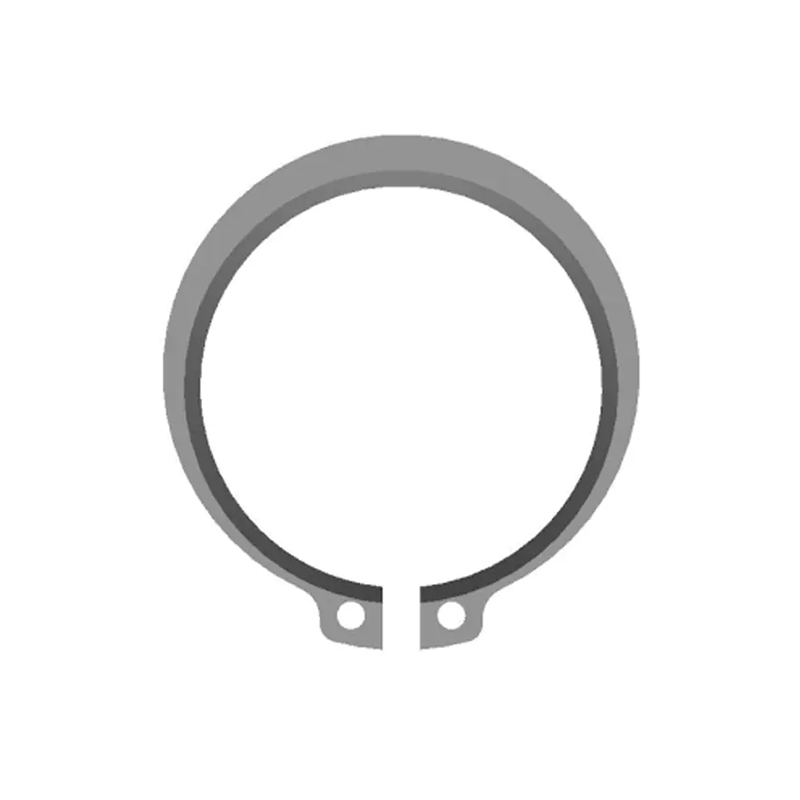
Fasteners such as circlips, washers, and snap rings are almost always specified in a cold worked condition. Cold working creates a surface that is smooth, dense, and dimensionally consistent. It also raises the elastic limit, which is exactly what an axial retention component needs. When combined with a subsequent heat treatment, cold worked alloys can deliver tensile strength, fatigue resistance, and wear performance far above what the base metal would provide alone. For example, our external circlips for shafts to DIN 471 are produced from cold worked spring steel strip that is stamped and then heat treated to achieve a consistent spring rate.
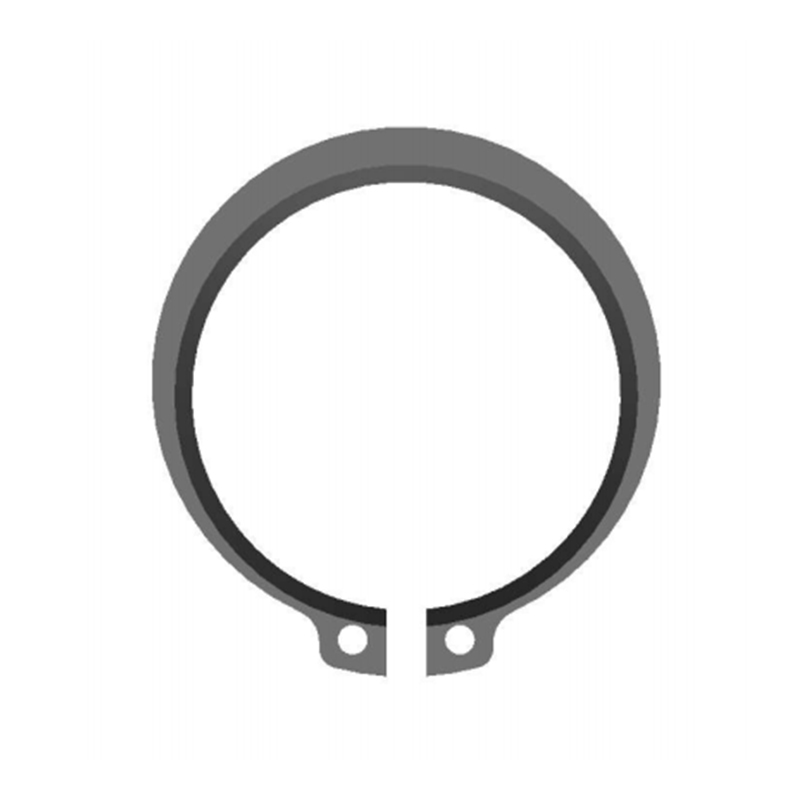 Custom External Circlips for Shafts-DIN471 Suppliers, CompanyAs China Custom External Circlips for Shafts-DIN471 Suppliers and External Circlips for Shafts-DIN471 Company, Dongbo Fastener Custom Ext...View Product →
Cold Working Processes Used in Alloy Components
Cold working covers a range of operations, and each one changes the alloy in a slightly different way. The four families most relevant to fastener production are squeezing, bending, shearing, and drawing. Precision stamping combines several of these in a single press cycle, which is why it is the preferred method for high-volume retaining rings and washers.
Stamping and bending
Stamping is the heart of circlip production. A strip of alloy steel is fed through a progressive die that cuts the outer shape, blanks the split, and forms the cross-section. Bending operations create the curved profile that lets a retaining ring fit into a groove. Because the material resists deformation, dies must be designed with springback compensation; otherwise the final part will sit too open or too closed in the groove.
Drawing, shearing, and how they interact
Shearing cuts the material, while drawing pushes it into a die cavity to form pockets or flanges. These operations are common in non-standard stamped parts such as brackets and cages. The shear zone itself becomes a cold worked layer, which can raise edge hardness but can also create micro-cracks if the clearance between punch and die is wrong. For this reason, precision clearances and regular die maintenance are not optional in cold worked alloy parts.
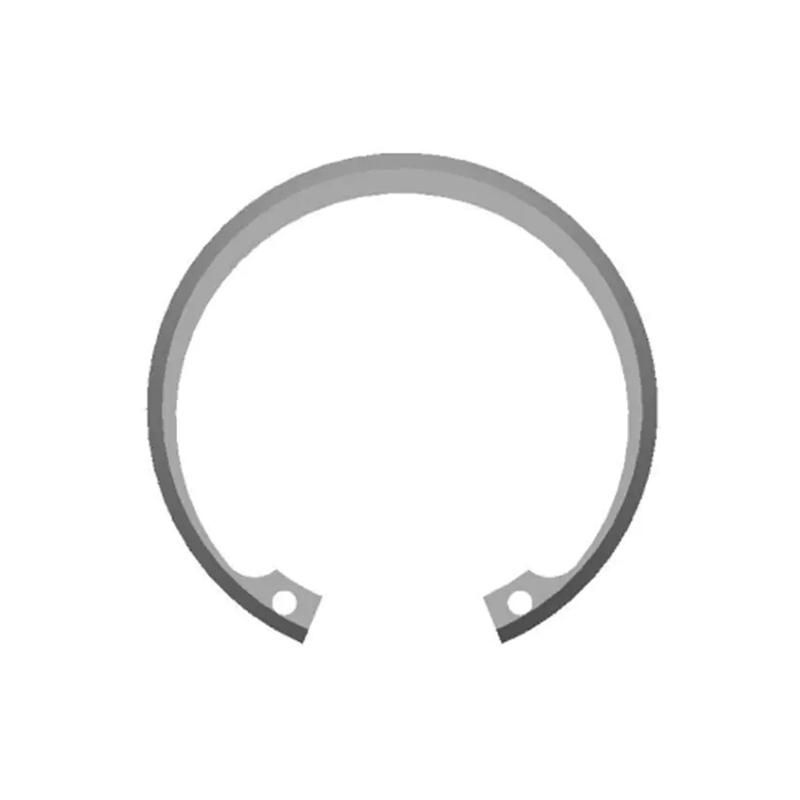
Internal circlips for bores are formed with the same cold working principles, although the geometry is reversed so the ring seats inside a housing bore. Our internal circlips to DIN 472 follow this process and are dimensionally inspected after forming to verify free diameter and groove fit.
 DIN472 1.4122 Circlips Suppliers, DIN472 Internal Retaining Ring CompanyAs China DIN472 1.4122 Circlips Suppliers and DIN472 Internal Retaining Ring Company, Dongbo Fastener supply Custom DIN472 1.4122 Circlip...View Product →
Choosing the Right Alloy for a Cold Worked Fastener
Not every alloy responds to cold working in the same way. Some work harden quickly and require annealing between operations; others form easily but lack spring properties after heat treatment. For most industrial retaining rings and washers, material selection comes down to four families.
| Alloy families commonly specified for cold worked fasteners and typical design considerations. | |||
| Alloy family | Typical components | Behavior in cold working | Design note |
| Medium-carbon steel (e.g., 65Mn, C67S) | External circlips, snap rings | Moderate work hardening, good formability | Need controlled heat treatment to restore ductility. |
| Alloy spring steel (e.g., 51CrV4, 50CrV4) | Heavy-duty washers, high-load retaining rings | Higher forming forces; excellent fatigue strength | Avoid sharp corners that concentrate stress. |
| Stainless steel (e.g., 301, 1.4310) | Corrosion-resistant circlips, marine fasteners | Rapid work hardening; requires robust tooling | Surface finish and passivation matter. |
| Aluminum alloys (e.g., 5052, 6061) | Lightweight washers, spacer brackets | Soft and easy to form, low elastic limit | Not for high spring-rate applications. |
Spring steel and the role of heat treatment
Alloy spring steels are the default choice for cold worked retaining rings because they are formable enough to be stamped and then tempered to produce a stable spring characteristic. DIN 471 and DIN 472 standard parts, for example, rely on this sequence to guarantee that the ring will seat correctly and maintain axial retention under repeated load cycles.
Sourcing Cold Worked Alloy Fasteners: Key Checks
Because cold working changes the metal permanently, small differences in material chemistry, die wear, or press settings can push a part outside tolerance. Buyers and design engineers should verify several things before approving a supplier.
Dimensional tolerance and springback control
Retaining rings are defined by groove width, ring thickness, and free diameter. Cold worked parts naturally spring back after forming, so tooling must be built to compensate. Ask for documented dimensional reports and confirm that free diameter and gap width are measured under the same conditions as final assembly.
Heat treatment and surface condition
Cold working alone is rarely enough for high-performance fasteners. The best parts are cold formed, then hardened and tempered, then cleaned and surface treated. A supplier that controls these steps in-house is more likely to hold consistent hardness and avoid decarburization. Our manufacturing capabilities include precision stamping, heat treatment, phosphating, ultrasonic cleaning, and optical sorting under one roof.
Quality control and traceability
Look for automated optical inspection, hardness testing, and batch traceability. For large volumes, consistency is everything. In our facility, production orders are tracked through ERP with first-in, first-out control, and every batch passes through automatic optical screening before packaging.
Custom cold worked alloys and non-standard shapes
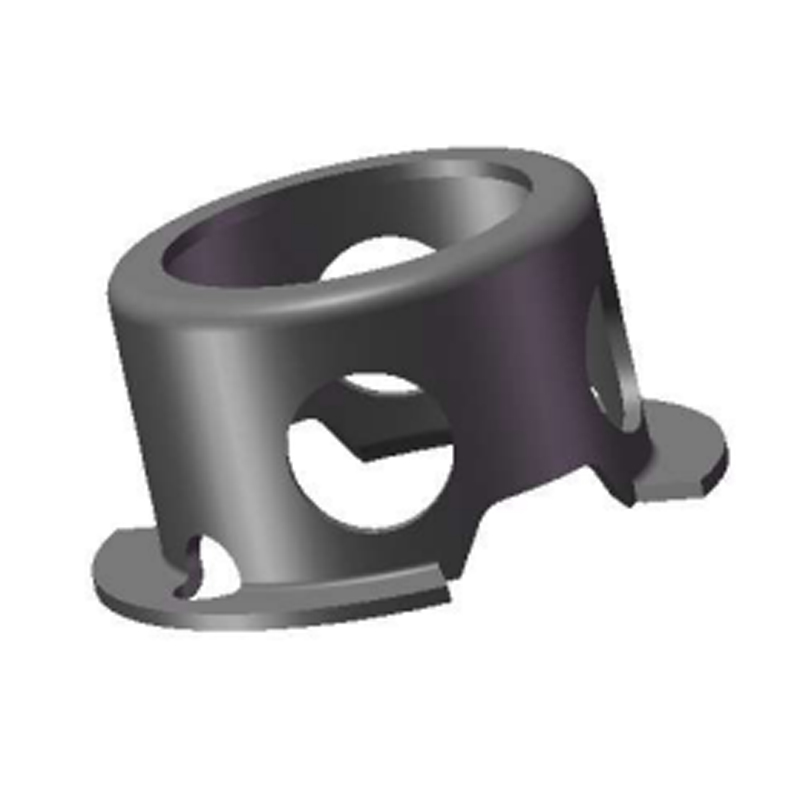
When standard catalogs do not fit the application, cold working opens the door to custom shapes. Non-standard stamped parts can be developed with the same alloy families and process controls used for standard circlips, but with geometry tailored to a specific housing, bracket, or cage. A good example is a wear-resistant special-shaped external circlip, which is cold stamped from alloy strip and then heat treated for applications that see abrasive wear. If the project starts from a sketch or a failed standard part, our product customization service can turn it into a producible component.
 Custom Wear-Resistant Special-Shaped External Circlip Suppliers, CompanyAs China Custom Wear-Resistant Special-Shaped External Circlip Suppliers and Wear-Resistant Special-Shaped External Circlip Company, Dong...View Product →
Final Thoughts on Cold Working Alloys
Cold working alloys is not a generic manufacturing step; it is a metallurgical decision that affects strength, elasticity, tolerance, and service life. For retaining rings, circlips, and stamped fasteners, the combination of cold forming and controlled heat treatment delivers the mechanical performance that modern machinery depends on. By understanding how cold working changes the alloy, you can specify better parts, reduce field failures, and choose a manufacturing partner that controls the process from strip to finished component.