English
 中文简体
中文简体
Content
- 1 Understanding Internal and External Circlips: Essential Retaining Components
- 2 Design Characteristics and Structural Differences
- 3 Material Selection and Heat Treatment Specifications
- 4 Installation Tools and Proper Techniques
- 5 Load Capacity Calculations and Design Considerations
- 6 Application-Specific Selection Guidelines
- 7 Common Failure Modes and Prevention Strategies
- 8 Standards, Specifications, and Quality Requirements
Understanding Internal and External Circlips: Essential Retaining Components
Internal and external circlips represent fundamental fastening components in mechanical engineering, serving as axial retention devices that prevent lateral movement of assemblies on shafts or within bores. These spring steel rings, also known as snap rings or retaining rings, provide secure positioning without threading, welding, or permanent deformation. Internal circlips install within grooved bores to retain bearings, gears, or other components on the inside diameter of housings, while external circlips mount in grooves on shaft exteriors to prevent axial displacement of pulleys, wheels, or bearing assemblies. The versatility, ease of installation, and removal without disassembly make circlips indispensable across automotive, aerospace, industrial machinery, consumer electronics, and precision instrument applications.
The fundamental design principle of circlips relies on elastic deformation and the precise relationship between groove dimensions, ring material properties, and installation techniques. Manufactured primarily from spring steel alloys including carbon steel, stainless steel, and beryllium copper, circlips undergo heat treatment processes achieving hardness levels between 44-52 HRC, providing the necessary spring characteristics for secure retention while permitting installation and removal. The standardization of circlip dimensions through DIN, ISO, ANSI, and industry-specific specifications ensures interchangeability and reliable performance across diverse applications. Understanding the distinctions between internal and external variants, their dimensional specifications, material characteristics, and proper installation procedures is essential for engineers, maintenance technicians, and designers selecting appropriate retention solutions for mechanical assemblies.
Design Characteristics and Structural Differences
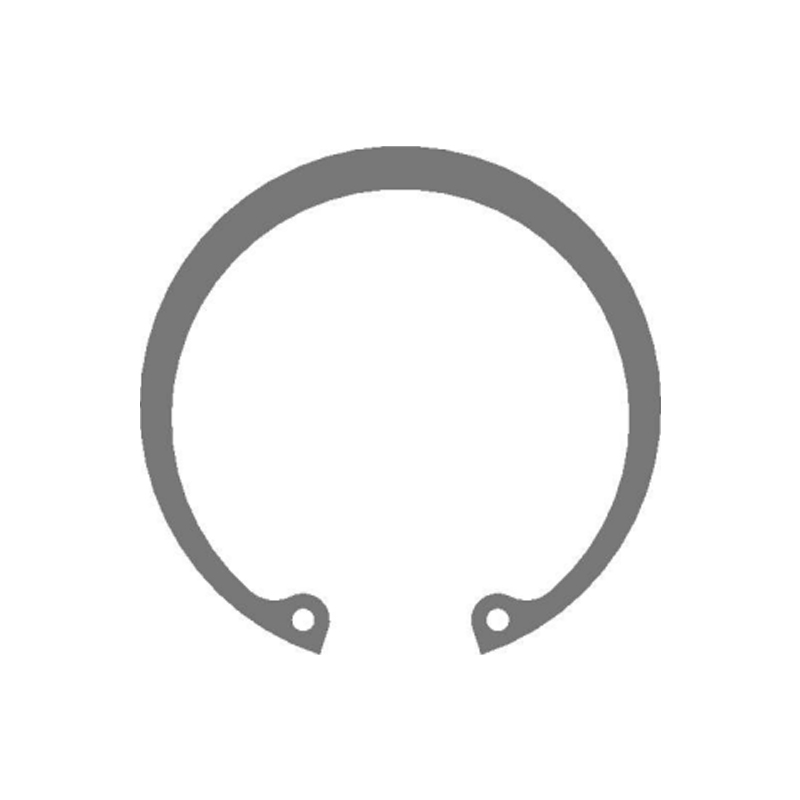
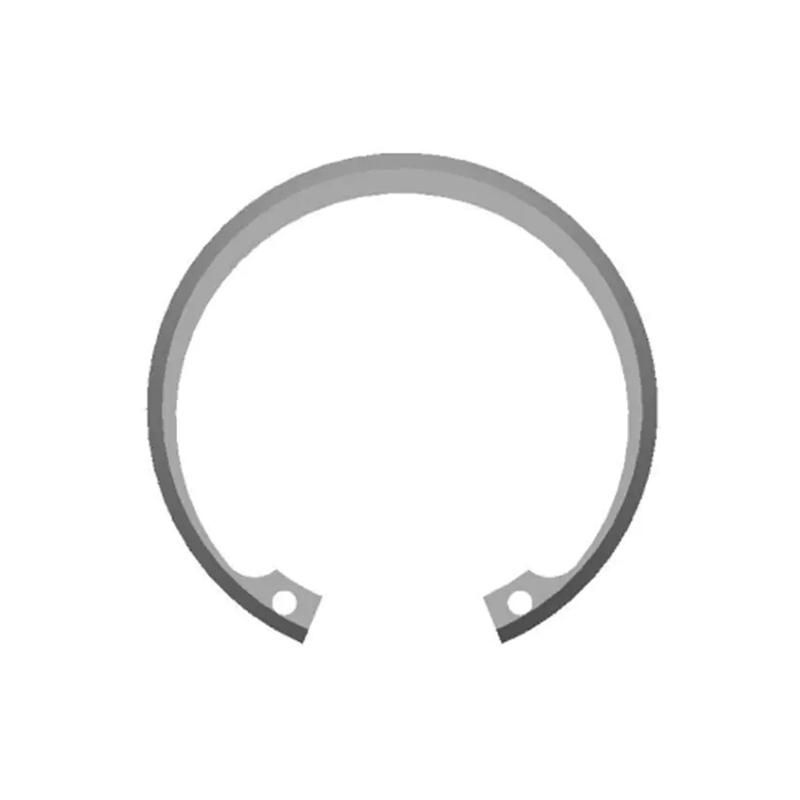
Internal circlips feature a continuous or near-continuous ring with lugs or holes positioned on the inner diameter, designed to compress radially inward during installation within a bore groove. The ring's natural expanded state maintains constant radial pressure against the groove walls, creating secure retention through elastic force. The lug configuration varies from single-lug designs for applications with minimal rotational requirements to opposed dual-lug arrangements providing balanced compression forces during installation with specialized circlip pliers. Advanced internal circlip designs incorporate beveled edges reducing stress concentrations at groove contact points, while specific variants include reinforced sections near the lug areas preventing permanent deformation during repeated installations.
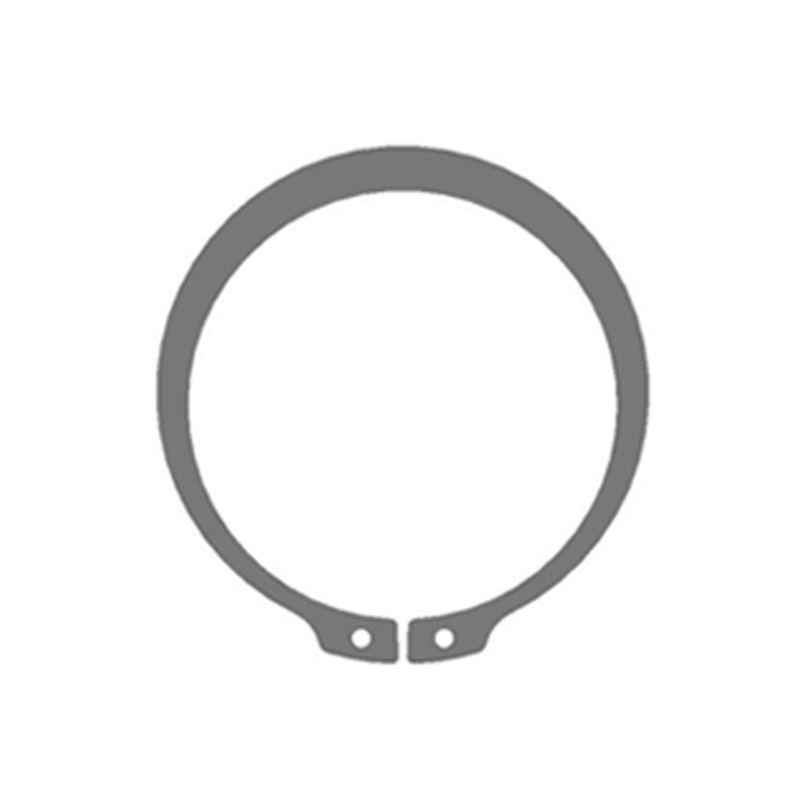
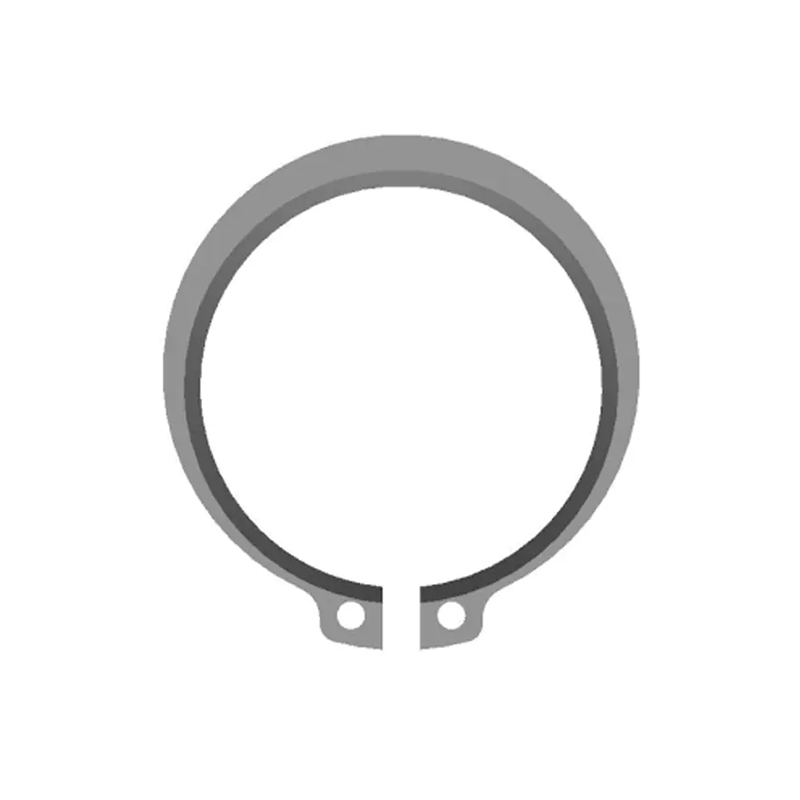
External circlips exhibit the inverse design philosophy, featuring lugs or holes on the outer diameter and requiring radial expansion during installation over shaft ends into external grooves. The ring's relaxed state diameter is smaller than the shaft groove diameter, generating inward radial force maintaining secure seating within the groove. External circlips typically demonstrate higher load-bearing capacity for equivalent nominal sizes compared to internal variants due to the mechanical advantage of compression loading on the outer ring material. Design variations include E-type circlips with three radial projections providing self-centering characteristics, C-type rings with gap openings facilitating installation without specialized tools in low-stress applications, and inverted designs where the ring seats on the groove's outer edge rather than the conventional inner shoulder configuration.
Key Dimensional Parameters
| Parameter | Internal Circlips | External Circlips | Critical Consideration |
| Nominal Diameter | Bore diameter (d1) | Shaft diameter (d2) | Primary sizing reference |
| Free Diameter | Larger than nominal | Smaller than nominal | Defines installation force |
| Ring Thickness | 0.6-6.0mm typical | 0.6-6.0mm typical | Affects load capacity |
| Groove Depth | Radially outward | Radially inward | Must accommodate ring thickness with clearance |
| Lug Configuration | Inner diameter placement | Outer diameter placement | Determines tool engagement method |
The groove geometry for circlip installation follows precise specifications balancing retention security against installation practicality and component stress concentration. Groove width typically exceeds ring thickness by 0.1-0.3mm for sizes under 50mm diameter, increasing to 0.3-0.5mm for larger assemblies, providing axial clearance preventing binding during thermal expansion or minor misalignments. Groove depth must accommodate the ring's radial thickness plus additional clearance ranging from 0.15mm for small precision applications to 0.5mm for industrial machinery, ensuring the ring seats completely below the shaft or bore surface. Sharp groove corners create stress concentration points on both the host component and the circlip during loading, necessitating radius specifications typically 0.1-0.2mm for precision applications and up to 0.5mm for heavy-duty installations, significantly improving fatigue resistance and preventing premature failure.
Material Selection and Heat Treatment Specifications
Carbon spring steel represents the predominant material for circlip manufacturing, with compositions typically containing 0.60-0.70% carbon providing optimal balance between hardness, spring characteristics, and manufacturing economics. Common grades include AISI 1060, 1070, and 1075 steels undergoing oil quenching from austenitizing temperatures around 820-850°C followed by tempering at 350-450°C, achieving hardness levels between 44-50 HRC suitable for general industrial applications. The heat treatment process develops martensitic microstructures with retained austenite percentages below 5%, ensuring dimensional stability during service while maintaining sufficient ductility preventing brittle fracture under shock loading. Surface decarburization during heat treatment reduces effective hardness and fatigue strength, requiring protective atmospheres during austenitizing or post-treatment grinding removing affected surface layers to depths of 0.05-0.15mm depending on ring thickness.
Stainless steel circlips address applications requiring corrosion resistance in marine environments, chemical processing equipment, food preparation machinery, or medical devices where carbon steel oxidation is unacceptable. Type 302 and 17-7 PH stainless steels dominate stainless circlip production, with austenitic Type 302 offering excellent corrosion resistance and non-magnetic properties achieving hardness levels of 40-47 HRC through cold working, while precipitation-hardening 17-7 PH stainless provides superior strength characteristics reaching 44-50 HRC through solution annealing at 1040°C followed by conditioning at 760°C and final aging at 565°C. The reduced elastic modulus of stainless steels compared to carbon steel (approximately 190 GPa versus 210 GPa) requires design compensation through increased ring thickness or modified groove dimensions maintaining equivalent retention forces, typically necessitating 10-15% thickness increases for comparable performance.
Specialized Material Applications
- Beryllium copper circlips provide non-magnetic characteristics essential for MRI equipment, compass mechanisms, and electromagnetic interference-sensitive applications, achieving hardness levels of 38-42 HRC through precipitation hardening while maintaining excellent electrical conductivity and corrosion resistance superior to standard stainless steels.
- Phosphor bronze rings serve applications requiring moderate corrosion resistance, good electrical conductivity, and reduced magnetic permeability, typically limited to lower-stress retention applications due to maximum hardness capabilities around 35-38 HRC and reduced elastic modulus compared to steel alternatives.
- Inconel and high-temperature alloys address extreme environment applications including gas turbine engines, exhaust systems, and furnace assemblies where operating temperatures exceed 400°C, maintaining spring characteristics and dimensional stability at temperatures destroying conventional carbon steel circlip properties.
- Polymer composite circlips manufactured from reinforced thermoplastics including glass-filled nylon or PEEK offer advantages in weight-critical aerospace applications, electrically insulating requirements, or chemical environments attacking metallic materials, though load capacities remain significantly lower than steel equivalents.
Surface treatments enhance circlip performance through corrosion protection, friction reduction, or cosmetic appearance modification. Zinc plating provides economical corrosion protection for carbon steel circlips in mildly corrosive environments, with thickness ranging from 5-15 microns meeting specifications such as ASTM B633 for standard industrial applications. Black oxide coatings offer minimal dimensional impact (less than 1 micron thickness) while providing moderate corrosion resistance and reduced light reflection for aesthetic considerations, though protective capabilities remain inferior to zinc or cadmium plating. Phosphate coating followed by oil impregnation creates a porous surface layer retaining lubricants, beneficial for applications experiencing frequent installation and removal cycles or requiring reduced friction during initial assembly. Environmental and health concerns have largely eliminated cadmium plating from circlip production despite superior corrosion resistance, with zinc-nickel alloy plating providing comparable performance in high-corrosion marine or chemical exposure applications.
Installation Tools and Proper Techniques
Specialized circlip pliers represent the primary installation and removal tools, featuring tips designed to engage the ring lugs while applying controlled expansion or compression forces. Internal circlip pliers incorporate pointed or tapered tips inserting into the ring's inner diameter holes, with squeeze-grip handles compressing the ring inward for installation within bores. The plier jaw geometry maintains parallel alignment during compression, preventing ring twisting or uneven loading that could cause permanent deformation or installation failure. Tip diameter selection must match the lug hole specifications, typically ranging from 1.0mm for small precision circlips to 3.0mm for heavy industrial applications, with tip lengths varying from 15mm for shallow groove access to 100mm or more for recessed installations requiring extended reach capabilities.
External circlip pliers feature outward-spreading tips that engage outer diameter lugs, with handle compression causing tip divergence expanding the ring for installation over shaft ends into external grooves. The mechanical advantage ratio of quality circlip pliers ranges from 3:1 to 5:1, reducing the operator force required for ring expansion while maintaining precise control preventing over-expansion beyond the elastic limit causing permanent deformation. Interchangeable tip systems allow single plier frames to accommodate diverse circlip sizes and configurations through quick-change tip cartridges, significantly reducing tooling costs for maintenance operations or manufacturing facilities handling multiple circlip specifications. Bent-nose and angled-tip variants address access-restricted installations where perpendicular approach is impossible, with 45-degree and 90-degree offset tips reaching circlips installed within deep housings, behind obstructions, or in confined assembly spaces.
Installation Best Practices
- Verify groove cleanliness and dimensional accuracy before circlip installation, removing burrs, chips, or debris that could prevent complete ring seating or create stress concentration points leading to premature failure under service loading.
- Compress or expand circlips only to the minimum diameter required for installation, avoiding excessive deformation beyond the elastic limit (typically 10-15% radial deformation maximum) that induces permanent set reducing retention force and potentially causing installation failure or service ejection.
- Ensure complete circlip seating within the groove after installation by visual verification and physical confirmation that the ring sits below the shaft or bore surface, with uniform groove engagement around the entire circumference indicating proper installation without twisting or partial seating.
- Apply controlled rotational force during installation aligning the circlip gap (for C-type rings) or lug positions away from maximum stress locations in the assembly, preventing preferential failure initiation at the gap or lug stress concentration points during service.
- Implement safety protocols including eye protection preventing injury from circlip ejection during installation or removal, as the stored elastic energy in compressed or expanded rings can propel circlips at high velocities if tool slippage occurs during handling.
Automated circlip installation equipment addresses high-volume production requirements where manual installation proves economically impractical or introduces quality inconsistencies. Pneumatic and servo-electric circlip applicators incorporate programmable expansion or compression cycles, force monitoring, and position verification ensuring consistent installation quality while achieving cycle times under 2 seconds for simple assemblies. Vision systems integrated with automated applicators verify circlip presence, orientation, and complete groove seating before releasing finished assemblies, eliminating defects associated with missing, inverted, or partially seated retention rings. The initial equipment investment for automated circlip installation ranges from $15,000 for basic pneumatic applicators to over $200,000 for fully integrated robotic cells with vision verification, typically justified for production volumes exceeding 50,000 annual assemblies or applications where manual installation quality variations create unacceptable field failure rates.
Load Capacity Calculations and Design Considerations
The axial load capacity of circlip installations depends on multiple interrelated factors including ring material properties, groove geometry, retained component characteristics, and loading conditions during service. Allowable thrust loads for standardized circlips are published in manufacturer catalogs and design handbooks, typically expressed as static load ratings representing the maximum axial force before permanent ring deformation or groove damage occurs. These published ratings assume ideal installation conditions with properly dimensioned grooves, complete ring seating, and static loading without shock, vibration, or alternating force directions. Conservative design practice applies safety factors of 2-4 to published static ratings for general industrial applications, increasing to 5-8 for critical safety applications or installations experiencing dynamic loading, vibration, or shock forces during service.
The thrust load transfer mechanism from the retained component through the circlip into the groove creates complex stress distributions requiring careful analysis for demanding applications. Initial loading contacts the circlip at the inner groove shoulder (for external rings) or outer groove shoulder (for internal rings), creating bearing stress at the contact interface. As loads increase, the ring deforms elastically, distributing contact pressure over increasing arc lengths up to approximately 180 degrees at maximum rated loads. Groove shoulder stress concentrations represent critical failure locations, particularly where inadequate fillet radii create stress multiplication factors of 2-3 times the nominal bearing stress. The retained component stiffness relative to the circlip influences load distribution, with flexible components (thin-walled bearing races) promoting more uniform loading compared to rigid components (thick gear hubs) concentrating loads over smaller contact arcs.
Factors Affecting Load Capacity
| Factor | Effect on Capacity | Design Optimization |
| Ring Thickness | Proportional increase with thickness | Specify thicker heavy-duty variants where clearances permit |
| Groove Depth | Deeper grooves reduce shaft/bore strength | Balance groove depth against component stress concentration |
| Material Hardness | Higher hardness improves load capacity | Maintain 44-52 HRC range for optimal spring properties |
| Groove Shoulder Radius | Larger radii reduce stress concentration | Maximize radius within manufacturing constraints |
| Temperature | Elevated temperatures reduce strength | Derate capacity or specify high-temp materials above 150°C |
| Dynamic Loading | Vibration and shock reduce effective capacity | Apply appropriate safety factors or consider reinforced variants |
Finite element analysis provides detailed stress distribution prediction for critical circlip applications where component failure could result in safety hazards, significant economic losses, or equipment damage. Three-dimensional FEA models incorporating circlip geometry, groove details, and retained component characteristics reveal peak stress locations, contact pressure distributions, and potential failure modes under various loading scenarios. Typical analyses identify the groove shoulder radius as the primary stress concentration location, with stress multiplication factors ranging from 1.5 for well-radiused grooves to over 4.0 for sharp corners or inadequately dimensioned grooves. The circlip gap region experiences elevated stress during loading, particularly for C-type rings where the discontinuity creates local stress concentration, generally requiring gap positioning away from maximum load application points to prevent preferential crack initiation and fatigue failure.
Application-Specific Selection Guidelines
Bearing retention represents one of the most common circlip applications, securing radial ball bearings, roller bearings, or plain bushings on shafts or within housings. External circlips prevent bearing outer race axial movement on shafts, while internal circlips retain bearing assemblies within bored housings. The bearing load rating, operating speed, and thermal expansion characteristics influence circlip selection, with heavy-duty industrial applications requiring reinforced circlips or multiple-ring configurations distributing loads across wider groove sections. High-speed rotating applications above 3,000 RPM require careful consideration of centrifugal forces acting on external circlips, potentially causing ring expansion and groove disengagement at critical speeds. Internal circlips experience centripetal force compression at high rotational velocities, generally providing more secure retention in high-speed applications where external mounting proves impractical.
Gear and pulley assemblies utilize circlips for axial positioning on transmission shafts, preventing component migration under thrust loads generated by helical gear tooth forces or belt tension vectors. The pulsating loads characteristic of gear mesh and belt drive systems create fatigue conditions requiring conservative circlip sizing with safety factors of 4-6 applied to static load ratings. Split-design circlips facilitate assembly and disassembly without complete shaft disassembly in transmission and gearbox applications, though the discontinuous ring construction reduces load capacity by approximately 20-30% compared to continuous-ring equivalents. Applications experiencing bidirectional thrust loading require circlips on both sides of the retained component or alternative retention methods including threaded lock nuts providing superior resistance to alternating force directions compared to single-side circlip retention.
Industry-Specific Applications
- Automotive applications including wheel bearing retention, transmission gear positioning, clutch assembly retention, and suspension component mounting rely heavily on circlips for cost-effective assembly and serviceability, with specifications emphasizing vibration resistance and corrosion protection through zinc-nickel or geomet coatings.
- Aerospace applications demand precision-manufactured circlips meeting stringent dimensional tolerances (±0.05mm typical), material traceability requirements, and documented quality certifications, often specifying stainless steel or titanium alloys for weight reduction and corrosion resistance in challenging environmental conditions.
- Agricultural equipment circlips must withstand contamination from dirt, moisture, and chemical fertilizers while maintaining retention integrity under shock loading from field operations, typically requiring heavy-duty variants with enhanced corrosion protection through hot-dip galvanizing or stainless steel construction.
- Medical device applications utilize stainless steel or beryllium copper circlips meeting biocompatibility requirements for surgical instruments, diagnostic equipment, and implantable device assemblies, with specifications emphasizing non-magnetic properties for MRI compatibility and sterilization resistance.
- Consumer electronics employ miniature circlips in camera lens assemblies, motor shaft retention, and precision mechanism positioning, with sizes ranging down to 3mm nominal diameter requiring specialized installation tooling and microscopic quality verification ensuring assembly reliability.
Hydraulic and pneumatic cylinder applications utilize circlips for piston rod seal retention, bearing support, and end cap securing in actuator assemblies. The pressure pulsations and side loading characteristic of fluid power systems create challenging retention requirements, often necessitating heavy-duty circlip variants or supplementary retention methods including retaining plates distributing loads over larger contact areas. Spiral-wound circlips manufactured from rectangular-section wire wound into multi-turn configurations provide increased load capacity compared to conventional stamped designs, particularly beneficial for large-bore hydraulic cylinders where groove depth limitations restrict single-ring thickness. The installation and removal of spiral circlips requires different techniques compared to conventional types, typically involving radial unwinding or progressive compression without dedicated plier engagement points.
Common Failure Modes and Prevention Strategies
Circlip failures manifest through several distinct mechanisms, each associated with specific root causes related to design deficiencies, improper installation, material defects, or service condition exceedances. Elastic limit exceedance represents a common failure mode where installation over-expansion or excessive service loading permanently deforms the ring beyond its yield strength, reducing radial retention force and potentially allowing groove disengagement under service loads. This failure type typically results from improper tool selection, operator error during installation, or undersized circlip specifications for the application loads. Prevention requires adherence to published expansion/compression limits during installation, proper circlip sizing calculations incorporating appropriate safety factors, and operator training emphasizing controlled installation techniques.
Fatigue cracking initiates at stress concentration locations including the ring gap, lug holes, or groove contact surfaces under cyclic loading conditions. The alternating stresses from vibration, pulsating loads, or thermal cycling propagate cracks through the ring cross-section, eventually causing complete fracture and retention failure. Surface defects from manufacturing processes, corrosion pitting, or handling damage accelerate fatigue crack initiation, reducing service life by 50-80% compared to defect-free installations. Fatigue prevention strategies include specifying shot-peened circlips with compressive residual stresses in surface layers delaying crack initiation, selecting continuous-ring designs eliminating gap stress concentrations where service conditions permit, and implementing corrosion protection coatings preventing pit formation serving as crack nucleation sites.
Failure Prevention Checklist
- Verify proper circlip size selection matching shaft or bore diameter specifications within published tolerance ranges, avoiding oversized or undersized ring installations that compromise retention force or prevent complete groove seating.
- Confirm groove dimensional accuracy including depth, width, and shoulder radius specifications meeting design standards, as under-depth grooves prevent complete ring seating while over-depth grooves reduce host component strength creating secondary failure modes.
- Inspect circlips for surface defects, dimensional deviations, or material irregularities before installation, rejecting rings exhibiting cracks, excessive burrs, out-of-round conditions, or hardness variations indicating improper heat treatment.
- Calculate actual service loads including static thrust, dynamic forces, shock loading, and thermal expansion effects, comparing total loading against derated circlip capacity with safety factors appropriate for application criticality and loading uncertainty.
- Implement periodic inspection protocols for critical assemblies, examining circlip seating, groove condition, and retained component positioning detecting incipient failures before complete retention loss occurs during service.
- Document circlip installations including part numbers, installation dates, and responsible personnel creating traceability enabling failure investigation and supporting predictive maintenance scheduling based on service hour accumulation or load cycle counting.
Corrosion damage compromises circlip retention through material loss reducing effective cross-section and creating stress concentration points at pit locations. Carbon steel circlips without protective coatings rapidly oxidize in humid environments, with rust formation undermining spring characteristics and potentially bonding the ring to groove surfaces preventing removal during maintenance. Stainless steel circlips resist general corrosion but remain susceptible to stress corrosion cracking in chloride environments, particularly when installed with residual tensile stresses from excessive expansion during installation. Galvanic corrosion occurs when dissimilar materials (carbon steel circlips with aluminum housings) create electrochemical cells in conductive environments, accelerating material loss through preferential anode dissolution. Prevention requires appropriate material selection for environmental exposure, protective coatings suitable for service conditions, and isolation techniques including non-conductive washers or coatings preventing galvanic couple formation between dissimilar metals.
Standards, Specifications, and Quality Requirements
International and national standards govern circlip dimensions, tolerances, materials, and testing requirements ensuring interchangeability and reliable performance across global supply chains. The DIN 471 standard specifies external circlips for shafts with normal and heavy-duty variants, defining nominal diameters from 3mm to 1000mm with corresponding thickness, groove dimensions, and load ratings. DIN 472 covers internal circlips for bores with equivalent size ranges and performance specifications. ISO 6799 provides international standardization of circlip types, dimensions, and technical requirements facilitating cross-border commerce and component sourcing. ANSI specifications including ANSI/ASME B18.27 establish North American standards for retaining rings, with dimensional systems using inch-based measurements rather than metric specifications predominant in European and Asian markets.
Material specifications reference established steel grades and heat treatment requirements ensuring consistent mechanical properties across manufacturers. DIN 1.1200 (AISI 1070 equivalent) represents the standard carbon steel grade for general-purpose circlips, while DIN 1.4310 (AISI 302 equivalent) specifies austenitic stainless steel for corrosion-resistant applications. Heat treatment requirements typically mandate minimum hardness of 44 HRC with maximum 52 HRC preventing excessive brittleness, though specific applications may specify narrower ranges optimizing spring characteristics for particular loading conditions. Surface finish specifications control manufacturing processes, with typical requirements limiting surface roughness to Ra 1.6 μm or better preventing stress concentration from machining marks while maintaining cost-effective production methods.
Quality Verification Testing
| Test Type | Purpose | Typical Acceptance Criteria |
| Dimensional Inspection | Verify diameter, thickness, tolerances | ±0.1mm for general, ±0.05mm for precision |
| Hardness Testing | Confirm heat treatment effectiveness | 44-52 HRC for carbon steel circlips |
| Expansion/Compression Test | Verify elastic limit and spring properties | No permanent set after specified deformation |
| Coating Thickness | Ensure adequate corrosion protection | 5-15 μm for zinc plating minimum |
| Visual Inspection | Detect surface defects, cracks, burrs | No cracks, delamination, or sharp edges |
| Salt Spray Testing | Evaluate corrosion resistance | 96-720 hours per ASTM B117 without red rust |
Aerospace and automotive quality systems impose additional requirements beyond general industrial standards, including statistical process control, first-article inspection, and traceability documentation linking finished circlips to raw material heat lots. AS9100 aerospace quality management standards require process validation demonstrating consistent production of conforming circlips, with sampling plans and inspection frequency calculated using statistical methods ensuring specified quality levels. Automotive IATF 16949 requirements emphasize production part approval processes including dimensional validation, material certification, and performance testing before serial production authorization. Critical applications may require 100% inspection using automated vision systems or coordinate measuring machines verifying dimensional compliance for every manufactured circlip rather than statistical sampling approaches acceptable for non-critical applications.
Traceability requirements for high-reliability applications mandate permanent marking of circlips or packaging with batch codes enabling identification of manufacturing date, material heat number, and production lot. Laser marking, dot-peen stamping, or ink-jet printing applies codes to circlip surfaces or anti-static packaging bags without compromising mechanical properties or dimensional accuracy. The traceability system links finished parts to raw material certifications, heat treatment records, and inspection data, enabling rapid identification and quarantine of potentially defective populations if downstream failures indicate systematic manufacturing issues. While traceability implementation increases manufacturing costs by approximately 5-15%, the rapid failure investigation and targeted recalls enabled by comprehensive tracking systems provide significant liability reduction and customer satisfaction benefits for safety-critical applications in medical, aerospace, and automotive sectors.