English
 中文简体

A 5 MW coastal solar tracker lost three bearing positions in its eighteenth month of service. The 304 stainless circlips holding each pillow block had pitted through along the groove contact line, and the axial float that followed damaged two bearings before anyone caught it. Moving those parts to 316L added roughly 40 percent to the piece price and pushed the neutral salt spray result past the 2,000-hour mark. That decision was made on a drawing, not in the field, which is exactly where most renewable energy grade selection either succeeds or goes wrong.
The short answer: grade choice follows exposure first, part function second, and cost last. For inland solar and sheltered onshore wind, 304 or 304L is usually sufficient. Within roughly 5 km of a coastline, 316L becomes the practical floor. Where chlorides, sustained loads, and long service intervals overlap, 2205 duplex earns its premium. For shaft-mounted retention that demands high strength at moderate corrosion resistance, 17-4PH is often a better trade than jumping straight to duplex.
Conclusion up front: a renewable energy fastener specification is a service-life document, not a price list. Solar assets are underwritten over 25 to 30 years, wind turbines over 20 to 25, and electrolyzers over 60,000 to 90,000 operating hours. Every grade decision should be defensible against that horizon, not against the cheapest quote on the table.
Content
- 1 Why Renewable Energy Pushes Stainless Grades Further Than General Industry
- 2 The Grades That Actually Appear on Renewable Energy Drawings
- 3 Comparing the Common Grades Side by Side
- 4 The Hidden Indicator: How Long Each Grade Survives Salt Spray
- 5 Where the Demand Sits Across Renewable Energy Segments
- 6 A Practical Selection Sequence
- 7 Why Manufacturing Consistency Decides Whether the Grade Works
- 8 Maintenance and Compliance Notes Worth Keeping on File
Why Renewable Energy Pushes Stainless Grades Further Than General Industry
Renewable energy assemblies are not simply outdoor machinery. Several constraints stack on top of each other, and each one narrows the grade list a little more.
- Service life. A circlip in a tracker bearing or a tower flange is rarely scheduled for replacement. It has to survive the full asset life with no planned intervention.
- Access cost. Replacing a retaining ring on a tracker row, let alone inside a nacelle, costs far more in downtime and lifting than the part itself. The economics push toward paying more per piece up front.
- Chloride load. Offshore wind and coastal solar see heavy chloride deposition. Inland sites still face de-icing salts, irrigation drift, and dust-borne chlorides, and these concentrate in groove crevices where the oxygen supply is lowest.
- Thermal cycling. Tracker structures swing from near 0 °C overnight to 70 °C or more on a sunlit frame. Repeated differential expansion between the ring and the groove drives fretting, and fretting removes the passive film locally.
- Hydrogen service. Electrolyzer and hydrogen storage hardware brings embrittlement into play. Standards such as ISO 11114-4 restrict high-strength martensitic steels and push the specification toward austenitic or duplex grades.
The Grades That Actually Appear on Renewable Energy Drawings
Five material families cover the large majority of solar, wind, and hydrogen fastening specifications. Knowing what each one buys you is faster than reading a mill certificate.
304 and 304L (1.4301 / 1.4307)
No molybdenum, so the pitting resistance equivalent number sits near 18. Suitable for inland solar racking, sheltered nacelle internals, and dry desert sites. It is the wrong grade for coastal deposition or for any crevice that stays wet. The trap is that 304 looks bright and clean on delivery and fails quietly two winters later.
316 and 316L (1.4401 / 1.4404)
Roughly 2 to 3 percent molybdenum lifts the pitting resistance near 24 to 25. This is the working baseline for solar trackers, onshore turbines within sight of the sea, and any outdoor bracket exposed to de-icing salt. It machines and stamps predictably, holds spring properties after forming, and is the grade most projects should specify unless there is a specific reason not to.
2205 Duplex (1.4462)
Nitrogen-strengthened duplex with a pitting resistance around 34 and a yield strength close to twice that of 316L. It suits offshore splash zones, high-load flange connections, and spring components where both corrosion resistance and load capacity matter. The trade-offs are narrower forming windows, higher tool wear, and a price that only makes sense when it removes a maintenance callout. It is also more sensitive to improper heat treatment than austenitic grades, which is why supplier process control matters as much as the grade name.
17-4PH (1.4542 / AISI 630)
Precipitation-hardening martensitic stainless with tensile strength around 1,100 MPa after aging. Its pitting resistance is only around 17, comparable to 304, yet it delivers axial retention loads that 316L cannot reach in the same section thickness. It is common for shaft-mounted retaining rings in high-vibration drivetrains. It should be avoided in sour or hydrogen-rich service.
1.4122 and Coated Carbon Steel
Martensitic stainless hardened to roughly 45 to 50 HRC, chosen for wear resistance in low-corrosion locations, or carbon steel with zinc or phosphate coating where cost dominates. Both need coating integrity to survive, and both are poor candidates where the coating can be chipped during installation.
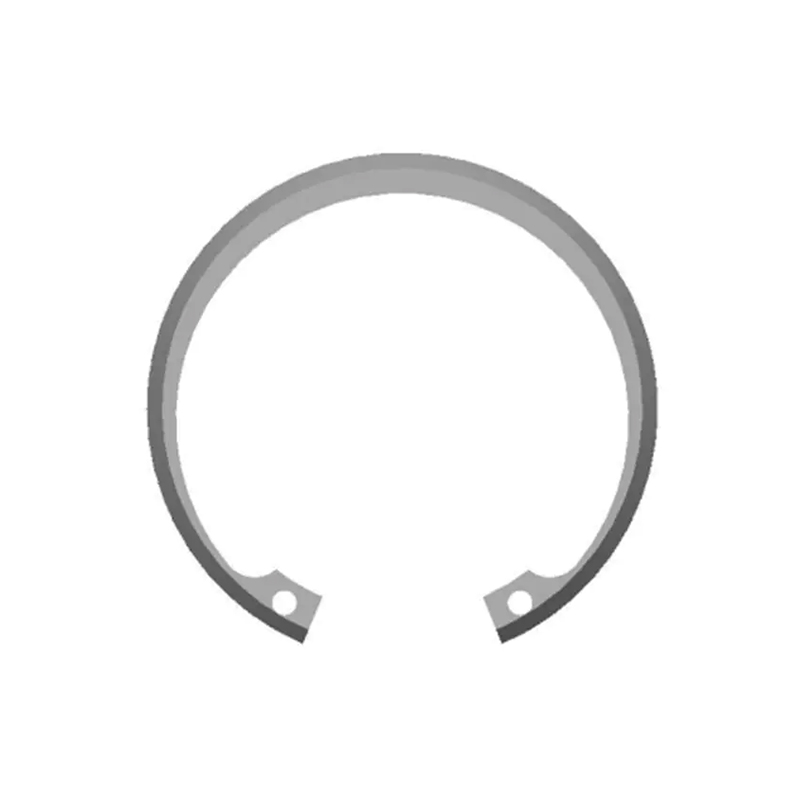
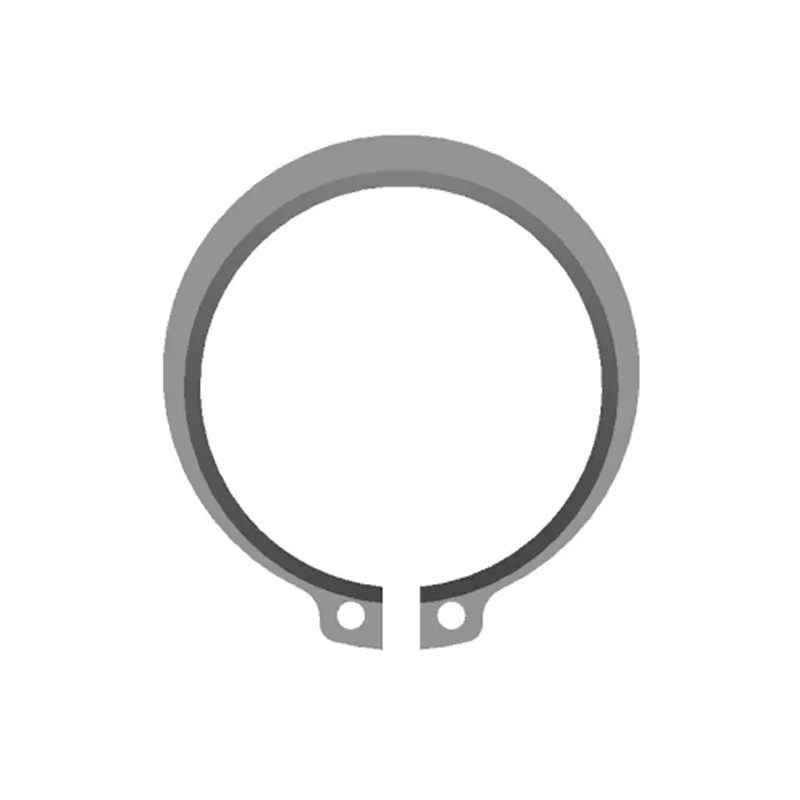
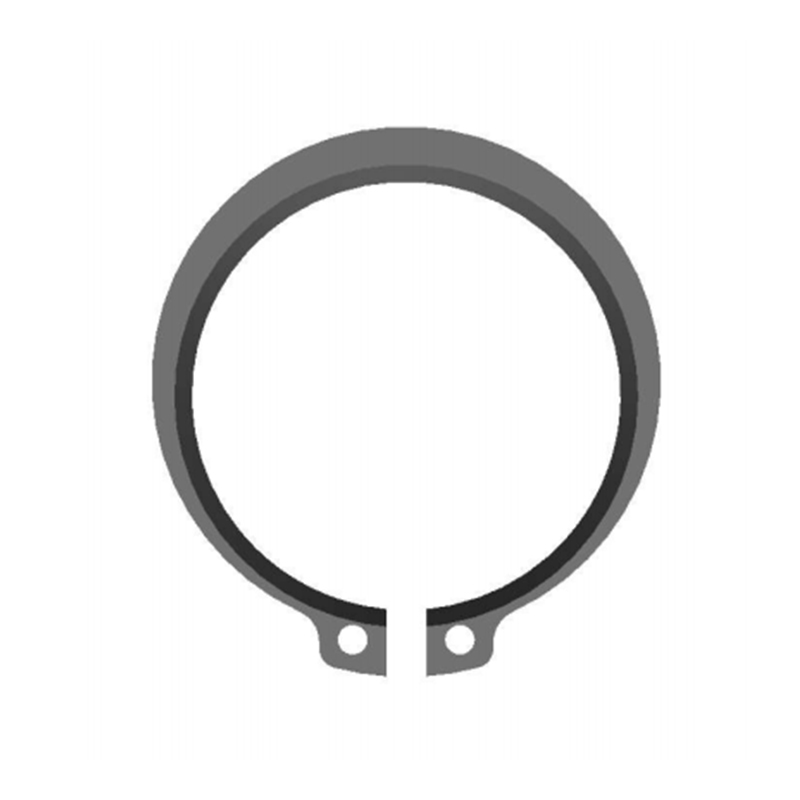 DIN471 External Circlips for Shafts in Carbon and Stainless SteelDIN471 external circlips in carbon or stainless steel with coating options, sized 3–1000 mm, customizable for shaft axial location and vibration control.View Product →
Comparing the Common Grades Side by Side
Numbers do not choose a grade for you, but they make the trade-offs visible before the quote stage. The table below is a starting screen, not a final specification.
| Grade | Approx. PREN | Relative Cost | Typical Renewable Energy Use |
| 304 / 304L | 18 | 1 | Inland solar racking, dry-climate nacelle internals |
| 316 / 316L | 24–25 | 1.3–1.4 | Solar trackers, coastal turbines, exposed brackets |
| 2205 duplex | 34–35 | 2.0–2.3 | Offshore splash zone, high-load flange joints |
| 17-4PH | 17 | 2.5–3.0 | Shaft retaining rings, high-vibration drivetrains |
| 1.4122 | 14–15 | 0.9 | Coated wear parts in sheltered, low-chloride locations |
Two things are worth reading carefully in that table. First, 17-4PH has a lower pitting resistance than 316L yet costs far more, because it is bought for strength, not corrosion. Second, the cost spread between 316L and 2205 is not gradual; it is a step, which is why duplex decisions should be driven by a named failure mode rather than by a general preference for better material.
The Hidden Indicator: How Long Each Grade Survives Salt Spray
Neutral salt spray testing to ASTM B117 or ISO 9227 is a screening test, not a life prediction. It still separates grades usefully, because time to first red rust or pitting under continuous salt fog tracks the same mechanism that causes field failures in coastal installations.
The pattern explains the grade ranking better than any single datasheet value. 316L lasts roughly five times as long as 304L under continuous salt fog, which is why the jump from 304 to 316L is worth far more than its 30 to 40 percent price premium in coastal deployment. Duplex roughly doubles that again. Meanwhile 17-4PH sits closer to 304L on corrosion while delivering several times the strength, so it should be selected for load, not for exposure. Note that 316 in the annealed condition outperforms 316 in a heavily cold-worked condition, because deformation creates martensite that becomes a pitting initiation site.
Where the Demand Sits Across Renewable Energy Segments
The grade mix a supplier keeps on the shelf reflects where the market actually spends its money. Solar and wind dominate the volume, while hydrogen is smaller but has the strictest material demands per kilogram.
- Solar, 40 percent: tracker bearings, torque tube brackets, module clamps, and grounding hardware. Mostly 316L, with duplex reserved for coastal sites.
- Wind, 35 percent: tower and blade flange bolting, yaw and pitch bearings, gearbox shaft retention. Mixed 316L, 2205, and 17-4PH.
- Hydrogen, 15 percent: electrolyzer stack compression washers and storage valve components. Predominantly 316L and duplex, with martensitic grades excluded.
- Other, 10 percent: hydro, biomass, and geothermal auxiliaries, where grade choice tracks local water chemistry rather than a standard specification.
Solar is the most volume-driven segment and the most sensitive to price, which makes it the place where an over-specified grade hurts most. Hydrogen is the opposite: the specification is rarely negotiable, and the supplier conversation is about documentation and heat-treatment control rather than unit price.
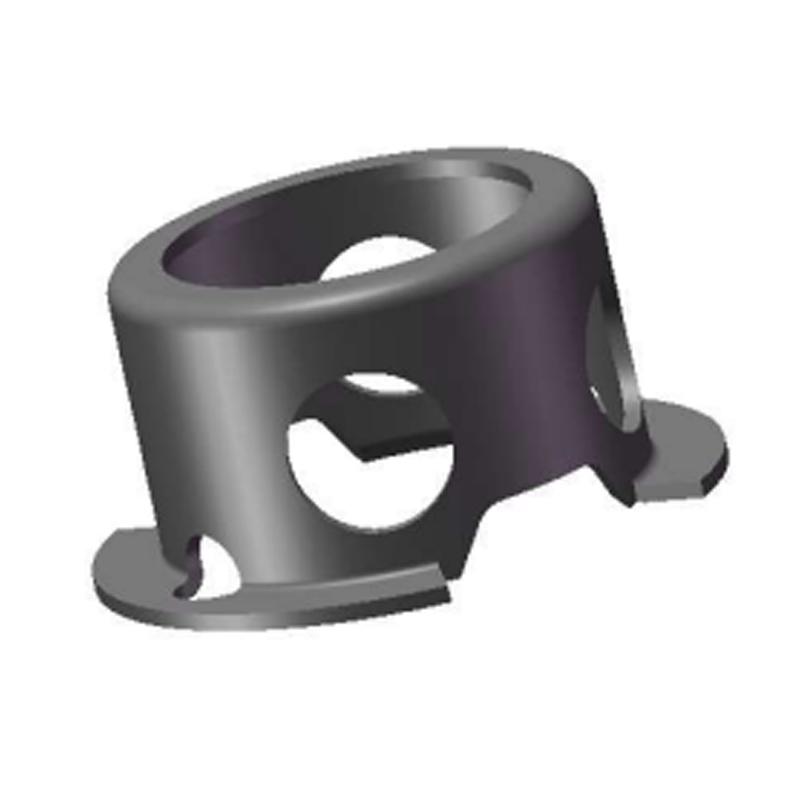
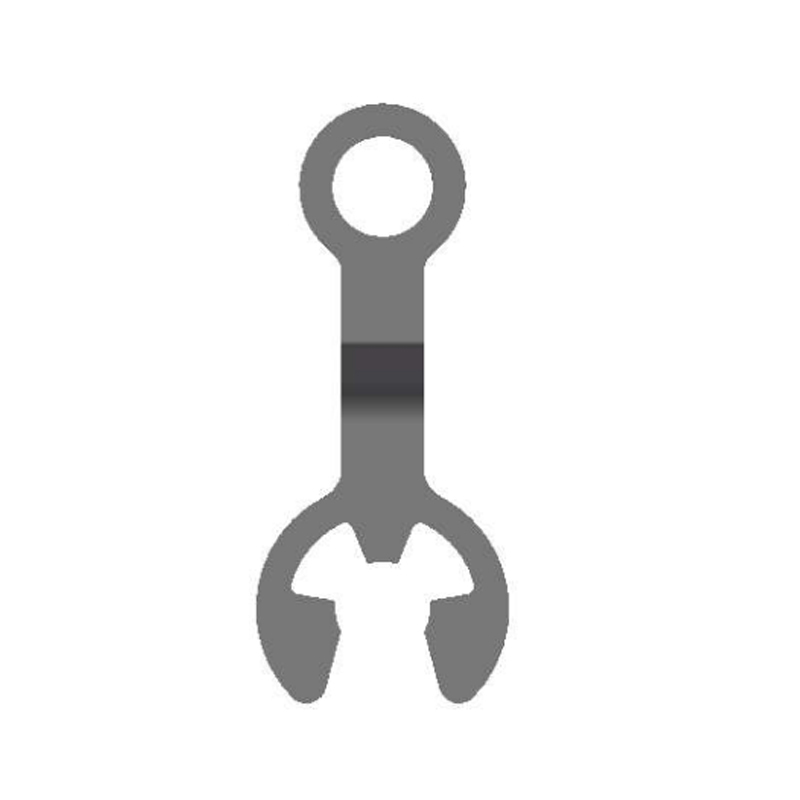 Corrosion-Resistant Special-Shaped Split Retaining Rings for Shafts and BoresCustom split retaining rings in corrosion-resistant stainless steel or nickel alloys, with tailored profiles for secure shaft or bore retention in harsh environments.View Product →
A Practical Selection Sequence
Selection is a sequence, not a single decision. Working through five steps in order prevents the most expensive mistake, which is choosing a grade before the exposure and load are understood.
Step 1 — Define the exposure
Record chloride deposition rate, maximum surface temperature, pH range, and whether the joint can stay wet. This single step usually eliminates two or three grades immediately.
Step 2 — Quantify the load
Establish axial retention force, vibration spectrum, and thermal cycle count. A ring that simply locates a part has very different requirements from one holding a preloaded bearing.
Step 3 — Match grade to function
Corrosion-limited parts go austenitic or duplex. Strength-limited parts go 17-4PH or hardened martensitic. Few parts are both, and recognizing which one you have prevents over-specification.
Step 4 — Lock the manufacturing route
Stamping, heat treatment, passivation, and cleaning all change corrosion performance. Specify the process, not just the material grade, or the delivered part will not match the calculation.
Step 5 — Verify with data
Salt spray, hardness and spring-force testing, groove tolerance checks, and dimensional reports. Verification is what turns a material choice into a specifiable part.
For high-load flange joints, disc spring washers are often part of the same decision, since their deflection behavior determines how much preload survives thermal cycling in a tower or a tracker frame.
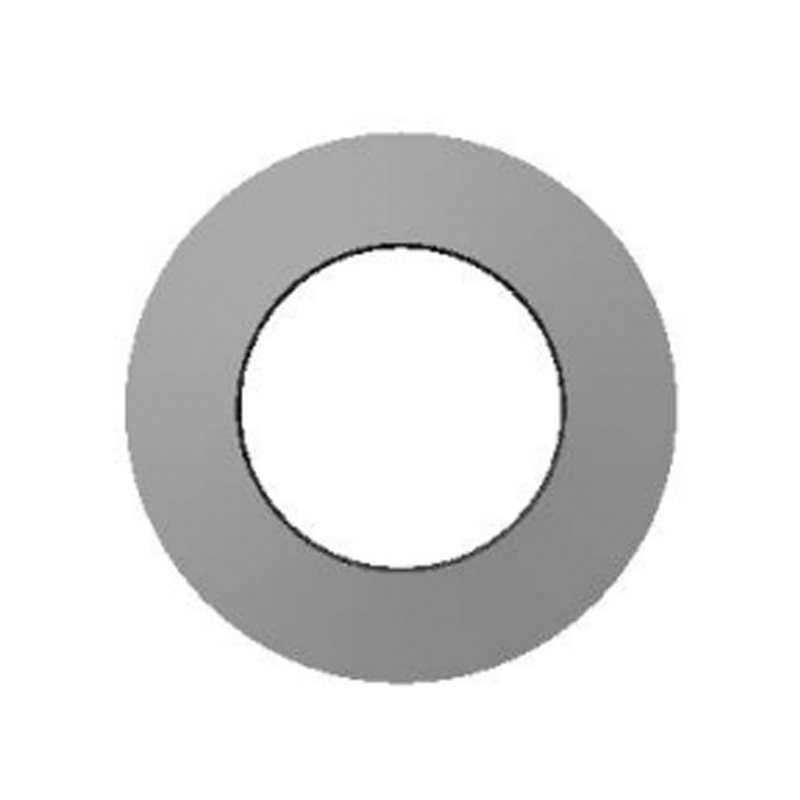 DIN2093 High-Load Belleville Spring Washers for Flange PreloadDIN2093 disc springs in 51CrV4 and related steels, with phosphate or Dacromet coatings, for maintaining bolt preload in flange joints.View Product →
Why Manufacturing Consistency Decides Whether the Grade Works
A grade on a drawing only delivers if the parts shipped match the parts specified. In renewable energy orders, that means consistency across heat-treatment batches, controlled spring-back during forming, and inspection that does not rely on the human eye alone.
This is where vertical integration shows up in corrosion results. Suppliers that keep rolling, stamping, heat treatment, and automated optical sorting under one roof retain more process control than those assembling finished parts from external sources. Surface contamination from machining, residual stamping stresses, and inconsistent passivation are the usual causes of a 316L part failing the same test a competitor's 316L part passes. Batch traceability and first-in-first-out inventory control matter too, because stainless stock left outdoors in a coastal warehouse can start pitting before it is ever formed.
Maintenance and Compliance Notes Worth Keeping on File
Installation errors that undo a good grade
Stainless steel is a passive-film material, not an inherently rustproof one. Over-spreading a retaining ring during installation work-hardens the tips and creates martensitic sites that pit first. Scoring the surface against a burred groove produces the same result. Pairing stainless parts directly with aluminum or zinc-coated carbon steel in a wet location invites galvanic attack on the less noble metal. A short review of common mistakes when using stainless steel circlips is worth including in the installation work instruction rather than leaving it to tribal knowledge.
Standards to reference in the specification
- Material: EN 10088-2 and EN 10088-3 for stainless flat and bar products; ASTM A276 for bar stock.
- Part geometry: DIN 471 and DIN 472 for shaft and bore retaining rings; DIN 2093 for disc springs; DIN 988 for load-distributing washers.
- Corrosion testing: ISO 9227 or ASTM B117 for salt spray; ASTM G48 for pitting and crevice resistance in ferric chloride.
- Sector-specific: IEC 61400-1 for wind turbine design conditions; ISO 11114-4 for hydrogen compatibility of metallic materials.
Two documentation habits pay for themselves. First, keep a certificate of analysis traceable to the finished lot, not just to the incoming coil. Second, record the heat-treatment condition alongside the grade, because a 316L ring in a work-hardened condition performs differently from the same grade in the annealed state, and that difference only shows up in the field. When a project is underwritten over 25 years, the paperwork is part of the product.
Grade selection in renewable energy is ultimately a risk-transfer exercise. The material on the drawing is a promise about the next two or three decades of weather, thermal cycling, and vibration that nobody will be around to inspect. Paying 30 percent more for 316L instead of 304 is cheap next to a bearing replacement on a coastal tracker array. Paying for duplex where 316L already clears the chloride threshold is waste. The useful discipline is to name the failure mode first, then choose the material that answers it, and then choose a manufacturer whose process control can deliver that material consistently, batch after batch.