English
 中文简体
中文简体
1.4122 circlips and 51CrV4 / 50CrV4 washers are precision retaining and load-distributing components specified where standard carbon steel alternatives would fail — either through corrosion in demanding environments, or through inadequate spring performance under high dynamic and fatigue loading. The material designation is the critical specification: 1.4122 (a martensitic stainless steel) is chosen for circlips requiring corrosion resistance combined with the hardness and spring characteristics essential for retaining rings, while 51CrV4 and 50CrV4 (chromium-vanadium spring steels, effectively the same alloy under different national designations) are the premier spring washer materials when maximum fatigue life, high elastic deflection, and reliable load retention are required under dynamic and shock loading. Selecting the correct material for each of these components directly determines whether the assembly will maintain its retention or clamping function throughout the design service life.

Content
- 1 Material 1.4122: The Martensitic Stainless Steel Behind Corrosion-Resistant Circlips
- 2 1.4122 Circlips: Standards, Forms, and Application Range
- 3 51CrV4 and 50CrV4: Material Identity and Why Both Designations Exist
- 4 51CrV4 / 50CrV4 Washers: Types, Standards, and Mechanical Specifications
- 5 Heat Treatment of 51CrV4 / 50CrV4 for Washer Applications
- 6 Surface Coatings and Corrosion Protection for 51CrV4 Washers
- 7 Selecting Between 1.4122 and 51CrV4 Components for Your Application
- 8 Common Specification Mistakes and How to Avoid Them
Material 1.4122: The Martensitic Stainless Steel Behind Corrosion-Resistant Circlips
1.4122 is a chromium-molybdenum martensitic stainless steel defined under EN 10088-3 and widely used in the production of circlips (retaining rings), snap rings, and spring elements that must resist corrosion while maintaining the hardness and spring-back force necessary for reliable retention in grooved shafts and bores.
Chemical Composition of 1.4122
The alloy's performance balance between corrosion resistance and mechanical strength is determined by its composition. According to EN 10088-1, 1.4122 contains:
| Chemical Composition of 1.4122 Martensitic Stainless Steel (EN 10088-1) | |||
| Element | Min % | Max % | Role in Alloy |
| Carbon (C) | 0.33 | 0.45 | Primary hardening element; enables martensite formation and spring hardness |
| Chromium (Cr) | 15.5 | 17.5 | Corrosion resistance; passive oxide layer formation |
| Molybdenum (Mo) | 0.8 | 1.3 | Enhances pitting corrosion resistance; improves hardenability |
| Manganese (Mn) | — | 1 | Deoxidizer; improves hardenability |
| Silicon (Si) | — | 1 | Deoxidizer; contributes to spring modulus |
| Phosphorus (P) | — | 0.04 | Controlled impurity limit |
| Sulfur (S) | — | 0.015 | Controlled impurity limit |
The relatively high carbon content (0.33–0.45%) is the key differentiator from austenitic stainless steels (which typically contain less than 0.08% carbon) and is what allows 1.4122 to be hardened by heat treatment to the spring temper conditions required for circlip applications. The 15.5–17.5% chromium content provides the corrosion resistance that makes this alloy genuinely stainless — substantially better than standard carbon spring steels used in uncoated circlips — while the molybdenum addition improves resistance to chloride-induced pitting, an important advantage in food processing, marine, and chemical environments.
Mechanical Properties of 1.4122 in Spring-Hardened Condition
For circlip applications, 1.4122 strip and wire is supplied in the hardened and tempered (spring temper) condition, typically achieving:
- Tensile strength: 1,100–1,450 MPa depending on section size and heat treatment
- 0.2% proof stress: 900–1,200 MPa
- Hardness: 36–44 HRC (typical for circlip applications)
- Elastic modulus: approximately 200 GPa
- Operating temperature range: −60°C to +300°C (with some reduction in spring force at elevated temperatures)
These properties place 1.4122 circlips significantly above standard austenitic stainless steel grades (1.4301 / 304, 1.4306 / 304L) in mechanical performance. Austenitic grades cannot be hardened by heat treatment and rely on cold working for their strength — typically achieving only 200–350 HV compared to the 370–440 HV achievable in properly heat-treated 1.4122. This hardness difference is directly reflected in the circlip's spring-back force and its ability to maintain seating in the groove under sustained and dynamic axial loads.
Corrosion Resistance of 1.4122 vs. Alternative Circlip Materials
The corrosion resistance of 1.4122 is significantly better than carbon spring steel (65Mn, C75S) with or without zinc or phosphate coating, but somewhat below that of austenitic grades (1.4301, 1.4401):
| Circlip Material Corrosion Resistance and Mechanical Performance Comparison | |||||
| Material | Designation | Hardness (HRC) | Salt Spray (h, approx.) | Chloride Pitting | Relative Spring Force |
| Carbon spring steel (zinc-plated) | C75S / 65Mn | 44–52 | 72–200 (coating dependent) | Severe once coating fails | High (reference) |
| Martensitic stainless | 1.4122 | 36–44 | 500–1,000+ | Moderate (Mo improves) | High |
| Austenitic stainless | 1.4301 (304) | 20–28 (cold-worked) | 1,000–2,000+ | Moderate | Lower (softer material) |
| Austenitic stainless (Mo) | 1.4401 (316) | 20–28 (cold-worked) | 2,000–4,000+ | Good | Lower (softer material) |
This comparison reveals why 1.4122 occupies a specific niche: it is the material that delivers both adequate corrosion resistance and the mechanical hardness needed for effective spring retention. Engineers who require corrosion resistance but specify 1.4301 circlips sacrifice retention force and risk loose fitting in service; those who specify carbon steel circlips in corrosive environments face progressive corrosion of the retaining ring and eventual groove damage or ring failure.
1.4122 Circlips: Standards, Forms, and Application Range
Circlips manufactured from 1.4122 follow the same dimensional standards as their carbon steel equivalents — the material designation specifies the alloy, not the geometry. This means 1.4122 circlips are available in the full range of standard retaining ring forms used across industrial, automotive, and precision engineering applications.
Standard Forms Available in 1.4122
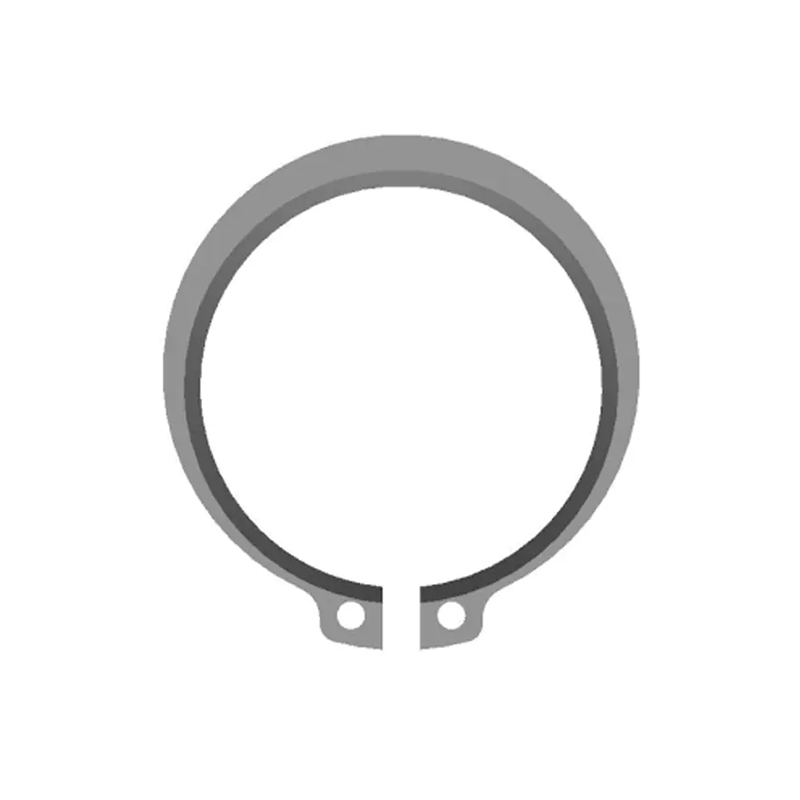
- External (shaft) circlips — DIN 471: Fit into a circumferential groove on a shaft, retaining components against axial displacement away from the shaft end. Available in shaft diameters from 3 mm to 300 mm in standard range. The circlip's natural diameter is smaller than the shaft groove diameter, so installation requires expanding the ring over the shaft using circlip pliers before it snaps into the groove.
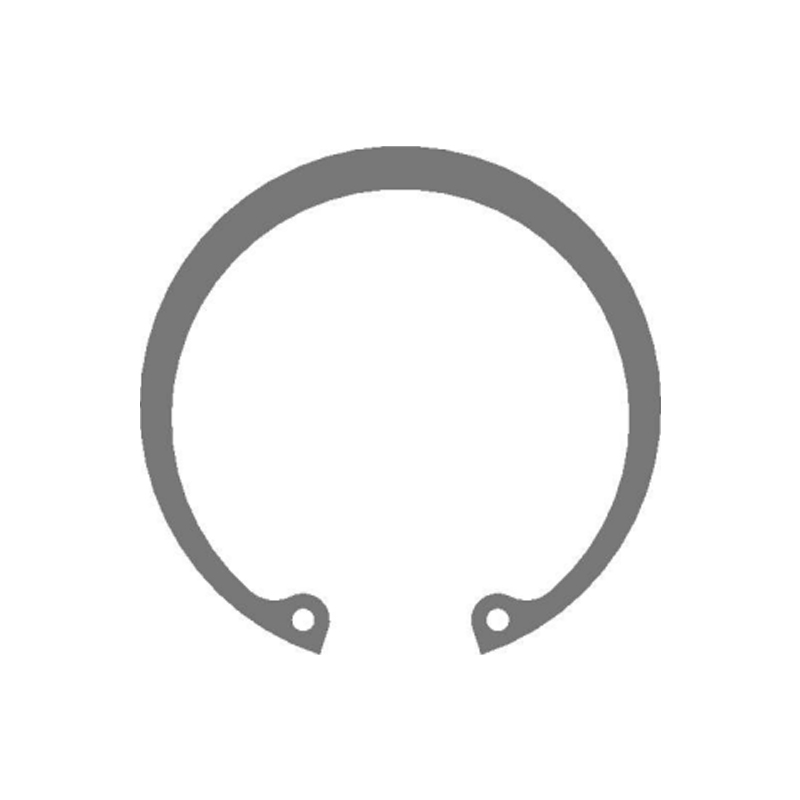
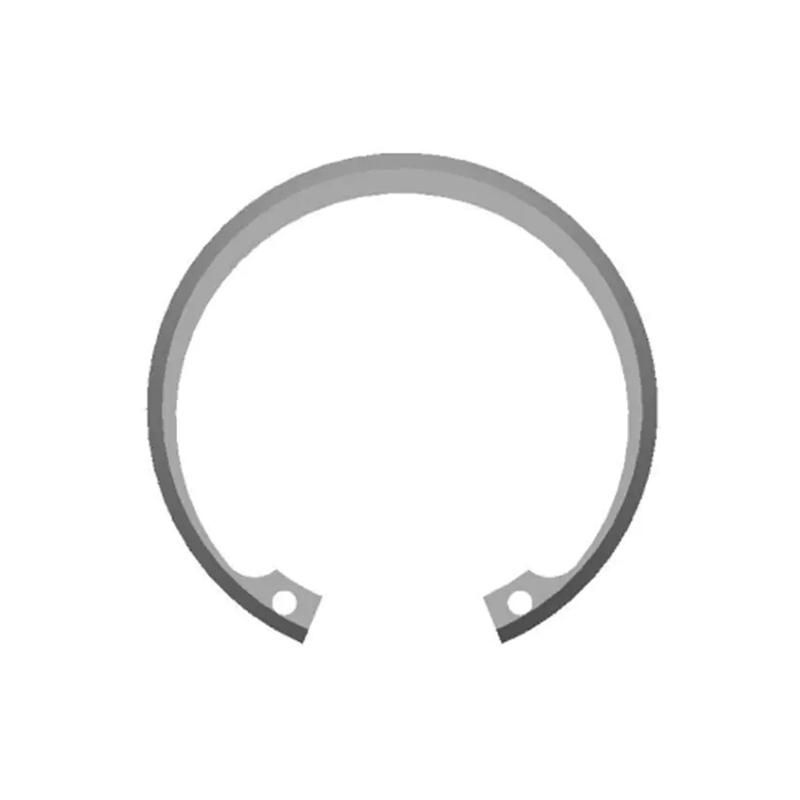
- Internal (bore) circlips — DIN 472: Fit into a circumferential groove inside a bore, retaining components against displacement toward the bore center. The circlip's natural diameter is larger than the bore groove diameter, requiring compression for installation. Available in bore diameters from 8 mm to 300 mm.
- E-clips (external snap rings): Horseshoe-shaped retaining rings that clip into an external shaft groove without requiring circlip pliers — they can be pushed radially onto the shaft. Used where axial installation is impractical. Available in 1.4122 for shaft diameters from approximately 2 mm to 40 mm.
- Bowed (curved) circlips — DIN 6799 and similar: Circlips with a slight axial bow that maintain a spring load against the retained component, eliminating end-play. Particularly valuable in precision applications where zero axial clearance is required.
Groove Geometry Requirements for 1.4122 Circlips
The retaining groove must be machined to the tolerances specified in DIN 471 (shaft) or DIN 472 (bore) to ensure the circlip seats correctly and develops its rated axial load capacity. Critical groove dimensions include:
- Groove width: Must accommodate the circlip thickness with minimal axial clearance — typically the groove width tolerance is H11 for external applications and h11 for internal applications, providing a close sliding fit.
- Groove depth: Must allow the circlip to seat fully into the groove with its nominal radial width protruding beyond the shaft or bore surface to engage the retained component. Under-deep grooves allow the circlip to pop out under load; over-deep grooves reduce the effective bearing area and lower the axial load capacity.
- Groove edge radius: A sharp groove edge (small radius) maximizes the bearing area of the circlip against the groove wall. Excessive radius reduces effective bearing width and lowers axial capacity.
- Groove position from shaft end: DIN 471 specifies a minimum distance from the groove centerline to the shaft end — too close to the shaft end leaves insufficient material for the groove and risks groove failure under load.
Industries Where 1.4122 Circlips Are Specified
The combination of corrosion resistance and mechanical performance makes 1.4122 circlips the standard choice in:
- Food and beverage processing equipment: Where CIP (Clean-In-Place) washdown with acidic or alkaline cleaning agents makes carbon steel circlips corrode rapidly, and where contamination from corrosion products is a food safety concern.
- Marine and offshore equipment: Pumps, valves, winches, and deck machinery exposed to seawater spray and immersion.
- Medical and pharmaceutical equipment: Autoclaved instruments and process equipment where steam sterilization cycles would destroy coatings on carbon steel components.
- Chemical process plant: Pumps, agitators, and valves handling corrosive media where stainless steel is the general construction material.
- Outdoor and agricultural machinery: Exposed assemblies subject to weathering, rain, mud, and fertilizer contamination.
51CrV4 and 50CrV4: Material Identity and Why Both Designations Exist
51CrV4 (EN designation, material number 1.8159) and 50CrV4 (the equivalent AISI/SAE designation: SAE 6150, or the legacy DIN 50CrV4) refer to the same fundamental chromium-vanadium spring steel alloy. The numerical difference in the name — 51 versus 50 — reflects the carbon content specification in different national standard systems rather than a meaningfully distinct alloy. Both designations describe a steel with approximately 0.47–0.55% carbon, 0.9–1.2% chromium, and 0.10–0.25% vanadium, heat treated to spring temper condition for use in high-performance spring washers, disc springs, lock washers, and other elastic fastener elements.
Full Chemical Composition of 51CrV4 / 50CrV4
| Chemical Composition of 51CrV4 / 50CrV4 Spring Steel (EN 10089 / EN 10132-4) | |||
| Element | Min % | Max % | Contribution to Performance |
| Carbon (C) | 0.47 | 0.55 | Hardness, yield strength, spring characteristics |
| Silicon (Si) | 0.1 | 0.4 | Solid solution strengthening; increases elastic limit |
| Manganese (Mn) | 0.7 | 1.1 | Hardenability; deoxidation |
| Chromium (Cr) | 0.9 | 1.2 | Hardenability; wear resistance; high-temperature strength |
| Vanadium (V) | 0.1 | 0.25 | Grain refinement; fatigue resistance; temper resistance |
| Phosphorus (P) | — | 0.025 | Controlled impurity |
| Sulfur (S) | — | 0.025 | Controlled impurity |
The Role of Vanadium: Why 51CrV4 Outperforms Plain Carbon Spring Steels
Vanadium is the alloying element that distinguishes 51CrV4 from simpler spring steels such as C75S (high-carbon spring steel) or 65Mn (manganese spring steel). Vanadium's primary contributions are:
- Grain refinement: Vanadium carbides and nitrides form at grain boundaries during solidification and heat treatment, preventing austenite grain growth. A finer grain structure translates directly into higher fatigue strength — the critical parameter for spring washers subjected to millions of load cycles. Research consistently demonstrates that vanadium-refined steels achieve 15–25% higher fatigue endurance limits than equivalent-hardness plain carbon or chromium steels.
- Temper resistance: Vanadium carbides are thermally stable, resisting dissolution during tempering. This allows 51CrV4 springs to be tempered at slightly higher temperatures than plain carbon springs — producing better relief of quenching stresses while maintaining hardness — resulting in improved toughness and reduced risk of delayed fracture (hydrogen embrittlement) in electroplated components.
- Consistent hardenability: The vanadium and chromium combination ensures deep, uniform hardening through cross-sections up to approximately 25–30 mm, critical for washers and disc springs with significant section thickness.
51CrV4 / 50CrV4 Washers: Types, Standards, and Mechanical Specifications
51CrV4 / 50CrV4 is used for several distinct washer types, each designed for a specific load-retention or vibration-resistance function. Understanding the differences between these types prevents misspecification.
Belleville (Disc) Springs — EN 16983 / DIN 2093
Belleville springs (conical disc springs, also called disc washers) are the most demanding 51CrV4 washer application. A Belleville spring is a truncated cone of spring steel that acts as a non-linear spring when compressed — the conical geometry provides a non-linear force-deflection relationship that can be tuned by the cone height-to-thickness ratio (h₀/t ratio) to produce rising, constant, or even declining spring rate as deflection increases. 51CrV4 is the material of choice for disc springs under EN 16983 (formerly DIN 2093) Group 3 (thickness greater than 6 mm) and all dynamically loaded disc spring applications.
Key mechanical properties for 51CrV4 disc springs in hardened and tempered condition (as specified in EN 16983):
- Tensile strength: 1,200–1,500 MPa (depending on thickness class)
- 0.2% proof stress: ≥ 1,100 MPa
- Hardness: 42–52 HRC (385–505 HV)
- Elongation at break: ≥ 6%
- Operating temperature: −40°C to +200°C (with caution on relaxation at sustained temperatures above 130°C)
The standard test deflection for disc springs is to 75% of flat (h₀) for static applications and to 50–60% of flat for dynamic applications. Exceeding these deflection limits causes stress levels beyond the material's elastic range, producing permanent set (the spring does not return fully to its free height) — a critical failure mode in bolted joint applications where the disc spring's function is to maintain clamp load.
Wave Washers and Curved Washers
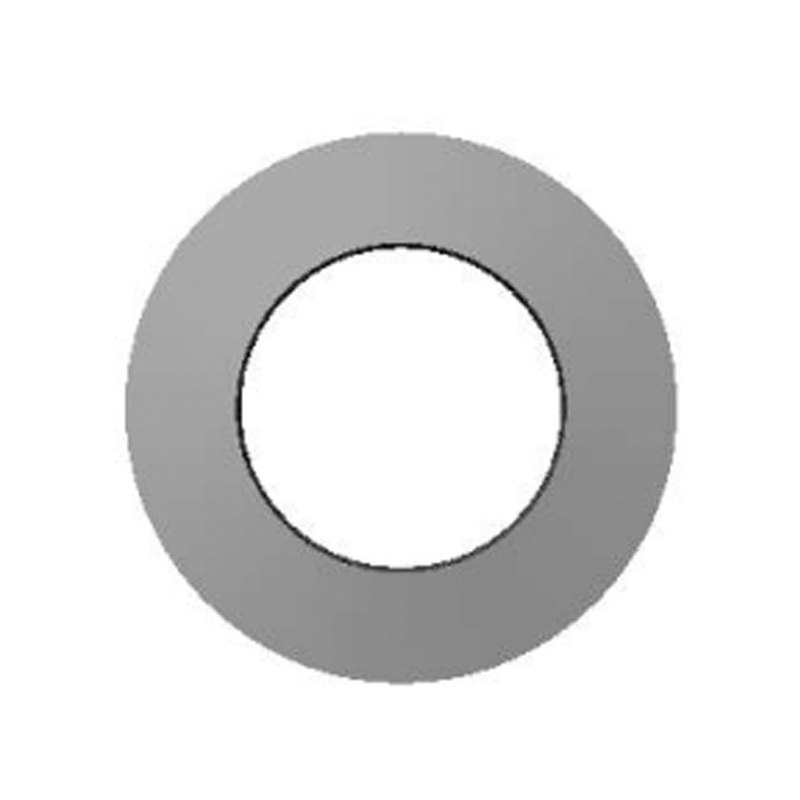
Wave washers are formed with a sinusoidal or multi-lobed wave profile in the axial direction, acting as a spring to take up axial clearance, maintain bearing preload, or provide controlled resistance to axial motion. When manufactured from 51CrV4, wave washers can sustain higher loads and more deflection cycles before fatigue failure than equivalent designs in carbon spring steel (C75S) or stainless steel (1.4310). Standard wave washer dimensions follow DIN 137 (single-wave, Type A/B) and application-specific manufacturer standards. 51CrV4 wave washers are common in bearing preload applications in gearboxes, electric motors, and precision rotating machinery operating at elevated temperatures or under high cyclic loading.
Lock Washers and Spring Lock Washers
Split (spring) lock washers — DIN 127 — rely on the spring force generated by the washer's split and helical form to maintain a frictional wedging load beneath a nut, resisting loosening from vibration. When manufactured from 51CrV4 rather than standard carbon steel, lock washers maintain their clamping force more reliably over longer service periods because:
- Higher elastic limit prevents the washer from permanently deforming (going flat) under the nut's clamping load, which would eliminate the spring effect entirely.
- Superior fatigue resistance under dynamic loading conditions that would cause crack initiation at the split ends of a standard carbon steel washer.
- Better performance at elevated temperatures (up to 200°C sustained) without relaxation — relevant in automotive engine bay, exhaust system, and industrial furnace applications.
Comparison of Spring Washer Materials
| Spring Washer Material Comparison: 51CrV4 vs. Common Alternatives | ||||
| Property | 51CrV4 / 50CrV4 | C75S (Carbon Spring) | 1.4310 (301 Stainless) | 60SiCrA7 (Si-Cr Spring) |
| Tensile strength (MPa) | 1,200–1,500 | 1,100–1,400 | 700–1,100 | 1,300–1,600 |
| Fatigue resistance | Excellent | Good | Moderate | Excellent |
| Max operating temp. | ~200°C | ~120°C | ~250°C | ~250°C |
| Corrosion resistance | Low (requires coating) | Low (requires coating) | Good (stainless) | Low (requires coating) |
| Grain refinement (V) | Yes (vanadium) | No | No | No |
| Relative cost | Medium | Low | Medium–High | Medium–High |
Heat Treatment of 51CrV4 / 50CrV4 for Washer Applications
The mechanical properties that make 51CrV4 suitable for spring washers are entirely dependent on correct heat treatment. The steel is supplied in annealed condition for forming, then hardened and tempered after shaping to achieve the required spring characteristics.
Hardening and Quenching
Formed washers are heated to the austenitizing temperature of 850–880°C, held at temperature for sufficient time to achieve full dissolution of carbides into the austenite matrix (typically 20–40 minutes depending on section thickness), then rapidly quenched in oil to transform the austenite to martensite. Oil quenching is preferred over water quenching for most washer section thicknesses because it reduces thermal shock gradients and the risk of quench cracking — particularly important for disc springs and Belleville washers with their complex stress states during quench. The quenched part is very hard (58–65 HRC) but brittle and unsuitable for use until tempered.
Tempering to Spring Hardness
Immediately after quenching, parts are tempered at 420–480°C for 1–2 hours to reduce hardness from the as-quenched brittle condition to the 42–52 HRC range specified for spring applications. Tempering at this temperature range dissolves some of the martensite stress while retaining high yield strength and adequate ductility for spring function. The vanadium in 51CrV4 resists over-tempering (secondary hardening) better than plain carbon or chromium steels, providing a more stable hardness response across the tempering temperature range.
After heat treatment, disc springs and critical spring washers are typically shot-peened — bombarded with hard steel shot to induce compressive residual stresses in the surface layer. Shot peening improves fatigue life by 50–100% in dynamically loaded spring applications by counteracting the tensile surface stresses that initiate fatigue cracks. EN 16983 specifies shot peening requirements for Group 2 and 3 disc springs used in dynamic applications.
Surface Coatings and Corrosion Protection for 51CrV4 Washers
Unlike 1.4122 circlips — which derive their corrosion resistance from the alloy itself — 51CrV4 spring steel washers are not inherently corrosion resistant and require surface treatment for any application with moisture exposure. The choice of coating must not compromise the spring fatigue properties of the part.
- Phosphate + oil: The most common treatment for 51CrV4 disc springs and lock washers in general engineering applications. Phosphating creates a thin crystalline conversion layer (5–15 µm) that provides a key for oil retention and moderate corrosion protection. Simple, low-cost, and does not risk hydrogen embrittlement — a critical consideration for high-hardness spring components above 40 HRC.
- Dacromet / Geomet (zinc-aluminum flake coating): Non-electrolytic zinc-aluminum flake coatings applied by dip-spin process. Provide 720–1,000 hours salt spray resistance (ISO 9227) with zero hydrogen embrittlement risk — making them the preferred alternative to electroplating for high-hardness spring components. Used extensively in automotive and heavy equipment applications for lock washers and disc springs.
- Hot-dip galvanizing: Not recommended for spring-hardened 51CrV4 components — the 450°C zinc bath temperature causes stress relief and loss of spring hardness, and hydrogen absorption risk during flux preparation. Suitable only for annealed (soft) steel components.
- Electroplated zinc or zinc-nickel: Electroplating provides good corrosion protection but introduces hydrogen embrittlement risk for components above 39 HRC hardness (per ISO 4042). If electroplating is used on 51CrV4 spring washers, mandatory baking at 190–210°C for a minimum of 4 hours within 4 hours of plating is required to diffuse absorbed hydrogen. Even with baking, electroplating of spring components above 42 HRC is generally avoided by responsible manufacturers. Delayed fracture failures in spring washers are frequently attributable to hydrogen embrittlement from inadequately controlled electroplating.
Selecting Between 1.4122 and 51CrV4 Components for Your Application
Both 1.4122 and 51CrV4 are premium-specification materials used in spring retaining and load-distribution components, but they solve different engineering problems. The selection decision should be structured around the following questions:
- What is the corrosion environment? If the assembly will be exposed to prolonged moisture, chemicals, food-grade cleaning agents, seawater, or high humidity without access for re-coating maintenance, 1.4122 stainless components provide inherent corrosion resistance without the maintenance dependency of coated carbon steel. If the environment is dry, protected from sustained moisture, or can be maintained with regular coating inspection, 51CrV4 with appropriate coating is entirely adequate and provides superior mechanical properties.
- Is the application static retention or dynamic spring loading? For circlip retention functions (primarily axial retention of components on shafts or in bores), the material choice is between 1.4122 stainless and carbon spring steel — driven by corrosion requirement. For spring washer applications involving cyclic deflection (disc springs, wave washers, lock washers under vibration), 51CrV4 is the premium choice for fatigue resistance regardless of corrosion environment, with coating selection driven by the environment.
- What is the operating temperature? Both materials are suitable to approximately 200°C for sustained service. Above 200°C, neither is optimal — silicon-chromium spring steels (60SiCrA7) are more appropriate for higher temperature spring applications, while higher-alloy stainless grades or Inconel components are needed for corrosion resistance at elevated temperatures.
- Are there regulatory or certification requirements? Food contact, medical device, and pharmaceutical applications will typically mandate stainless steel (1.4122 or austenitic grades) for corrosion and contamination reasons. Automotive and structural applications will follow specific OEM material specifications — confirm the required material designation precisely, as substituting 50CrV4 where 51CrV4 (1.8159) is specified, or vice versa, is effectively equivalent, but substituting 1.4122 where a carbon spring steel is specified changes the mechanical and magnetic properties of the component.
Common Specification Mistakes and How to Avoid Them
Procurement and engineering errors with these components are more common than they should be, and several recurring mistakes account for most field failures and non-conformances.
- Specifying 1.4301 (304) instead of 1.4122 for circlips in high-load applications: 1.4301 is an austenitic grade commonly described as "stainless steel circlips" in generic supplier catalogues. Its cold-worked hardness of approximately 200–280 HV is insufficient for heavy-duty retention — circlips spring out of grooves under load. Always confirm the material is 1.4122 or equivalent martensitic stainless when spring force retention is critical.
- Using electroplated 51CrV4 disc springs without post-plate baking: Suppliers who electroplate high-hardness spring components without mandatory hydrogen embrittlement relief baking are supplying non-compliant products. Request confirmation of baking procedure per ISO 4042 or equivalent whenever electroplated 51CrV4 components are procured.
- Exceeding recommended deflection limits on disc springs: Operating Belleville springs beyond 75% of flat (for static) or 60% of flat (for dynamic) produces permanent set that progressively reduces clamp load in bolted joints — often diagnosed incorrectly as bolt loosening when the actual failure is disc spring set. Always verify the spring stack design against the load-deflection curve at the expected working deflection.
- Ignoring groove tolerances when fitting 1.4122 circlips: Circlips installed in oversized grooves (groove width too large relative to circlip thickness) have excessive axial play that allows the ring to tilt under load — dramatically reducing the effective axial load capacity. Verify groove dimensions against the applicable DIN 471 or DIN 472 table before machining.
- Mixing designations 50CrV4 and 51CrV4 as if they were different alloys: Procurement systems that treat these as distinct materials will generate unnecessary supplier qualification work and potential split inventory. Align on a single designation — EN 51CrV4 / material number 1.8159 is the current standard European designation — and accept the equivalent national designations (50CrV4, SAE 6150) as compliant.