English
 中文简体

A 32 mm external circlip, a 620 °C service temperature, and a drawing marked "A286, age hardened". That combination is one of the few where the material callout is genuinely earned. It is also the point where the process sequence matters more than the alloy name: A286 is an iron-base superalloy that only reaches its published strength after a two-step age, and every operation before that age decides whether the finished ring holds its load or relaxes out of the groove.
Content
The short version
- A286 (UNS S66286, 1.4980, ASTM A453 Grade 660) is iron-based and titanium-strengthened, with a usable strength window from cryogenic temperatures to roughly 700 °C.
- Age hardening must follow forming and machining. Solution-annealed strip stamps and rolls; aged material cracks instead.
- Between about 400 °C and 700 °C it is often the cheapest alloy that still carries the load, because 17-4PH has already softened and 718 is over-specified.
- Budget for a machining index near 18 (B1112 = 100), 4–6× the material cost of 316, and a heat-treat step most circlip shops cannot run in-house.
The rest of this article explains why those four statements hold, and what they change on a purchase order.
What A286 Is, and Why the Age Decides the Part
A286 is an austenitic iron-nickel-chromium alloy held together by titanium. Roughly a quarter of the composition is nickel, which keeps the structure austenitic and allows titanium to stay in solution; chromium supplies oxidation resistance; and 1.9–2.35% titanium forms the Ni3Ti gamma-prime particles that do the actual strengthening during aging. Because the matrix is iron rather than nickel, the alloy sits between the stainless steels and the nickel superalloys in both capability and price.
For flat parts such as circlips, washers, brackets and limit cages, the practical rule is simple: every forming operation happens on solution-annealed material, and the age happens last. Bending a lug or coiling a ring after aging produces cracking at the highest-stress radius, and even where no crack appears, the cold work removes part of the stress-rupture margin the specification was bought for.
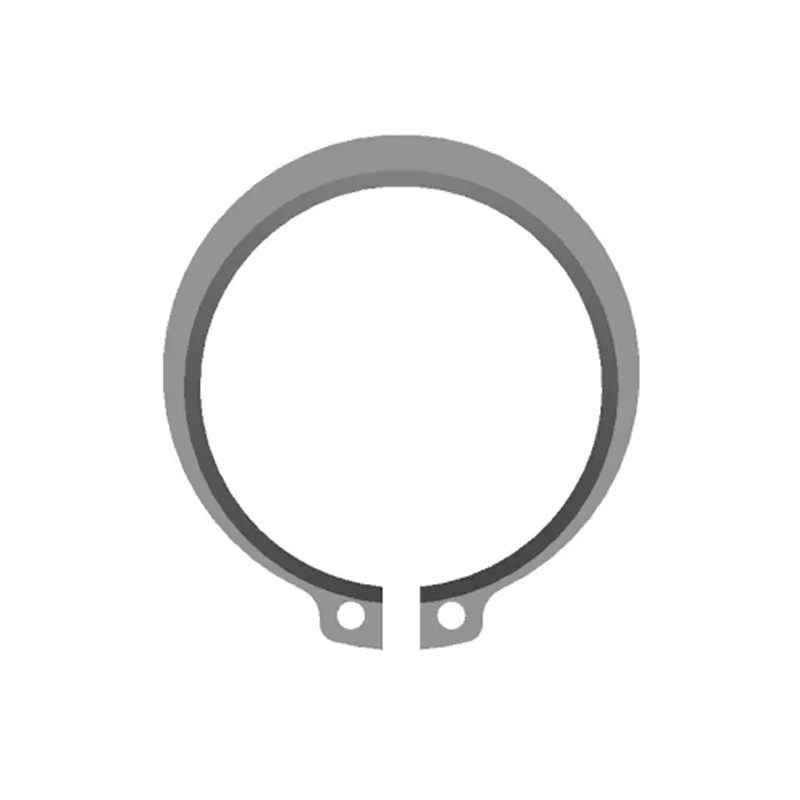
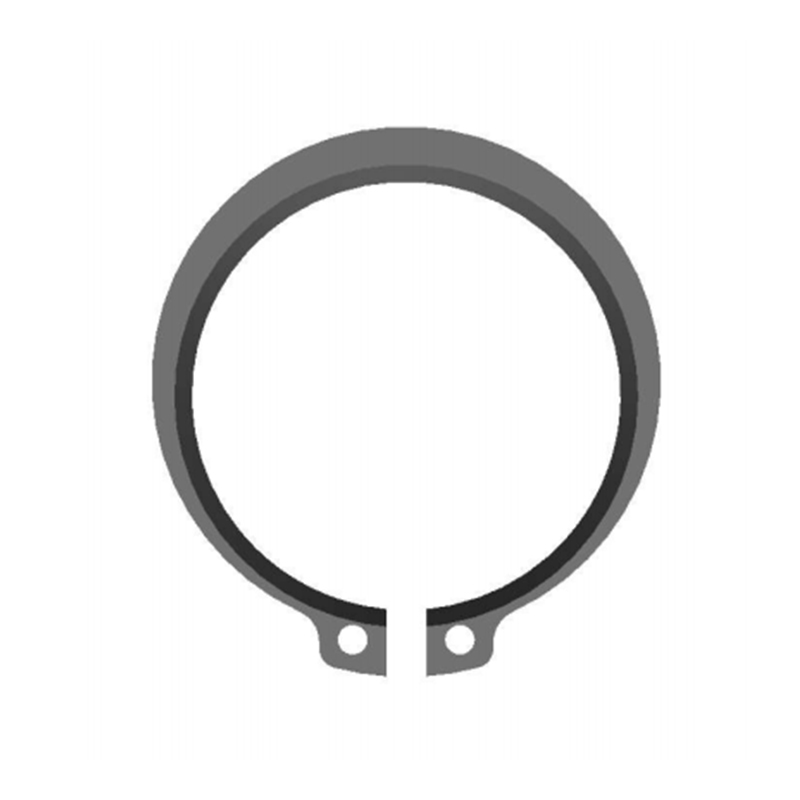 DIN 471 External Circlips for ShaftsDIN 471 shaft circlips for axial retention, available in carbon and stainless steel with sizes to 1000 mm and customization options.View Product →
Shaft-side retaining rings are one of the shapes where this chemistry is worth the trouble: a DIN 471 pattern produced from A286 strip, aged after forming, keeps its radial load at exhaust-frame temperatures where a carbon spring steel ring has long since relaxed.
A286 Against the Alloys You Already Stock
Most sourcing decisions are not "A286 or nothing" but "A286 or the grade already in the rack". The comparison below uses indicative room-temperature values for aged material; the service ceiling column is the one that usually settles the argument.
Two conclusions follow. First, A286 is rarely the strongest option on the list; its value is being the cheapest alloy that still meets a requirement above roughly 450 °C. Second, at anything below 300 °C, choosing A286 buys nothing but a longer lead time, a harder machining route and a heat-treat certificate you did not need.
Where 17-4PH reaches its limit is exactly where A286 starts to matter: continuous duty around 400–500 °C under load, or repeated excursions to 600 °C where the martensitic grade overages and loses hardness permanently rather than temporarily.
The Number Buyers Miss: Retained Strength at Temperature
Quotes are compared on room-temperature tensile data. The variable that actually keeps a circlip seated in its groove is retained strength at operating temperature, and above about 500 °C the governing property becomes stress-rupture life rather than short-term tensile at all.
That curve produces three design consequences. A ring sized on room-temperature data at 650 °C will be under-specified by roughly a fifth before any relaxation is considered. Time at temperature matters more than the peak: a short excursion is a tensile problem, an eight-thousand-hour duty cycle is a rupture problem, which is why AMS 5731-class bar stock is routinely released against stress-rupture tests. And the groove the ring seats in must be able to take the same load — a hardened A286 ring in a soft 316 housing simply deforms the housing instead.
Where A286 Parts Are Actually Consumed
The demand pattern explains the supply pattern. A286 is bought in relatively small lots, by industries that need documentation more than they need tonnage, which is why strip and small bar are less freely stocked than 17-4PH.
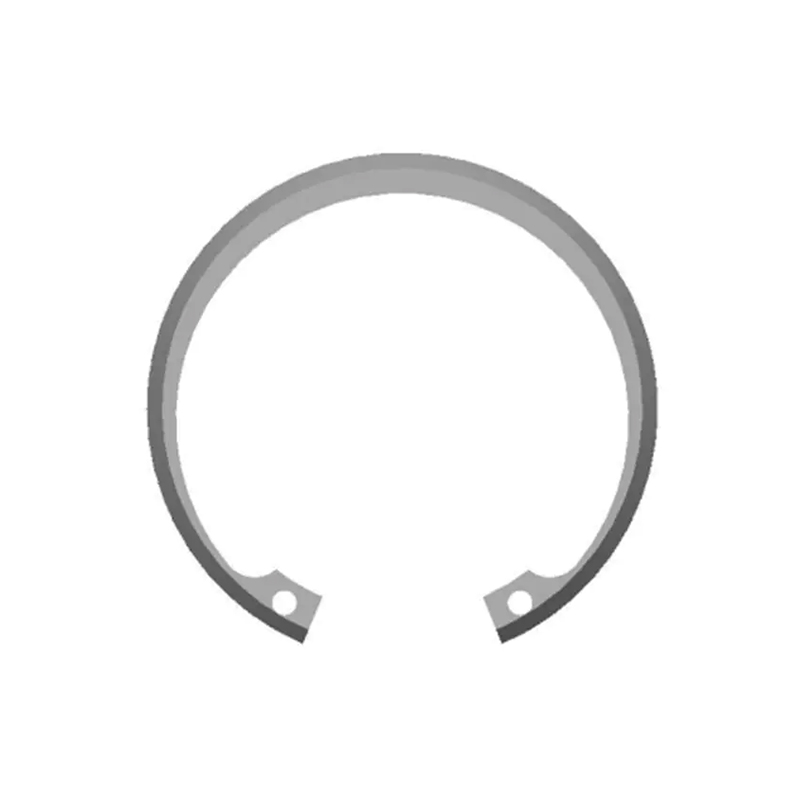
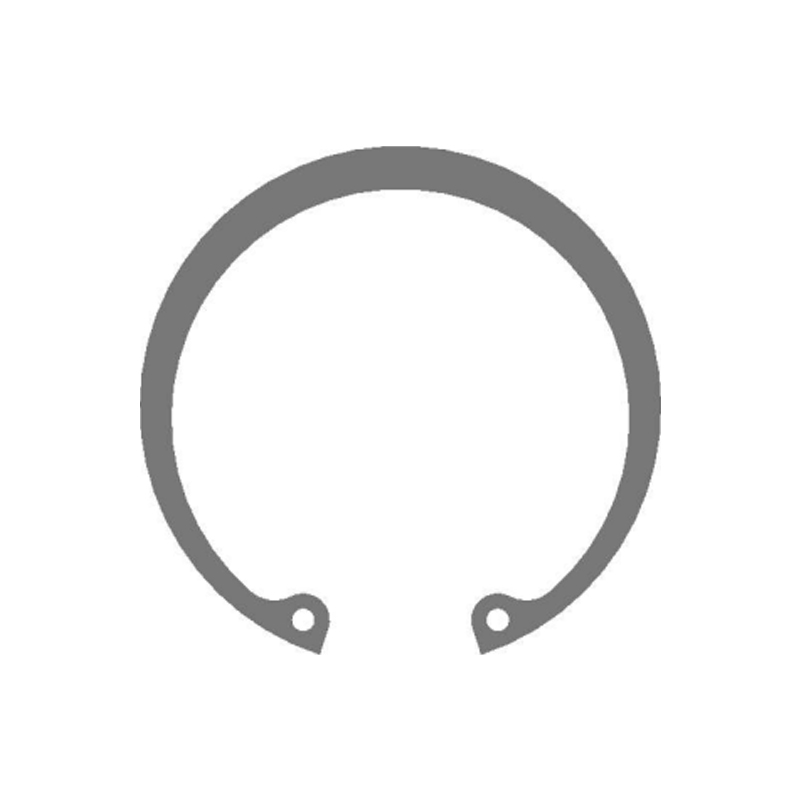 Internal Circlips-DIN472 Metric SuppliersHome / Products / Internal Circlips / Internal Circlips-DIN472 MetricView Product →
The bore-side equivalent, a DIN 472 pattern internal ring, follows the same logic in reverse: the ring is loaded in compression against the groove wall, so the material's ability to hold hoop stress at temperature matters as much as its hardness at room temperature.
From Drawing to Release: a Six-Step Qualification Path
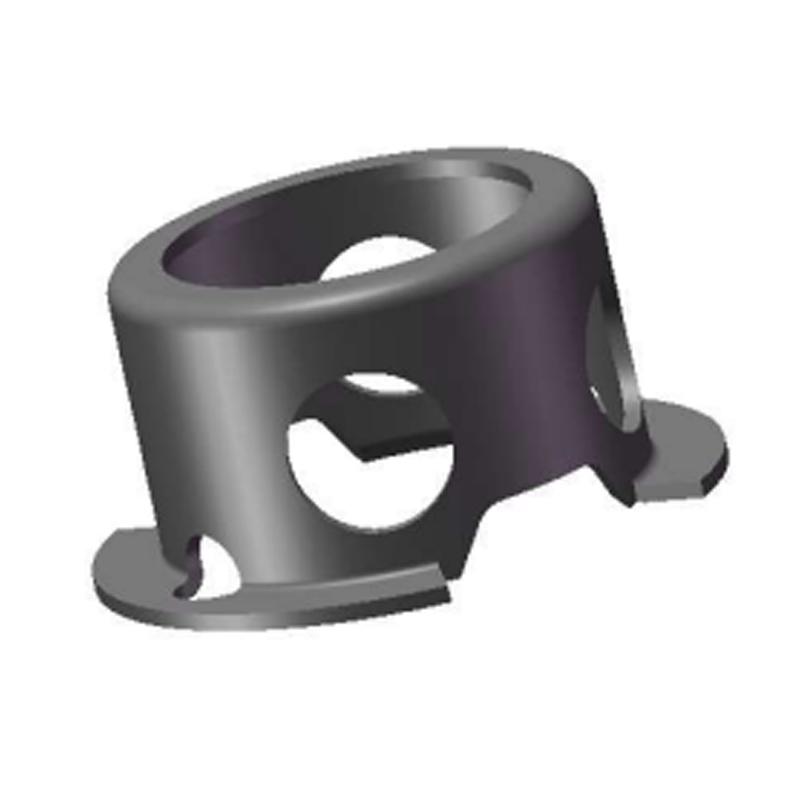
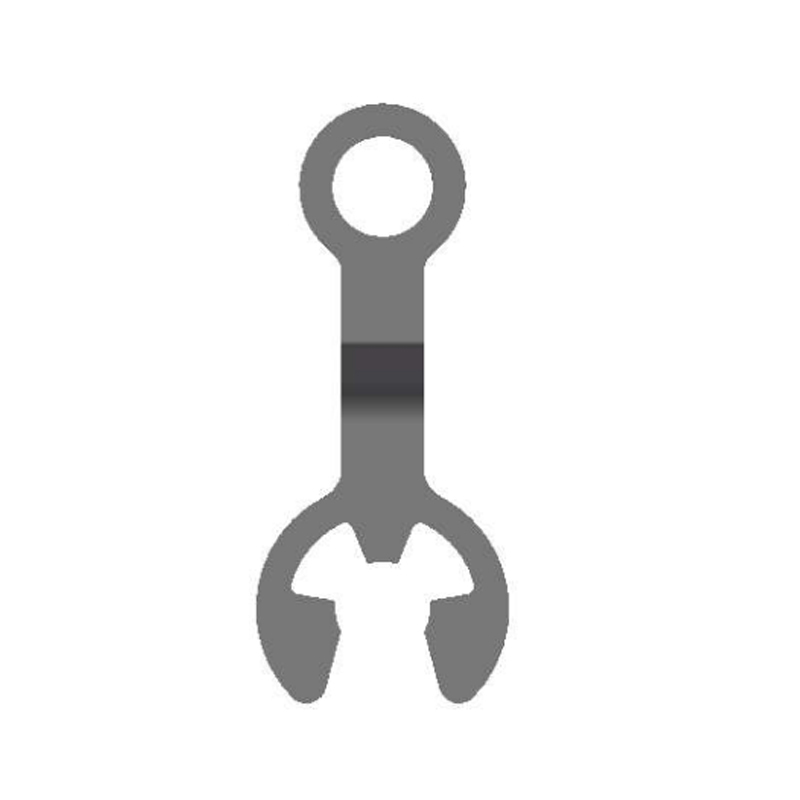 Corrosion-Resistant Special-Shaped Split Retaining RingsCustom split retaining rings in corrosion-resistant materials, with special-shaped geometry for secure fit in harsh environments and frequent assembly/disassembly.View Product →
Custom stampings are where step 3 most often goes wrong: a bracket or split ring reworked after aging will show no visible defect and still fail on the bench. Suppliers with in-house heat treatment and optical sorting close that gap far more reliably than a chain of subcontractors, which is worth checking through the custom manufacturing route before the drawing is released.
Maintenance and Compliance Notes That Bite Later
A286 parts rarely fail in the first month. The failures that do occur cluster around assembly practice and paperwork.
- Galling. High-nickel austenitic surfaces seize against themselves. Use a molybdenum-disulphide or nickel-based anti-seize on threads and lug contacts, and control torque rather than tightening until it feels right.
- Passivation. Citric-acid passivation to ASTM A967 is generally the safer route for titanium-bearing alloys; confirm the method on the purchase order rather than assuming nitric.
- Reuse. Retaining rings that have seen thermal cycling should be treated as single-use. The visible ring looks fine; the residual spring load does not.
- Environment. Aqueous chloride service above roughly 60 °C carries a stress-corrosion-cracking risk, and hydrofluoric-acid media should rule the alloy out entirely.
- Identification. Permanent marking and lot segregation matter more than usual, because A286 and 316 parts of the same geometry are visually indistinguishable on the shop floor.
None of these points requires an exotic supply chain. They require a supplier that controls stamping, heat treatment and inspection under one quality system, so the aging record can be tied back to the strip lot it came from — the kind of process control described in Dongbo's manufacturing flow.
If the service temperature stays under 400 °C, A286 is usually an expensive way to buy reassurance, and a well-specified 17-4PH or 316 part will out-last and out-ship it. Above roughly 450 °C, under sustained load, the calculation flips: the alloy's retained strength and stress-rupture behaviour turn a marginal design into a durable one, and the extra cost per part is small next to the cost of a field failure. The decision rests on three numbers — continuous temperature, sustained load, and required life — and on one process rule that no certificate can substitute for: form first, age last.