English
 中文简体

A shipment of alloy steel coil can clear every paperwork check and still stop a stamping line inside a single shift. The mill certificate says 65Mn, the calliper says 2.5 mm, and yet the strip splits at the bend radius, the blanked rings come off the tool with a wavy edge, and scrap quietly climbs into double digits.
The reason is simple: alloy steel coil is a semi-finished input. Every property that decides whether a retaining ring springs back correctly — hardenability, edge condition, decarburisation depth, thickness consistency along the strip — is set at the steel mill and inherited by the press, the heat-treatment furnace and the assembly line. Buyers who treat coil as a commodity inherit the problems; buyers who specify it as a process input avoid them.
The short version
- Select coil by part function, not by habit. Retaining rings and disc springs need spring grades such as 65Mn or 50CrV4; brackets and limit cages work well with lower-carbon, higher-strength grades.
- Thickness tolerance, slit edge quality and decarburisation depth move stamping yield more than the headline grade name does.
- Specify delivery condition and heat-treatment route together, because hardenability only pays back when the two match.
Content
What Alloy Steel Coil Actually Is
Alloy steel coil is carbon steel to which controlled amounts of manganese, chromium, vanadium, molybdenum or silicon have been added, then hot-rolled or cold-rolled and wound into a continuous strip. Against plain carbon coil of similar carbon content, those additions change three things that matter to a fastener manufacturer: how deep the section hardens, how much strength survives at temperature, and how consistently the material behaves through repeated forming and heat treatment.
The coil geometry is part of the specification too. Strip arrives with inner diameters of roughly 400–610 mm, in weights from a few tonnes to well over ten, and typically in thicknesses from 0.2 mm to 6 mm. That geometry drives the slitting plan, the press feed system and how much material is left on the coil at the end of a run — a genuine cost line when you blank millions of rings a year.
Chemistry
Carbon of 0.35–0.75% plus Mn, Cr, V or Mo. A fraction of a percent of vanadium shifts hardenability further than several tenths of carbon alone.
Delivery condition
Annealed, spheroidise-annealed, cold-rolled or hot-rolled pickled. Spheroidised strip forms cleanly into circlip lugs; cold-rolled strip holds tighter thickness bands.
Edge condition
Slit or mill edge, with defined burr limits. Burr above roughly 3% of thickness becomes a crack starter once the strip is bent into a ring.
Downstream route
Decoiling, slitting, blanking, hardening and tempering, surface treatment, optical sorting. Each step tightens what the upstream coil must deliver.
In practice, the chain runs from coil to finished part in one continuous sequence: decoil and slit to the exact strip width, blank and form the ring or washer, quench and temper to the target hardness, then blacken, phosphate or plate, and finish with automated optical screening and mechanical testing. That is why a producer with in-house rolling, stamping and heat-treatment capability can hold tolerances that a pure trader cannot, simply because the coil specification and the furnace recipe are tuned against each other rather than negotiated between three parties.
Comparing the Grades Used for Stamped Parts
The table below gives typical, not guaranteed, values. Real numbers move with thickness, mill practice and tempering temperature, so always confirm against the mill certificate and your own incoming inspection.
Two practical notes. First, 42CrMo delivers high strength at lower hardness, which makes it a better match for structural stampings than for parts that must flex and recover. Second, moving from C67S to 65Mn rarely changes the blanking tool, but it can change the spring-back allowance — so re-validate the die rather than assuming a drop-in swap.
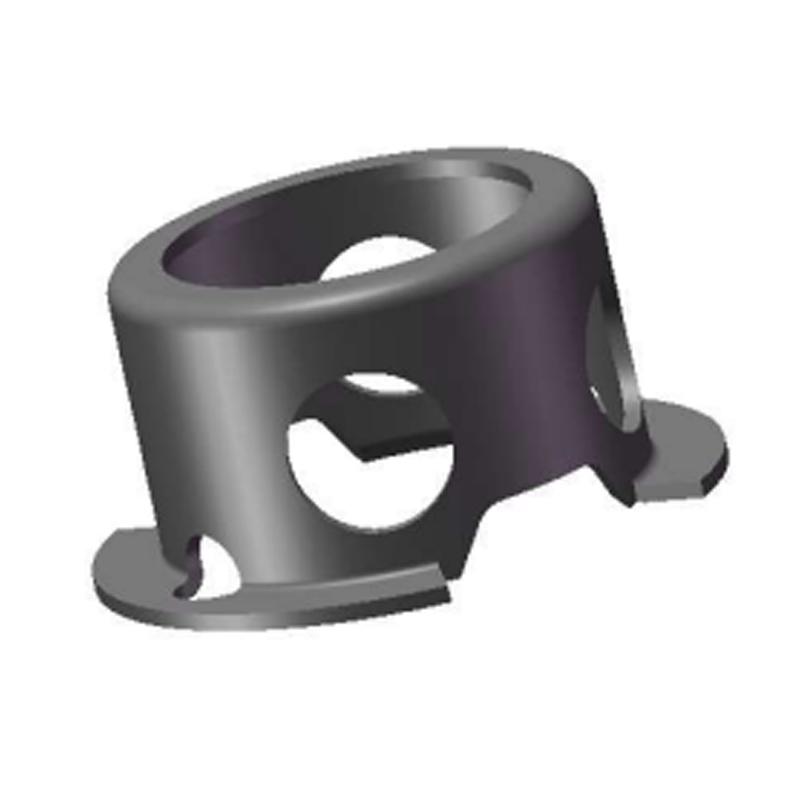 Wear-Resistant Limit Cage for High-Stress AssembliesCustom limit cage for guiding or limiting moving parts in high-stress hydraulic, pneumatic, and machinery assemblies, with multiple steel and polymer options.View Product →
The Hidden Indicators That Decide Yield
Ask a stamping engineer where the scrap comes from and the answer is rarely the grade name. In our experience across circlip and washer production, the losses cluster around a handful of coil characteristics that never appear on a one-line purchase order.
- Edge quality. A burr taller than about 3% of strip thickness acts as a stress raiser. On a hardened 65Mn ring it becomes a fatigue origin, not just a cosmetic issue.
- Thickness variation across the strip. Crown or wedge profiles shift the bend allowance, so one side of the ring opens differently from the other and the groove fit suffers.
- Decarburisation. A soft surface layer on an otherwise correct alloy coil will not reach full hardness after quenching, and the part fails the load test while the certificate still looks perfect.
- Banding and segregation. Elongated inclusions align with the rolling direction, so parts blanked across the strip behave differently from parts blanked along it.
All of these are measurable. A decarburisation check on a mounted cross-section, a thickness profile scan every few metres, and a hardness traverse on a finished part will tell you more about a supplier than three pages of certificates.
Where the Coil Ends Up: Application Split
In a stamping portfolio built around axial retention and load distribution, alloy steel coil consumption splits roughly as shown below. The mix matters for procurement because each group carries a different hardness window and a different edge-quality requirement.
Automotive, wind power and construction absorb most of this output, and each pushes the coil in a different direction. Automotive buyers ask for consistent hardness and tight groove-fit tolerances; wind and heavy construction ask for toughness and corrosion protection on larger sections. Both end up demanding the same thing from the coil: predictable behaviour, batch after batch.
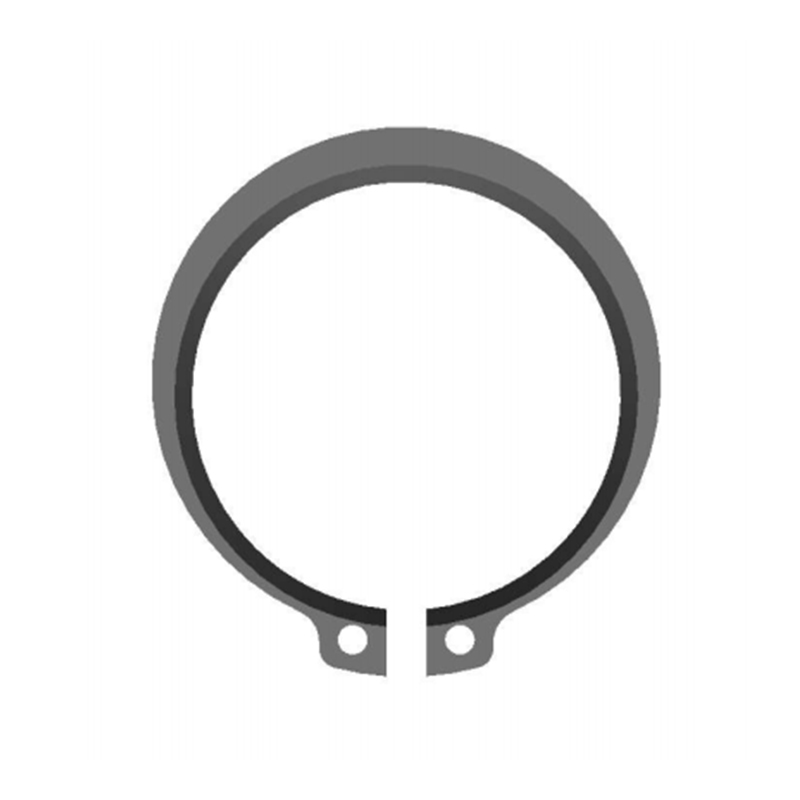 DIN471 External Circlips for Shaft RetentionExternal retaining rings for shafts that maintain axial position and reduce vibration, available in carbon and stainless steel with sizes up to 1000 mm.View Product →
A Five-Step Coil Selection Sequence
Define the function. Does the part hold axially, distribute load, or carry structure? A part that must deflect and recover needs spring steel; a bracket does not.
Match hardenability to section size. Thick sections in low-hardenability steel stay soft at the core after quenching. If the part is above roughly 3 mm, lean toward Cr or Cr-V grades.
Fix thickness and width tolerance. State the allowable thickness band and the slitting width tolerance explicitly; a nominal figure alone leaves the mill free to choose.
Set the delivery condition. Spheroidise-annealed strip for severe forming, cold-rolled for tight thickness control, pickled hot-rolled where cost dominates and forming is mild.
Lock traceability. Require heat numbers on every coil, retained samples, and a spectrometer check on arrival so the certificate can be verified against the metal.
Where the part is not in a catalogue at all, the sequence shifts: the coil grade is chosen alongside the tool design, and forming trials decide whether a lower-alloy grade can do the job. That is the normal path through custom stamping development, and it usually saves cost compared with over-specifying a spring grade for a part that never flexes.
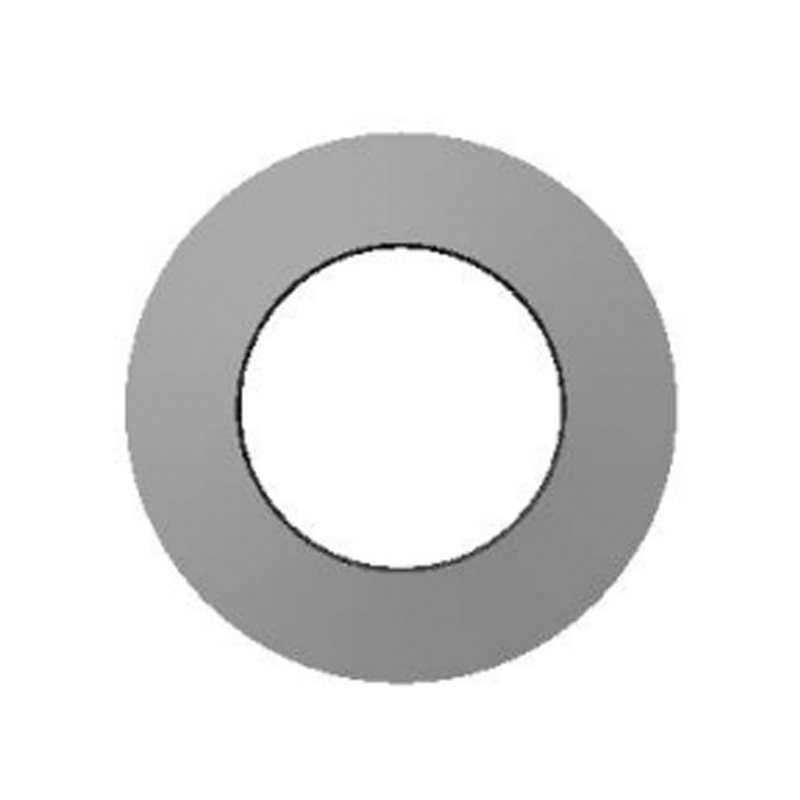 DIN2093 High-Load Belleville Spring WashersConical disc springs that maintain bolt pressure and compensate slack in flange, machinery, and automotive joints, with multiple alloy steel and coating options.View Product →
Storage, Inspection and Compliance
Coil handling is where good specifications quietly degrade. Stored upright or stacked without dunnage, a 5-tonne coil will ovalise and the inner wraps will rub, producing edge damage that only shows up three operations later.
- Store horizontally on saddles or timber, with the coil axis parallel to the floor, and never stack more than the packaging rating allows.
- Control atmosphere. Annealed and cold-rolled alloy strip rusts quickly; keep coils wrapped, oiled where agreed, and away from condensation cycles.
- Follow first-in, first-out. Barcode identification at goods-in, tied to the ERP record, keeps heat numbers recoverable years later.
- Inspect on arrival. Spectrometer verification of chemistry, tensile and hardness checks, thickness profile, and a decarburisation assessment on a cross-section.
- Align with recognised standards. EN 10132 for cold-rolled strip, GB/T 1222 for spring steels, JIS G4801 where Japanese specifications apply — plus the drawing-level tolerances agreed with the customer.
Compliance is largely a documentation discipline: heat-number traceability from coil to carton, retained test coupons, and calibrated test equipment. A laboratory accredited to CNAS or an equivalent scheme makes the difference between an internal claim and evidence a customer's auditor will accept — and it is what turns a coil purchase into a defensible quality record.
None of this is exotic. It is the ordinary discipline of treating alloy steel coil as the first step in a manufacturing process rather than the last step in a purchasing transaction. Do that, and the complaints that used to arrive with the scrap bin stop arriving at all.