English
 中文简体

A maintenance team replaces a 304 stainless retaining ring after a short service interval because the part has relaxed and no longer holds the bearing. The alloy is not defective. The specification simply assumed that “stainless” could be hardened like carbon steel. That assumption is the start of most costly mistakes in stainless fastener selection.
High-value conclusion: hardening stainless steel is grade-dependent. Martensitic and precipitation-hardening grades respond to controlled heat treatment; austenitic grades such as 304 and 316 are strengthened by cold work, not by quench hardening. For circlips, washers, and stampings, the correct route is chosen from alloy family, required hardness, corrosion exposure, and the standard governing the part.
Content
- 1 What Hardening Stainless Steel Really Means
- 2 Grade-by-Grade Hardening and Performance Comparison
- 3 The Hidden Variable: Corrosion and Toughness Trade-Offs
- 4 Where Hardened Stainless Components Earn Their Keep
- 5 ROI and Selection Guide for Fasteners
- 6 Maintenance and Compliance Notes That Prevent Field Failures
What Hardening Stainless Steel Really Means
Hardening is not a single operation. It is a sequence of heating, holding, cooling, and tempering that changes microstructure. In stainless steel, the starting crystal structure determines whether that sequence works at all.
Martensitic grades
410, 420, 440C, and similar grades can be austenitized, quenched, and tempered. Hardness is real, but corrosion resistance and toughness depend heavily on tempering temperature.
Austenitic grades
304, 316, and 321 are not hardened by heat treatment. They gain strength from cold rolling or drawing. A request for 304 at 40-45 HRC by quenching is a specification error, not a supplier limitation.
Precipitation-hardening grades
17-4PH and similar alloys are solution-treated and aged. They offer a practical balance of strength, machinability, and corrosion resistance for precision fasteners.
The practical implication is simple: before discussing hardness, confirm the alloy family. For retaining rings and stampings, this decision also affects spring temper, edge quality, and dimensional stability. A manufacturer with in-house heat treatment and automated optical sorting can control the sequence, but the drawing must still specify the correct grade and condition.
- Do not use “harden stainless” as a standalone note on a drawing.
- State the alloy, the desired hardness range, and the governing standard.
- Define the post-hardening surface condition, especially passivation and freedom from scale.
Grade-by-Grade Hardening and Performance Comparison
The comparison below is a selection view, not a mill certificate. It shows why the same hardness number can mean very different field performance.
For circlips, the hardness window is not decorative. Too soft, and the ring deforms during installation or loses axial load. Too hard, and the lug or section may crack when spread. That is why a drawing should define both bulk hardness and functional testing, not just a single Rockwell value.
The Hidden Variable: Corrosion and Toughness Trade-Offs
Hardening stainless steel often improves wear resistance while reducing corrosion resistance. Tempering can restore toughness, but it may also precipitate carbides that leave the surface less passive. The chart below uses an illustrative index to show the direction of the trade-off.
A hardened 440C washer may resist abrasion in a dry pivot, yet show rust staining in a humid plant. A lower-hardness 420 part may last longer if the environment contains chlorides and the load is moderate. The selection question is not “which is hardest?” but “which condition survives the real duty cycle?”
- Specify passivation after grinding, tumbling, or heat treatment when corrosion resistance matters.
- Avoid over-tempering thin retaining rings where spring temper is the functional requirement.
- Review hydrogen embrittlement risk when high-strength parts receive electroplating, even on stainless grades.
Where Hardened Stainless Components Earn Their Keep
Demand is concentrated where wear, spring force, and corrosion appear together. The distribution below reflects typical industrial fastener and retaining-ring applications rather than a single market study.
Automotive and transport assemblies: 42%
Wind, energy, and heavy equipment: 28%
Building hardware and industrial machinery: 18%
Food, medical, and special machinery: 12%
In automotive and wind applications, a circlip may be small, but its failure can stop an entire assembly. In building hardware, the same part may face outdoor moisture and seasonal temperature swings. The hardening route must be tied to that exposure, not copied from a nearby carbon-steel part.
ROI and Selection Guide for Fasteners
The lowest purchase price is rarely the lowest total cost when a retaining ring fails during commissioning. A practical selection sequence looks like this:
1. Define the duty
Record axial load, vibration, installation method, temperature, and cleaning chemicals before choosing a grade.
2. Match the alloy
Use austenitic grades for corrosion-first duty, martensitic grades for wear-first duty, and PH grades for a balanced high-strength part.
3. Verify the process
Ask for hardness range, tempering condition, passivation, and lot traceability. These details decide whether the part behaves as specified.
For shaft retention, DIN 471 external circlips are a common starting point when the groove and load direction are already defined. The product family below can be reviewed against the drawing and duty cycle.
 DIN 471 External Circlips for Shaft RetentionDIN 471 external circlips cover shaft retention with size, material, and surface options for drawing and duty-cycle review.View Product →
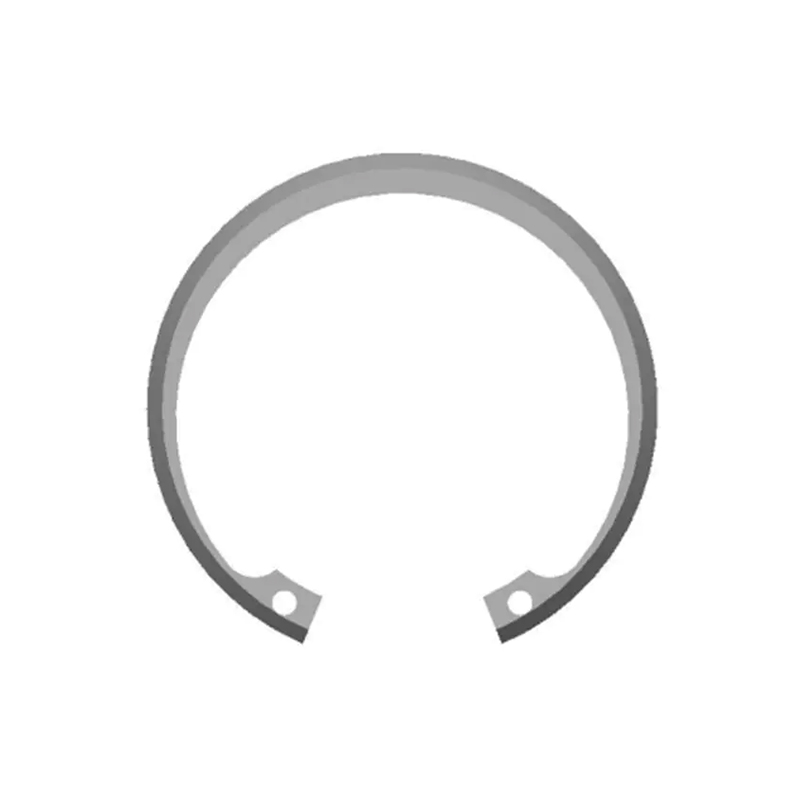
For bore retention, DIN 472 internal circlips serve the matching role inside a housing. Confirm groove depth, ring thickness, and installation clearance before converting a design to stainless.
 DIN 472 Internal Circlips for Bore RetentionMetric DIN 472 internal circlips support axial retention in housings, with size, material, surface-treatment, and customization options for assembly review.View Product →
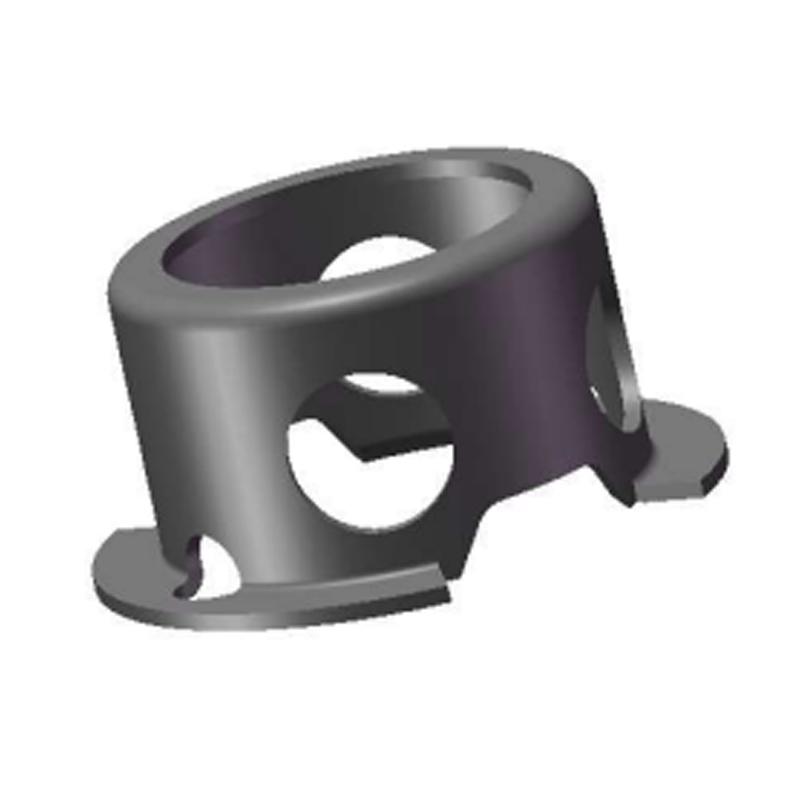
When the assembly needs a non-standard shape, bracket, or corrosion-resistant retaining feature, a custom stamping and retaining-ring development route is usually more economical than forcing a catalogue part into a poorly matched groove.
Maintenance and Compliance Notes That Prevent Field Failures
Hardening stainless steel does not end at the heat-treat furnace. The part must remain clean, correctly installed, and traceable through maintenance.
- Store hardened rings away from carbon-steel dust and machining debris to avoid free-iron contamination.
- Use installation tools that spread or compress the ring evenly; point loading is a common cause of cracks in hard stainless.
- Re-check passivation after field grinding or repair, because a disrupted passive layer can rust even on a corrosion-resistant grade.
- Keep certificates for alloy grade, heat number, hardness, and surface treatment where the application is audited.
In wet or chloride-bearing service, the retaining feature should be reviewed as a system: groove finish, mating material, lubricant, and ring hardness all interact. A corrosion-resistant special-shaped split retaining ring is one option when a standard ring cannot provide the needed geometry and surface protection.
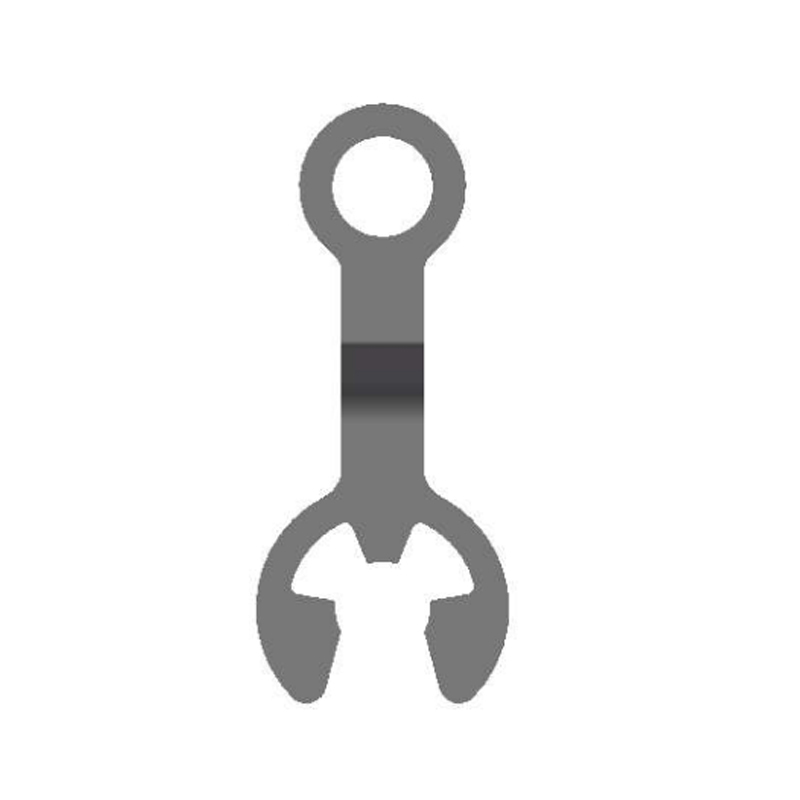 Corrosion-Resistant Special-Shaped Split Retaining RingsCustom split retaining rings use corrosion-resistant materials and tailored geometry for shafts or bores where standard rings cannot meet the required fit.View Product →
Document the approved condition, not only the alloy name. “Stainless, hardened” is too vague for procurement, inspection, and maintenance. A complete callout names the grade, hardness range, heat-treatment condition, passivation requirement, and acceptance test.
The reliable path is to treat hardening stainless steel as an alloy-selection decision first and a heat-treatment decision second. Once the grade and duty cycle are aligned, hardness becomes a controlled manufacturing parameter rather than a hopeful note on a drawing. That shift reduces rework, prevents premature ring failure, and makes the total cost of the fastener visible before the first shutdown.