English
 中文简体

The drawing says “cold drawn steel,” but the purchase order needs a process, a temper, and a tolerance. That is the usual gap when a shaft circlip, bearing retainer, disc spring, or stamped washer moves from prototype to series supply. Cold drawn steel is not a single grade; it is a condition produced by pulling hot-rolled bar or wire through a die at room temperature. The result is a smoother, straighter, more dimensionally consistent feedstock with higher strength, but also with residual stress and reduced ductility that must be engineered rather than assumed. For fasteners, the practical benefit is fewer sizing surprises at the press or turning center; the practical risk is treating “cold drawn” as a complete specification.
Bottom line for buying teams
- Cold drawn steel is a process condition, not a grade. Specify the base steel, drawing reduction, thermal treatment, and final mechanical properties.
- Tight tolerances and scale-free surfaces reduce secondary machining and scrap, especially on circlips, washers, and thin stamped parts.
- Strength rises and ductility falls. Springback, cracking, and residual stress need validation in forming and heat treatment.
- Compare price at finished-part yield, not per kilogram. Straightness, near-net section, and stable feed can lower total cost.
Content
- 1 What Cold Drawing Changes in the Steel
- 2 Cold Drawn vs Hot Rolled vs Cold Rolled: A Practical Comparison
- 3 Hidden Mechanical Effects Buyers Should Verify
- 4 Where Cold Drawn Steel Fits: Application Mix
- 5 Selection Workflow for Procurement and Engineering
- 6 Maintenance, Traceability, and Compliance Notes
What Cold Drawing Changes in the Steel
Cold drawing starts with hot-rolled bar or wire that is cleaned, coated with lubricant, pulled through a die, straightened, and cut. The die reduction cold-works the surface and compresses the section. Typical drafts refine diameter and ovality, improve straightness, and produce a smooth finish. Because the material stays below its recrystallization temperature, dislocations multiply, raising tensile and yield strength while lowering elongation. The trade-off is stored energy: residual stress and a harder surface can help or hurt later blanking, coining, and bending.
Tolerance and straightness
Cold drawn bar commonly holds tighter diameter and straightness than hot rolled. That matters on bar-fed lathes and progressive presses, where small feed variation becomes scrap or tool wear.
Surface condition
A scale-free, smoother surface improves die life and coating uniformity. Still verify seams, laps, decarburization, and handling marks, because a cosmetic improvement can hide a longitudinal defect.
Mechanical uplift
Industry cold-drawing data show that a standard draft can raise tensile strength by roughly 25–30%. Yield strength also increases, while elongation and reduction of area fall.
Stress and formability
Residual stress can cause distortion after slotting, coining, or heat treatment. Stress-relief annealing may be needed for severe forming or for parts that must hold flatness after machining.
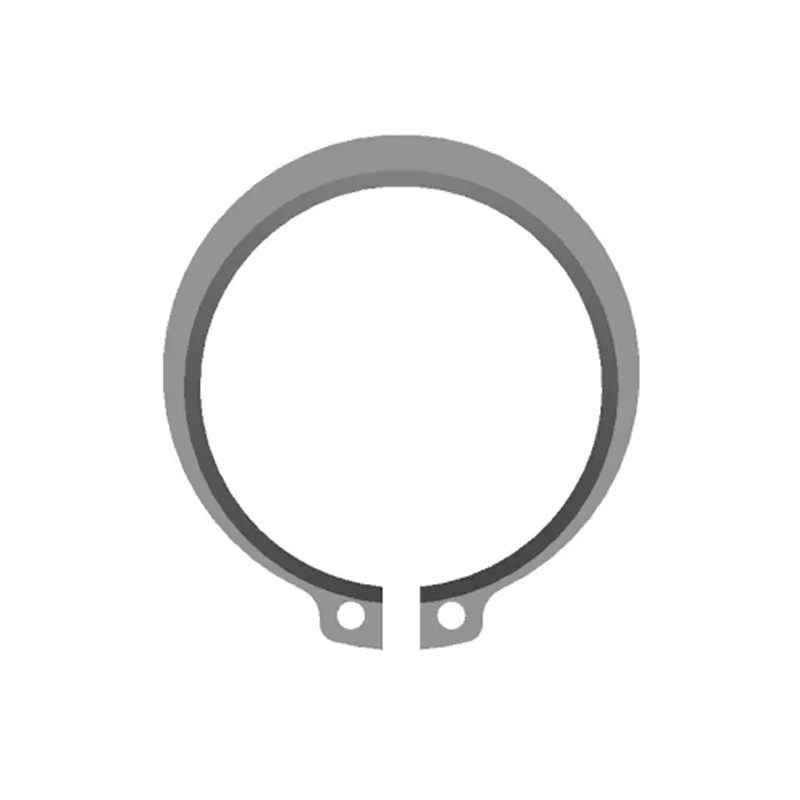
A shaft circlip is a useful example. The ring must seat in a groove, resist axial load, and survive installation without taking a permanent set. If the feedstock is cold drawn but the stress-relief step is skipped, the part may pass dimensional inspection and still crack at the lugs. For a typical shaft-retaining application, compare groove geometry and material condition against a standard family such as:
 DIN471 External Circlips for ShaftsCompare groove geometry and material condition using this DIN471 family, which lists sizes, load capacities, materials, and surface treatments for shaft retaining rings.View Product →
The drawing callout should state the base steel grade, wire or bar condition, and final hardness, not just “cold drawn steel.”
Cold Drawn vs Hot Rolled vs Cold Rolled: A Practical Comparison
“Cold rolled” and “cold drawn” are often used interchangeably in conversation, but they are not the same purchasing route. Cold rolling reduces thickness on a mill; cold drawing pulls a round or shaped section through a die. Both work-harden steel, but the dimensional result, shape capability, and cost base differ.
Comparison is directional and depends on steel grade, drawing reduction, and thermal treatment.
Procurement should compare total cost, not the bar price alone. A cold-drawn bar may cost more per kilogram, but it can eliminate straightening, reduce machining allowance, and stabilize press feed. Because cold drawing converts mill variation into a controlled feedstock, incoming material control, heat treatment, and surface preparation matter as much as the drawing callout; a supplier with in-house manufacturing and heat-treatment control can hold those variables release to release.
Hidden Mechanical Effects Buyers Should Verify
The visible benefit is dimensional. The hidden effects are mechanical and residual. The chart below uses directional indices to show what a standard cold-drawing draft typically does to a hot-rolled feedstock; it is a screening aid, not an acceptance limit.
Hot-rolled tensile: 100
Cold-drawn tensile: 125–130
Cold-drawn yield: 115–125
Ductility: 70–85
Straightness gain: high
Use these indicators to ask better questions. The purchase specification should define test methods, sampling, and whether properties are guaranteed on the drawn bar or after heat treatment. Verify tensile and yield strength, elongation, hardness, residual stress or stress-relief condition, surface defects, and straightness. For parts that are slotted, coined, or bent after drawing, run a forming trial that includes the actual lot and lubrication.
- Ask whether the mill or drawer supplies mechanical properties at the final cold-drawn size.
- Confirm stress-relief annealing when the part has tight flatness or severe forming.
- Check seam and decarburization limits for small-section circlips and spring-like washers.
Where Cold Drawn Steel Fits: Application Mix
Cold drawn steel is common where a small section must carry load with little machining: automotive clamps and retaining rings, wind turbine pitch and yaw assemblies, building hardware, and general machinery. The mix below is an illustrative planning view for cold-drawn fastener and stamped components, not a market statistic.
Automotive and transport — 45%
Wind and energy — 25%
Construction equipment — 20%
General machinery — 10%
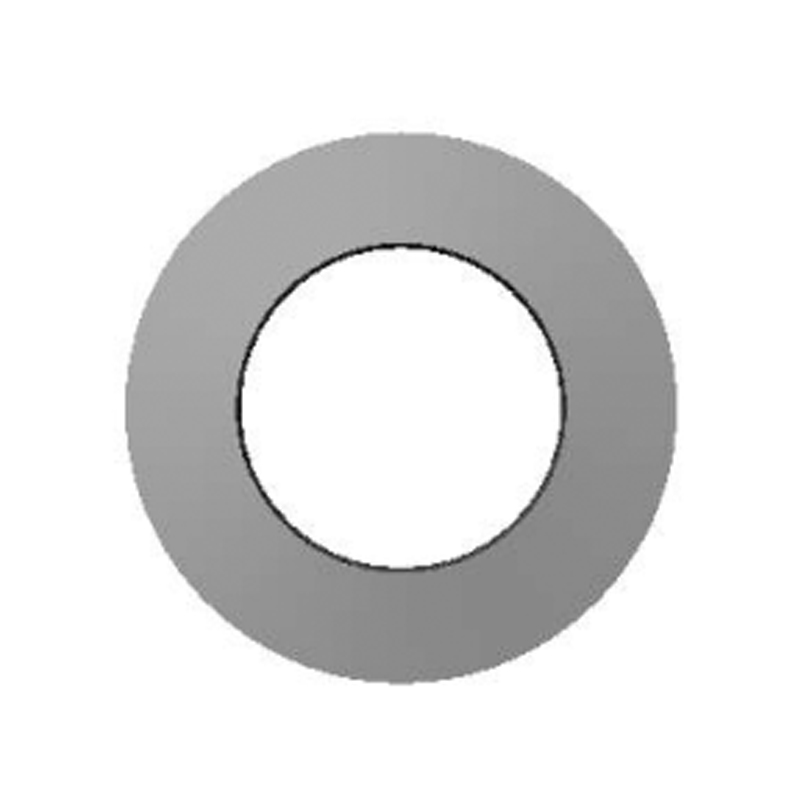
In wind and heavy equipment, high-load disc springs and retaining rings are often specified with cold-drawn or cold-rolled strip because preload must remain stable through vibration. A representative high-load disc spring family is:
 DIN2093 High-Load Belleville Spring WashersView this DIN2093 disc spring family for stable axial preload, with material and coating options suited to vibration and sealing applications.View Product →
The same logic applies to automotive bearing retainers and building hardware: the cold-drawn condition helps hold a consistent blank, but coating, hardness, and installation direction still determine field performance.
Selection Workflow for Procurement and Engineering
A workable selection process keeps material, forming, and inspection tied to the part function. Use this sequence when cold drawn steel is proposed for a retaining ring, washer, or stamping.
- Define the function: axial retention, preload, load distribution, or structural support. The function sets the allowable hardness, toughness, and flatness.
- Fix the base grade and the cold-drawn condition. State the steel grade, drawing reduction range, and whether stress relief is required.
- Set tolerances by fit, not by mill convenience. Groove width, ring thickness, and bore or shaft clearance should drive the dimensional callout.
- Require mechanical and metallurgical reports. Include tensile, yield, elongation, hardness, and surface defect limits where they affect assembly.
- Validate forming and heat treatment together. Springback after coining, lug cracking, and distortion after hardening are process issues, not just material issues.
- Lock change control. Base steel source, drawing die wear, annealing cycle, and coating batch should trigger review before shipment.
If the drawing moves beyond standard rings into brackets, limit cages, or special-shaped rings, bring the stamping supplier into the drawing review before the tool is cut. Early product customization work can prevent a cold-drawn feedstock from being selected for a geometry it cannot form economically.
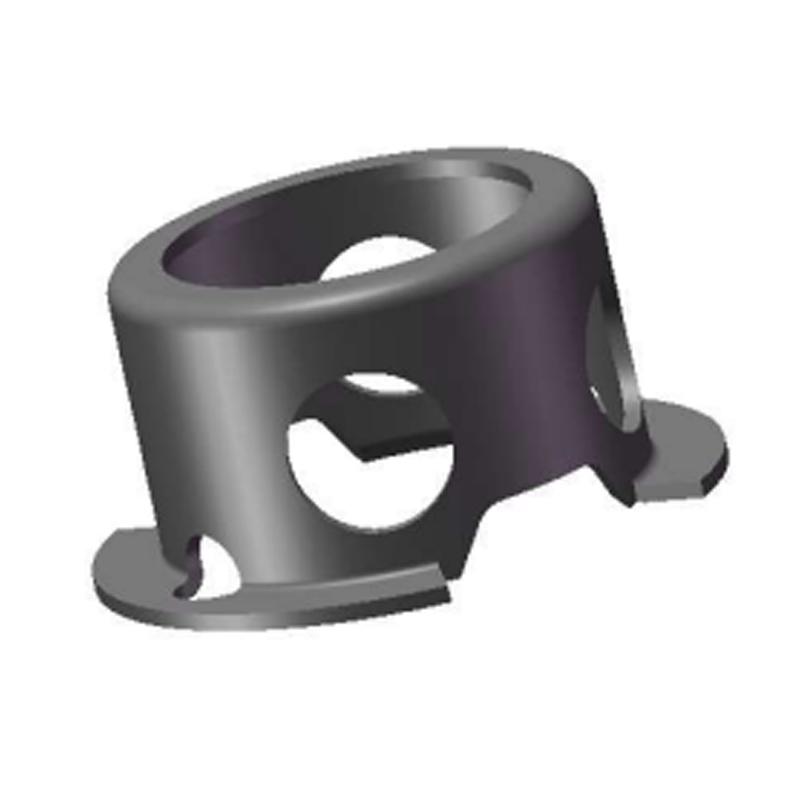 Custom Wear-Resistant Limit CagesFor special-shaped rings and limit cages, this custom stamped component supports drawing review with material, surface-treatment, and mold-development options.View Product →
Maintenance, Traceability, and Compliance Notes
Cold drawn steel is more sensitive to storage than hot-rolled stock because it has no mill scale to buffer moisture. A few practical controls protect the investment after receipt.
- Store bar and wire in a dry, elevated area and avoid condensation cycles. Cold-drawn surfaces can flash rust quickly.
- Protect straight bars from bending and coiled wire from kinking; handling damage can defeat the straightness benefit.
- Trace heat number, drawing lot, heat-treat batch, and surface-treatment batch through the production record.
- Keep material certificates, dimensional reports, hardness or tensile results, and coating test records with the lot.
- For coated or plated parts, confirm hydrogen embrittlement controls and baking requirements with the finisher.
- Apply change notification to base steel source, drawing reduction, annealing, and coating, because each can shift fit or fatigue life.
Cold drawn steel is a useful answer when a fastener or stamped part needs a stable blank, a smooth surface, and higher strength without extra machining. It is a poor answer when the drawing leaves the base grade, stress-relief condition, or final properties undefined. The safest purchase specification treats cold drawing as one step in a chain—steel grade, reduction, thermal treatment, forming, coating, and inspection—and holds each step to the part’s actual function.