English
 中文简体

A food-plant maintenance team replaces the same shaft retaining ring every 14 months. The ring is 17-4 PH, aged to H900 because that was the strongest column on the data sheet, and it keeps cracking at the lug where washdown water collects. The alloy is not the problem. The condition is. H900 buys roughly 1,310 MPa of yield strength and pays for it with most of the grade's chloride stress-corrosion margin.
The short answer: 17-4 (UNS S17400, AISI 630, EN 1.4542) is a martensitic precipitation-hardening stainless steel. You machine or stamp it in the soft solution-treated condition, then age it between 480 °C and 620 °C to reach anything from about 725 MPa to 1,310 MPa of yield strength. Specify it when you need strength beyond the 300-series and corrosion resistance beyond the 400-series, and when you control the aging step. Do not specify it when chlorides, hot acid, or a sustained service temperature above roughly 300 °C sets the limit.
Nearly every 17-4 failure we see traced back to the same root cause: the aging treatment was treated as a formality rather than as the reason the alloy exists.
Content
How the Precipitation-Hardening Mechanism Works
Solution treatment at about 1,040 °C dissolves the alloying elements into face-centred-cubic austenite. Air cooling then transforms that austenite into low-carbon lath martensite, not the hard, crack-prone plate martensite of a high-carbon tool steel. Because carbon is capped at 0.07%, the as-cooled structure is soft enough to machine and the cooling rate is gentle enough that distortion stays small compared with a quench-and-temper alloy steel.
Aging is where the strength comes from. Holding the part at 480–620 °C for one to six hours precipitates copper-rich phases only nanometres across, along with niobium carbides that pin grain boundaries. Those precipitates strain the martensite lattice and block dislocation movement. Age cooler and the precipitates stay fine and coherent, so strength peaks. Age hotter and they coarsen: strength drops, ductility, toughness and stress-corrosion resistance recover.
Chemistry does the work
Roughly 15.5–17.5% Cr, 3–5% Ni, 3–5% Cu and 0.15–0.45% Nb. Chromium builds the passive film, copper supplies the precipitate, niobium refines grain size and delays overaging.
One low-distortion step
No quench tank, no cracking risk, growth typically under 0.1%. That is why the grade suits finished-machined parts and formed rings that must hold tolerance.
Magnetic in every condition
Unlike 304 or 316, 17-4 stays ferromagnetic from Condition A through H1150. Relevant for sensor targets, magnetic clamping and any assembly where residual magnetism attracts debris.
Property Data by Condition
The aging curve is the specification. The values below are typical room-temperature figures for bar and small forgings to ASTM A564 or AMS 5643; heavy sections run lower, so always state where the test coupon comes from.
Notice what that trade really costs. In a circlip or a bolted joint, the difference between 1,310 MPa and 725 MPa yield rarely governs the design, because the groove, the thread or the section change fails long before the bulk material does. What governs is whether the part survives its environment for the service interval. On that measure, H900 is frequently the wrong choice and H1150 is frequently the right one.
The Numbers Most Data Sheets Bury
Yield strength is easy to compare and easy to over-value. The chart below places 17-4 against common alternatives at room temperature, using typical minimums rather than marketing figures.
205 MPa
205 MPa
275 MPa
655 MPa
725 MPa
1,310 MPa
The points that matter more than the bars:
- Chloride stress corrosion is the real ceiling. Tensile stress, chlorides and temperatures above roughly 60 °C form the classic combination, and the peak-aged condition is the least tolerant of it. Overaging to H1150 or H1150M is the standard mitigation.
- Sour service standards restrict the grade to overaged conditions. NACE MR0175 / ISO 15156 does not accept 17-4 in H900, so a valve stem or a wellhead fastener specified at peak strength is non-compliant before it is even machined.
- Hydrogen embrittlement risk rises with strength. If a 17-4 part at H900 must be electroplated, the bake cycle is not optional and the plating shop needs it written into the purchase order.
- Galling is common when 17-4 runs against 17-4 in sliding contact. Differing hardness, a dry-film lubricant or a change of one counterface solves it more cheaply than a material upgrade.
- Aging leaves a dark oxide that must be removed by pickling or mechanical means, otherwise the corrosion resistance you paid for never appears at the surface.
Where the Grade Earns Its Place
Consumption is concentrated in applications where a designer needs roughly twice the strength of 316 without stepping into a coating-dependent alloy steel. The split below is an indicative planning view, not a market study.
Aerospace, 30% — actuator hardware, fittings, high-strength fasteners and airframe components where AMS 5643 governs.
Oil and gas, 25% — valve stems, gates, seats and subsea hardware, almost always in an overaged condition.
Chemical and process, 18% — pump shafts, impellers, sleeves and mixers.
Food, paper and pharma, 12% — doctor blades, knives, shafts and washdown hardware.
Medical and laboratory, 8% — instruments and tooling; other industrial uses make up the remainder.
Specifying 17-4 Fasteners, Circlips and Stamped Parts
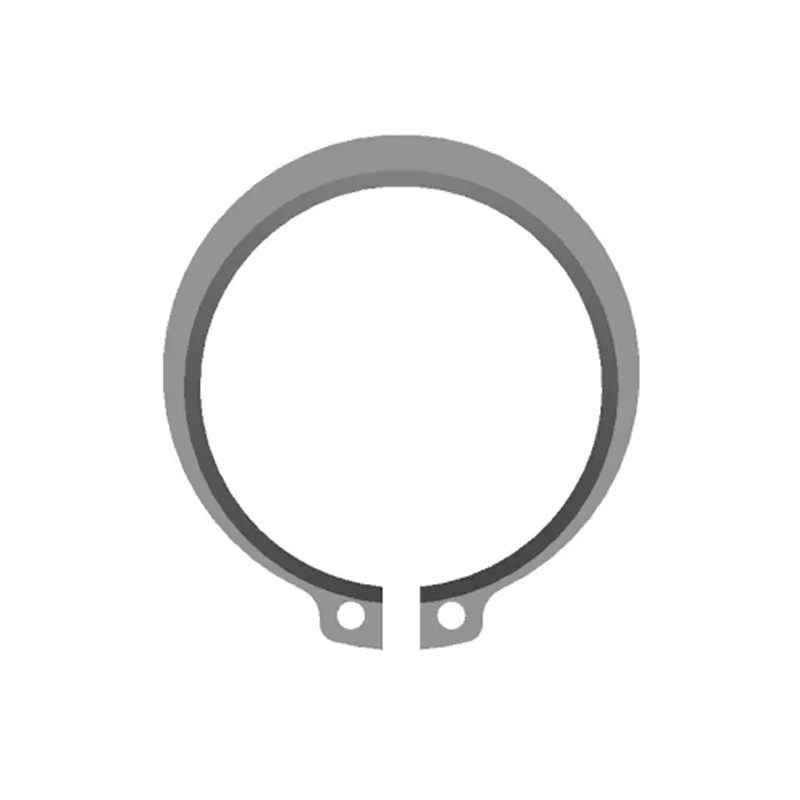
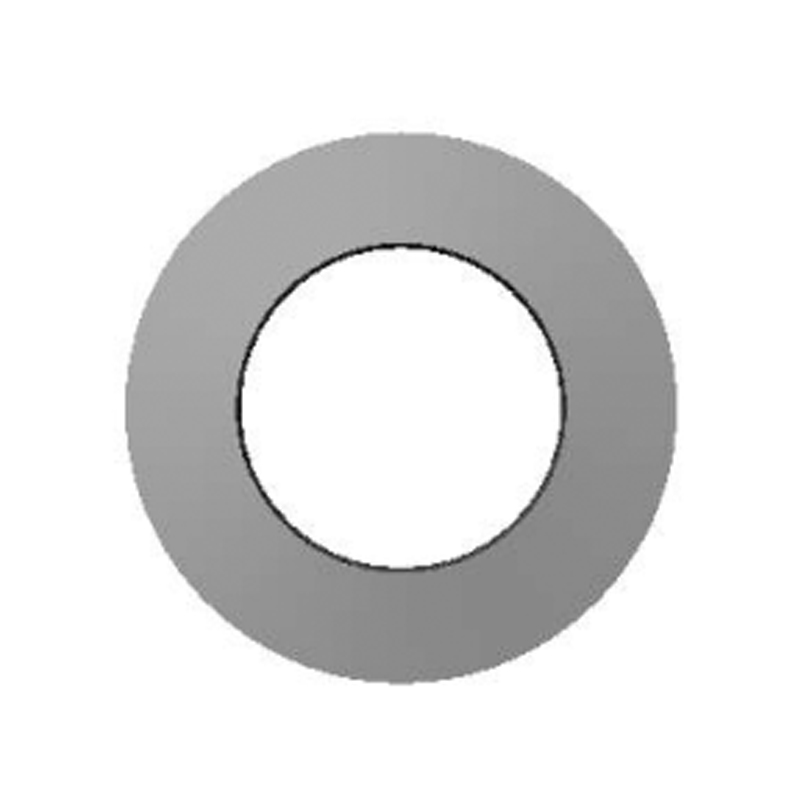
Retaining rings and stamped washers concentrate load into very small sections, which changes the specification logic. On an external circlip the lug root, the groove contact face and the tapered section carry the axial load, and at 1,310 MPa yield a sharp internal corner becomes a crack starter. Specify root radii, an edge break and a burr orientation that keeps stamping burrs on the non-load face.
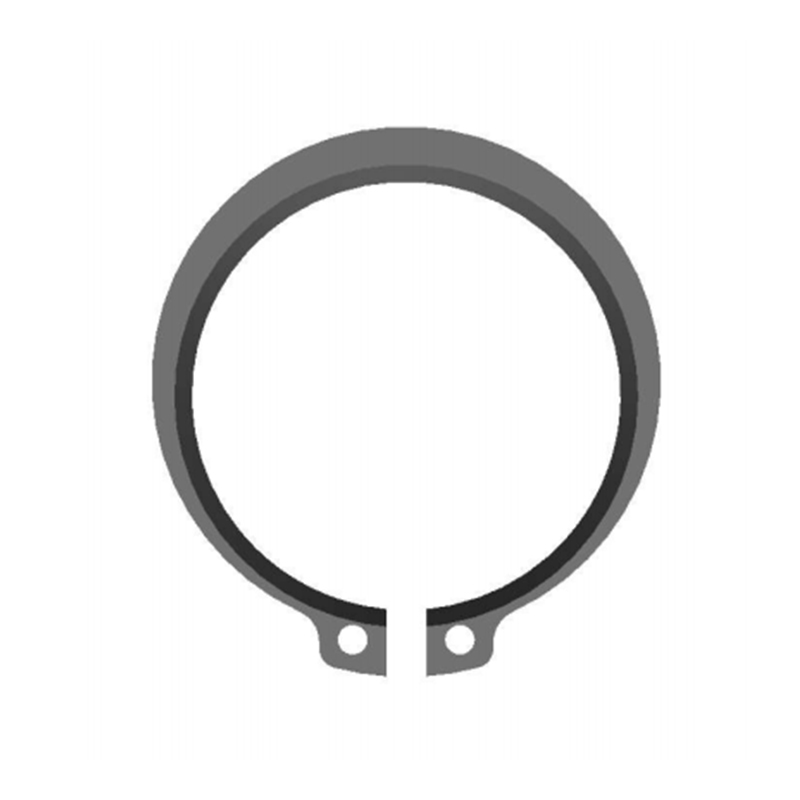 DIN 471 External Circlips for ShaftsDIN 471 shaft rings with size, material, coating, load and speed data help specify axial retention where lug roots carry concentrated load.View Product →
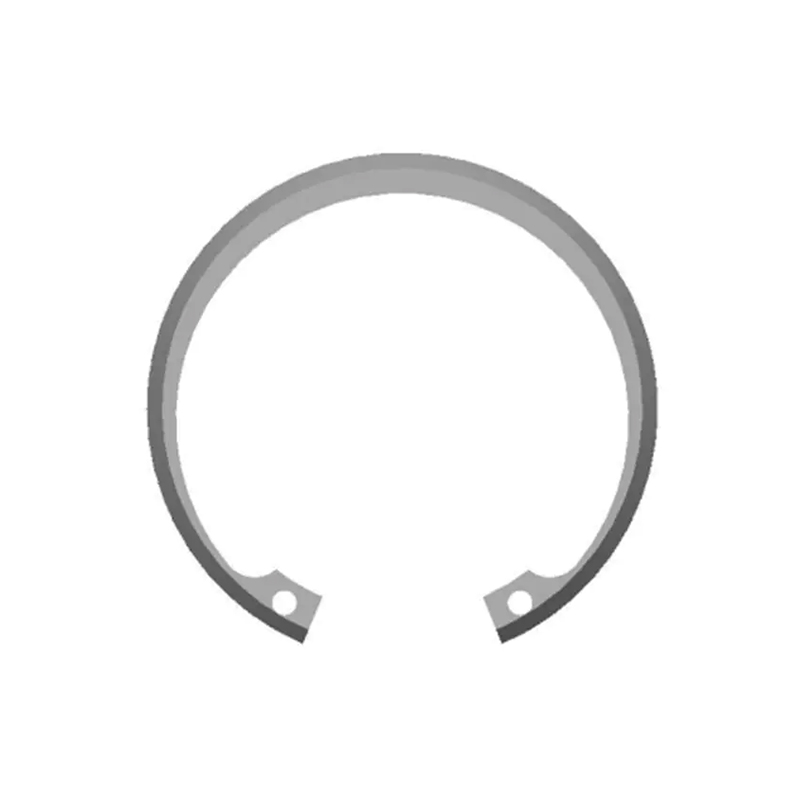
Internal rings on a bore groove sit in compression once installed, so the observed failure mode shifts toward groove shear, ring fatigue or permanent set rather than lug cracking. That is one reason overaged conditions are common in bore-side retention: a slightly lower yield with more elongation tolerates installation strain and vibration far better than a peak-aged ring that has nowhere to go when it is over-expanded.
 DIN 472 Internal Circlips for Bore RetentionInternal bore rings sit in compression; DIN 472 size, material, coating and load data support axial retention choices.View Product →
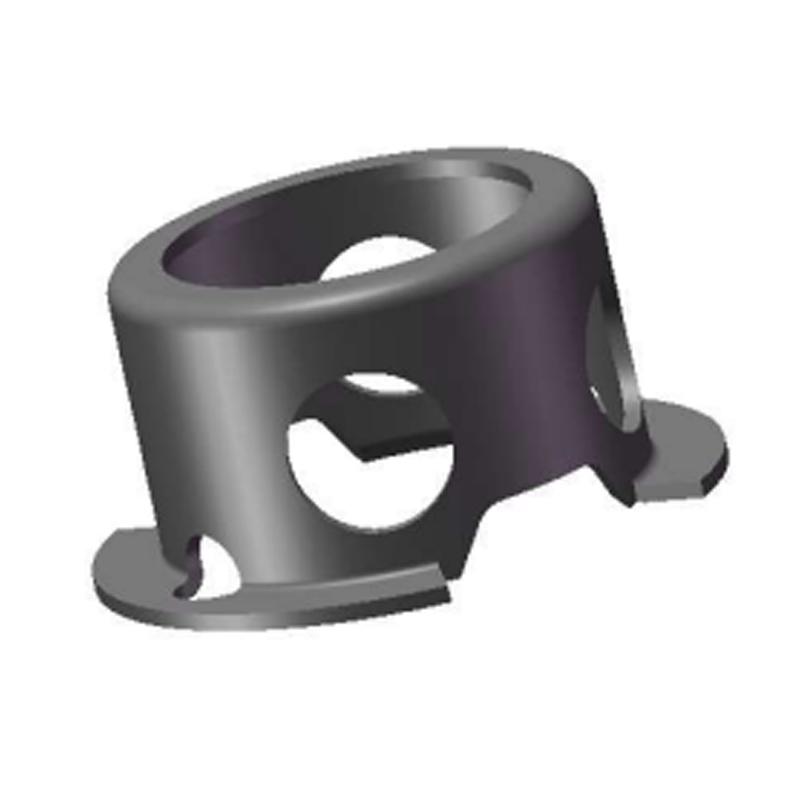
Stamped brackets, limit cages and special-shaped rings follow a different route again. They are formed in Condition A, because forming a 40 HRC part is impractical, and aged after forming. Springback in the soft condition is predictable; in the aged condition it is not, so tool compensation should be based on the annealed strip and verified on the first aged batch. Our custom stamping and forming programme is built around that sequence: form, age, descale, passivate, inspect.
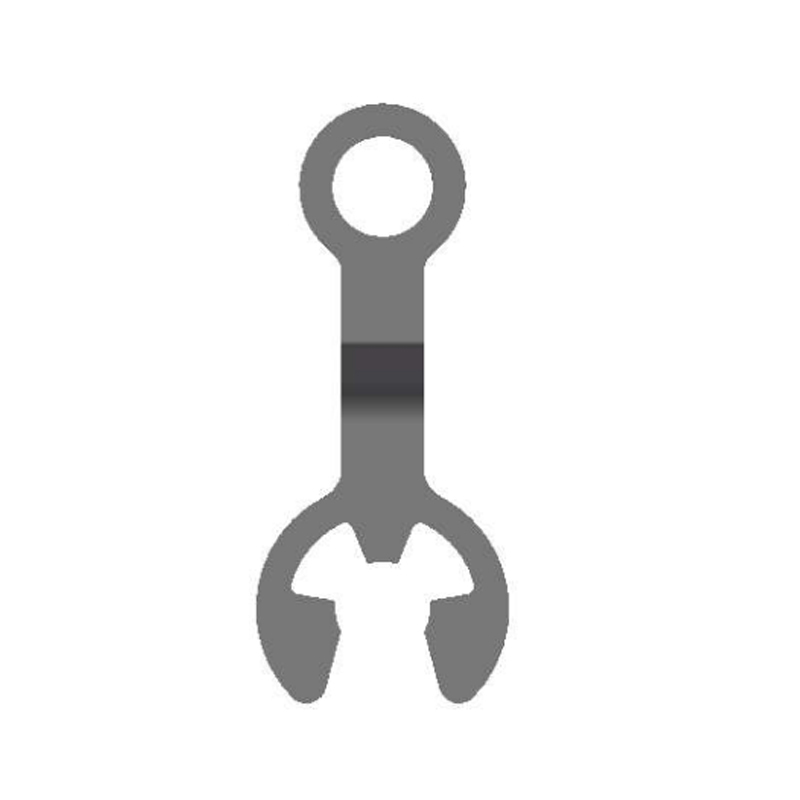 Corrosion-Resistant Special-Shaped Split Retaining RingsCustom corrosion-resistant split rings in stainless steel or nickel alloys for shaft or bore retention; verify finished-part hardness and lot traceability.View Product →
Two purchasing details are worth more than any strength figure. First, insist on heat-lot traceability with the aging charge number, because a mixed lot is impossible to unpick after assembly. Second, specify hardness on the finished part, not only on the test bar: hardness is the cheapest proxy for whether the aging furnace actually did what the certificate claims.
A Sourcing Workflow That Avoids Rework
- Fix the load case. Axial load, vibration amplitude, cycle count, installation strain and service temperature. Without these, condition selection is guesswork.
- Choose the condition from the environment, not the data sheet. Dry and static points toward H900 or H1025; chlorides, washdown or sour service point toward H1150 or H1150M.
- Write the specification completely. Grade and UNS number, condition and aging cycle, hardness range, ASTM A564 or A693 reference, surface finish, passivation standard, hydrogen bake if plated, marking and traceability.
- Qualify the process, not just the sample. Aging furnace uniformity, oxide removal, hardness survey frequency and outgoing inspection belong in the audit, alongside the in-house manufacturing and inspection flow.
- Verify at first article and periodically. Chemistry, hardness, microstructure and, where relevant, a salt-spray or SCC screening check.
Maintenance and Compliance Notes
- Never re-age or stress-relieve a 17-4 part in the field. An uncontrolled excursion to the wrong temperature can quietly remove several hundred megapascals of yield strength, and nothing about the part will look different.
- Inspect grooves for fretting, crevice staining and witness marks at the lug contact. A ring that has taken a permanent set has already lost its preload and should be replaced, not re-fitted.
- Keep documentation aligned with the standard invoked: ASTM A564 for bar and forgings, ASTM A693 for sheet, strip and plate, AMS 5643 for aerospace, EN 10088-3 grade 1.4542 for European work, with an EN 10204 3.1 certificate as the baseline.
- For sour service, confirm the overaged condition and the hardness cap before quoting, and keep the NACE MR0175 / ISO 15156 requirement visible on the drawing rather than buried in a specification annex.
- Plan for the oxide. Aging in air produces a heat tint that must be removed; if the drawing says passivated but the process skips pickling, the corrosion performance in the field will not match the qualification test.
No material choice survives weak process control. 17-4 rewards a supplier that treats aging as a metallurgical operation with a recorded cycle, a hardness check on every lot and a clean descaling step afterwards. Get those three right and the grade delivers a combination of strength, toughness and corrosion resistance that few alloys can match at the price.