English
 中文简体
中文简体
During a material review for a heavy-duty vehicle axle, an engineer asked why the retaining rings had to be cold forged instead of simply turned from bar stock. The answer was not about cost alone: cold forged steel delivers a grain flow pattern that resists fatigue crack growth far better than machined parts.
Cold forging steel typically increases yield strength by 20–30% and produces a surface finish of 1.6–3.2 μm Ra, making it the preferred choice for high-volume retaining rings, washers, and snap rings where fatigue resistance and dimensional consistency are critical.
Content
- 1 Cold Forging Steel: What Happens to the Metal?
- 2 Cold Forging vs. Hot Forging: A Data-Driven Comparison
- 3 Beyond Hardness: The Metrics That Predict Cold Forged Steel Performance
- 4 Where Cold Forged Steel Fasteners Are Used Today
- 5 How to Select the Right Cold Forged Steel Component
- 6 Maintenance, Standards, and Compliance for Cold Forged Steel Parts
Cold Forging Steel: What Happens to the Metal?
Cold forging deforms steel below its recrystallization temperature. Instead of breaking down and reforming grains as in hot forging, the cold process stretches and rotates the crystal grains along the flow of the metal. This is what produces work hardening—the mechanism that gives cold forged steel its extra strength.
Grain Alignment
Grains follow the die contour, producing a continuous flow line that improves fatigue life compared to cut or machined surfaces.
Strain Hardening
The deformation introduces dislocations that impede further slip, raising yield strength without additional heat treatment.
Dimensional Stability
Because the work hardening is uniform across the section, final tolerances remain tight and repeatable across millions of parts.
Steel chemistry matters as much as geometry. Low-carbon steels such as C10, C15, and C22 are common choices because their low carbon content makes them ductile enough to deform without cracking. Boron steels are also used when higher hardenability is needed for heat treatment after forging. The aim is a microstructure that can absorb large strains while keeping a consistent final shape.
For manufacturers, this means the same steel grade may behave differently depending on the die design and press speed. That is why advanced precision manufacturing processes combine controlled lubrication, die clearance, and optical inspection to keep the process stable.
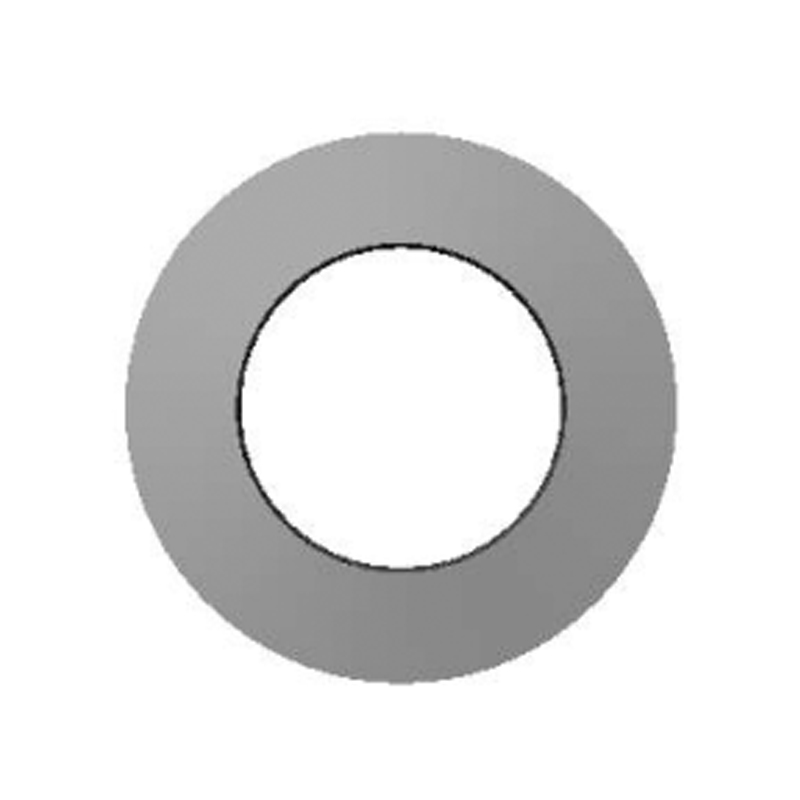 High-Load Belleville Spring Washer DIN2093 for Flange SealingThis disc spring maintains flange pressure when bolts loosen, with uniform stress distribution for low stroke and high compensation. Suitable for shock absorption and fastener protection.View Product →
Cold Forging vs. Hot Forging: A Data-Driven Comparison
The comparison shows why cold forging steel dominates high-volume precision fastener manufacturing. The tighter tolerances and better surface finish reduce secondary machining, while the strength gain allows part lightweighting without increasing section thickness.
Beyond Hardness: The Metrics That Predict Cold Forged Steel Performance
Hardness alone does not tell the full story. The real predictor of service life is how quickly the material strain-hardens and how much internal stress remains after forming. The chart below illustrates the yield strength rise of a typical low-carbon cold forging steel as the deformation ratio increases.
The curve is steep at first, then flattens. This is why most cold forging operations are designed to stop at 30–40% deformation: beyond that point, ductility drops faster than strength improves, increasing the risk of cracking or die failure.
Where Cold Forged Steel Fasteners Are Used Today
Cold forged steel components appear wherever a compact, high-strength part must stay locked in place. The sector split below reflects the typical demand pattern seen by fastener manufacturers.
- Automotive – 60%: transmission shafts, axle retainers, brake assemblies
- Wind Energy – 25%: main shaft bearing cages, pitch bearing clips
- Construction – 15%: structural joint clips, load-bearing washers
In automotive applications, cold forged steel is the default for parts like shaft retaining rings because the process keeps the ring’s seating face flat and burr-free, which is essential under repeated axial loading.
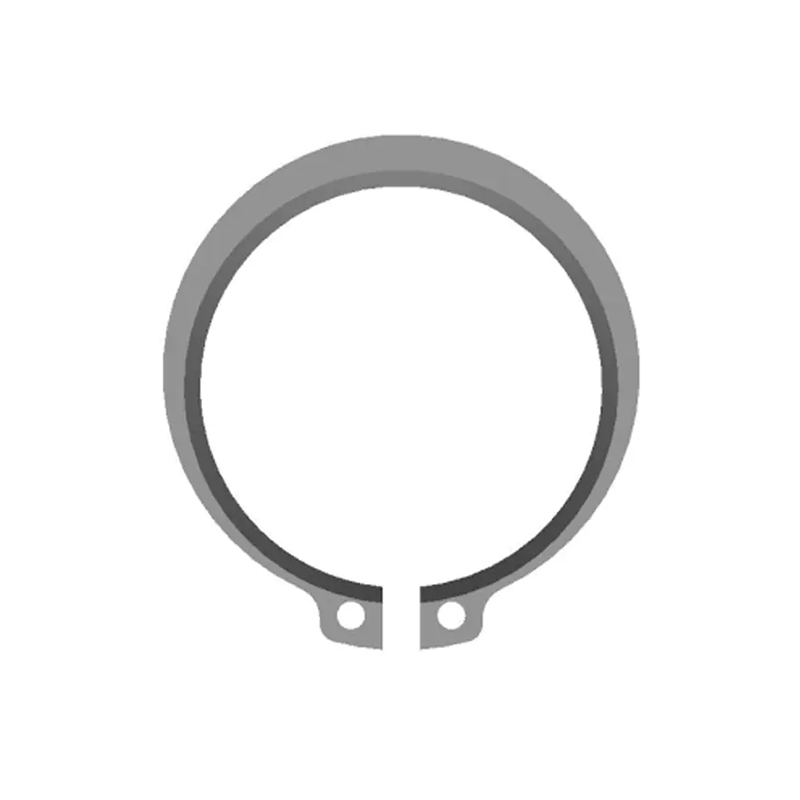
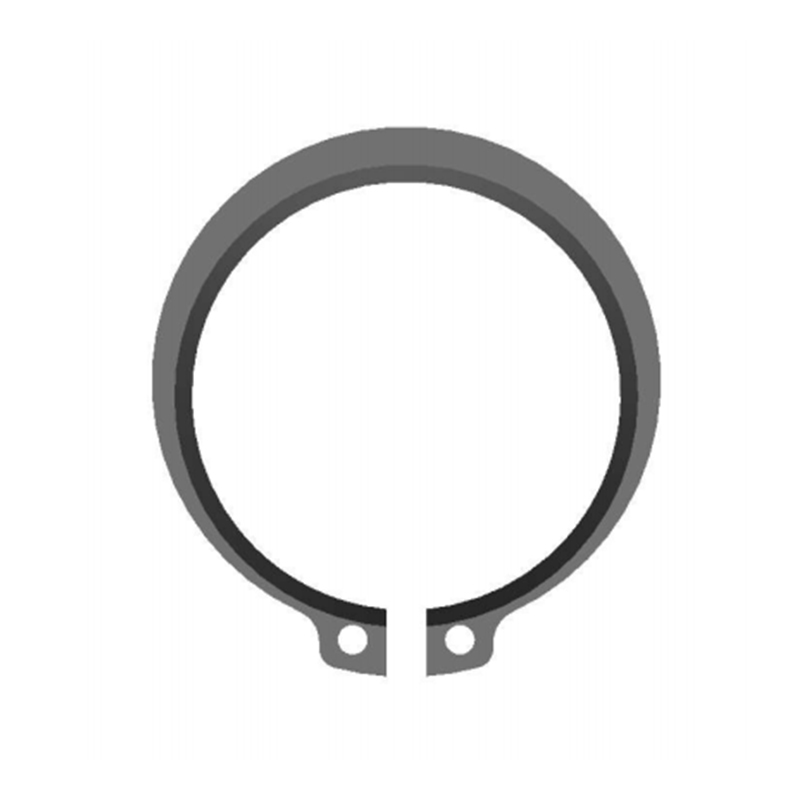 External Circlips DIN471 for Shaft Axial RetentionDesigned to prevent axial displacement on shafts, these circlips improve machinery stability and efficiency. Flat seating faces reduce wear under repeated loading.View Product →
How to Select the Right Cold Forged Steel Component
Choosing a cold forged steel fastener is not a single decision. It is a sequence of trade-offs between material, geometry, and process capability. The following steps mirror a practical sourcing workflow.
1. Define Load and Temperature Conditions
Calculate the axial load and operating temperature range. This determines the required yield strength and whether heat treatment is needed.
2. Match Steel Grade to Formability
Choose a low-carbon or boron steel that can absorb the strain without cracking. The steel must also be compatible with the final surface coating.
3. Choose Standard or Custom Design
Standard DIN parts shorten lead time. Where the load path is unusual, customized fastener solutions allow die geometry to be adjusted to your groove profile.
4. Verify Tolerances and Surface Finish
Inspect the ring’s seating face and radial sector for burrs and flatness. The specified Ra value is your best indicator of potential fretting wear.
5. Audit Manufacturer Quality Control
Confirm the supplier runs automatic optical inspection and tensile testing on each lot. Traceability from coil to finished part prevents expensive field failures.
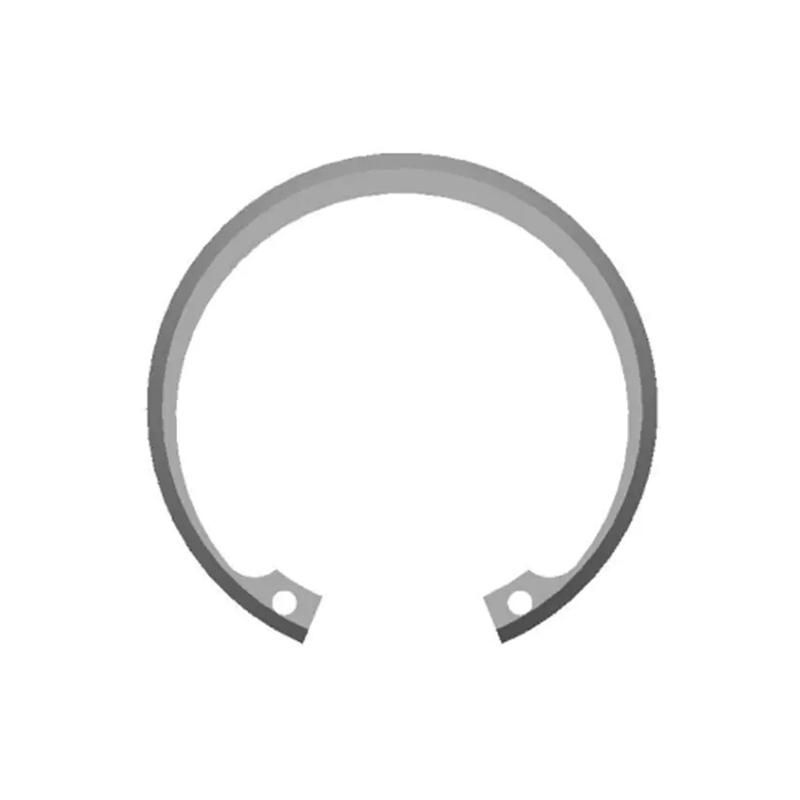
 Metric Internal Circlips DIN472 for Bore GroovesInstalled in internal grooves to secure parts in holes, these circlips offer reliable axial positioning. Available in carbon and stainless steels with various finishes.View Product →
Maintenance, Standards, and Compliance for Cold Forged Steel Parts
Cold forged steel parts like DIN 471 shaft rings, DIN 472 bore rings, and DIN 2093 spring washers are designed to operate for many years, but they still need proper handling and periodic verification.
- Check the groove width on the shaft or housing. Wear on the groove edge is the most common cause of ring dislodgement.
- Apply the corrosion protection specified on the drawing: zinc phosphate, zinc flake, or black oxide each behave differently under salt spray.
- Verify the heat treatment certificate matches the required surface hardness. Case depth or through-hardening values must be traceable to the material certificate.
- Inspect for micro-cracks after disassembly, especially in high-vibration environments. Cold forged parts retain residual stress; a crack can propagate if the ring is re-used improperly.
For elevated-temperature or highly corrosive service, consult the material supplier before ordering. Stainless and high-alloy cold forging steels are available, but they require different press speeds and die clearances than carbon steels.