English
 中文简体
中文简体
Content
- 1 What Are Non-Standard Metal Stamping Parts?
- 2 Key Stamping Processes Used in Custom Parts
- 3 Materials Commonly Used in Non-Standard Stamping
- 4 Industry Applications: Where Non-Standard Stamping Is Essential
- 5 From Drawing to Delivery: The Custom Development Process
- 6 Quality Standards That Matter
- 7 Why Choose Dongbo for Non-Standard Stamping Parts
What Are Non-Standard Metal Stamping Parts?
Most stamped metal components fall into one of two categories: standard parts that match a published catalogue specification, and non-standard parts that exist only because a specific engineer drew them. Non-standard metal stamping parts are components manufactured entirely to customer-defined geometry — every dimension, hole pattern, contour, and functional feature is derived from a drawing, sample, or engineering requirement rather than an off-the-shelf specification.
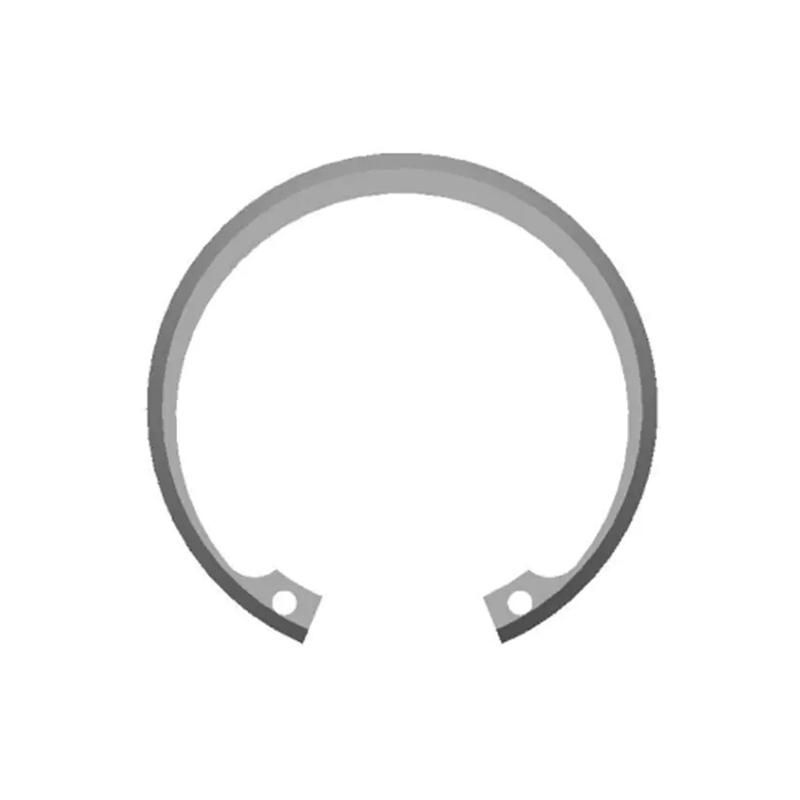
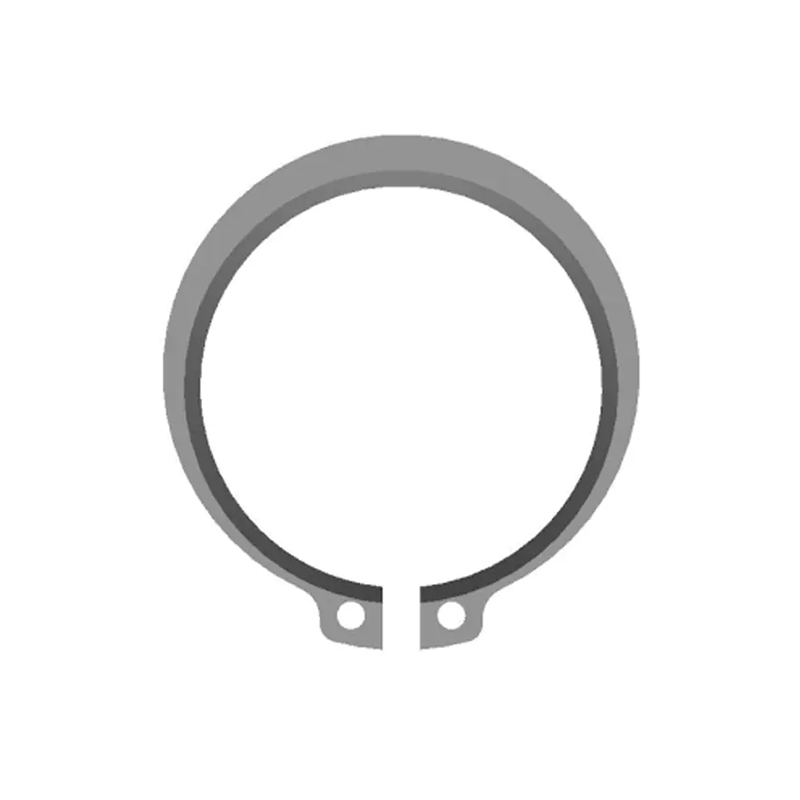
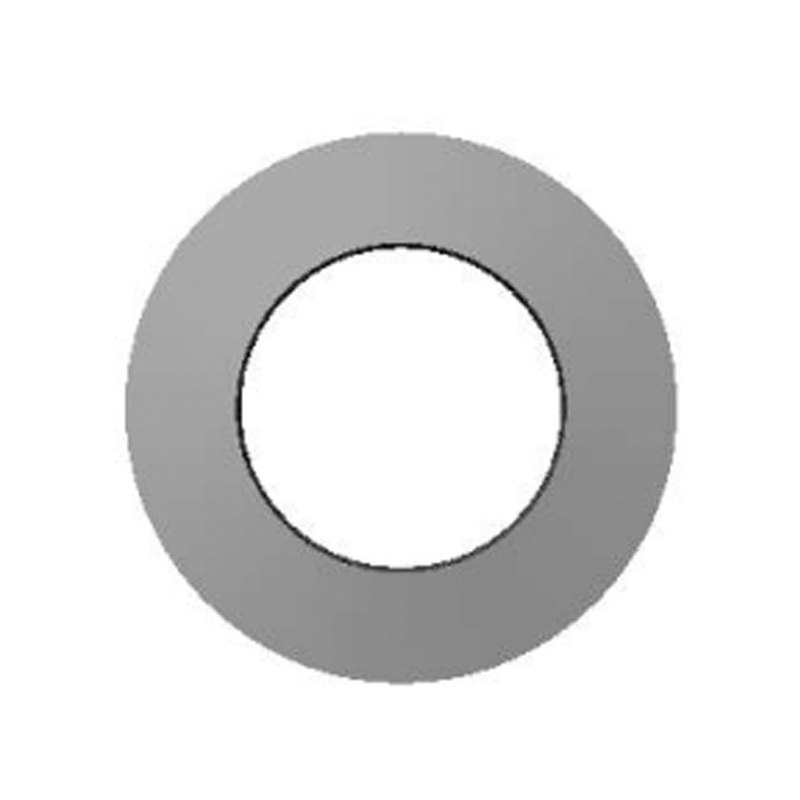
The practical implication is significant. Where a standard washer or retaining ring can be pulled from stock and shipped the same day, a non-standard stamped part requires custom die design, material selection, trial stamping, and dimensional validation before a single production piece leaves the press. That engineering investment is exactly what makes non-standard parts irreplaceable: they fit their application with a precision no catalogue item can replicate.
Demand for these components spans virtually every manufacturing sector. Wherever a product assembly has a geometry, load requirement, or environmental condition that off-the-shelf hardware cannot satisfy, non-standard stamping becomes the default solution. Explore our full range of custom-engineered non-standard stamping parts to see the breadth of geometries and applications we serve.
Key Stamping Processes Used in Custom Parts
Non-standard metal stamping is not a single operation. It is a family of sheet-metal forming processes, and selecting the right combination determines part accuracy, material utilization, tooling cost, and cycle time. The following are the principal processes applied in custom work.
- Blanking and fine blanking — Shearing a precise flat shape from coil or sheet. Fine blanking uses a three-action press to produce near-zero-burr edges, critical for sealing faces and mating surfaces.
- Punching and piercing — Creating holes, slots, and apertures in sheet metal. CNC punching allows complex hole layouts without the cost of a dedicated punch per feature.
- Bending and forming — Air-bending and bottoming on CNC press brakes achieve angles from 0° to 180°. Compound forms with multiple bends are completed in a single setup, reducing handling and registration error.
- Deep drawing — Transforming flat blanks into hollow three-dimensional shells — cups, enclosures, housings. Draw ratio, blank-holder force, and lubrication must be carefully controlled to prevent wrinkling or fracture.
- Embossing and coining — Displacing material locally to create ribs, identification markings, or controlled surface texture. Coining applies high pressure to achieve very tight thickness tolerances in critical zones.
- Progressive die stamping — Multiple operations performed in sequential die stations on a continuous strip. One press stroke produces one finished part, making progressive dies the backbone of high-volume non-standard production at low per-piece cost.
For geometrically complex non-standard parts, formability analysis using CAE simulation is conducted before any physical tooling is cut. This predicts thinning zones, springback angles, and potential fracture lines — dramatically reducing trial-and-error rework costs before production begins.
Materials Commonly Used in Non-Standard Stamping
Material selection is among the most consequential decisions in any non-standard stamping project. The chosen alloy must satisfy mechanical performance requirements, forming characteristics, corrosion resistance demands, and final weight targets — simultaneously. The table below summarizes the materials most frequently processed in custom stamping operations.
| Material | Formability | Strength | Corrosion Resistance | Typical Applications |
|---|---|---|---|---|
| Carbon Steel (SPCC / DC01–DC04) | Excellent | Medium | Low (requires coating) | Structural brackets, chassis hardware, furniture frames |
| Stainless Steel 304 | Good | Medium–High | High | Kitchen hardware, medical components, exposed architectural parts |
| Stainless Steel 316 | Good | Medium–High | Very High | Marine environments, chemical exposure applications |
| Aluminum Alloy (5052 / 5754) | Very Good | Medium | Good | Lightweight brackets, automotive trim, aerospace-adjacent parts |
| Spring Steel (65Mn / SUP series) | Moderate | Very High | Low (requires coating) | Retaining rings, circlips, elastic fasteners |
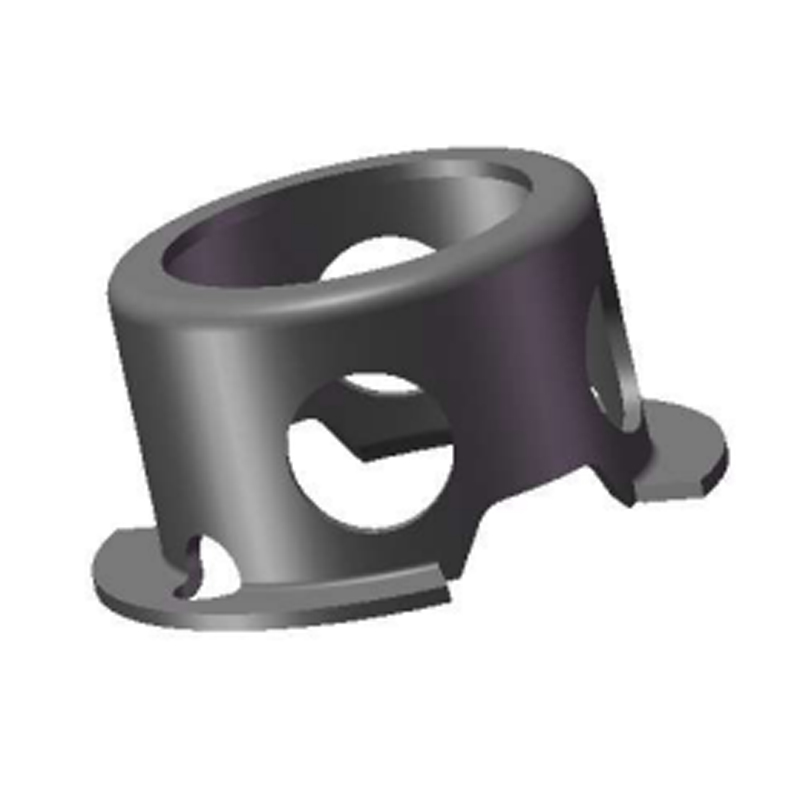
Spring steel deserves particular mention for non-standard fastener-adjacent stampings. Its high yield-to-tensile ratio allows thin-section parts — such as custom retaining rings and limit cages — to store and release elastic energy reliably over millions of cycles. Matching the alloy grade to the functional requirement from the outset prevents costly redesigns downstream.

Industry Applications: Where Non-Standard Stamping Is Essential
The common thread across every application below is the same: standard catalogue parts simply cannot meet the dimensional, material, or performance specification. Non-standard stamping fills that gap.
- Automotive — Body reinforcements, powertrain brackets, sensor housings, battery tray components, and seat-mechanism hardware. Automotive non-standard stampings are governed by IATF 16949, demanding zero-defect quality on every delivered part. Dongbo supplies Tier 1 and Tier 2 automotive customers and maintains direct partnerships with SAIC, BYD, and CRRC.
- Construction machinery — Structural connecting plates, load-bearing brackets, and filter-system screen components require high strength-to-weight ratios and resistance to fatigue under vibration and shock loading. Custom spring-steel stampings are frequently specified for retention functions within heavy equipment sub-assemblies. See our range of snap rings for precision mechanical assemblies that serve these demanding environments.
- Electronics and appliances — Terminal shields, EMI shielding plates, and mounting brackets require tight dimensional tolerances and burr-free edges to function reliably within compact electronic enclosures. Copper and aluminum alloys are common material choices.
- Energy equipment — Wind turbine nacelle brackets, solar panel mounting hardware, and power distribution components demand corrosion resistance and structural integrity across extended service lives outdoors.
- Industrial machinery — Custom limit cages, wear-resistant guide components, and special-shaped retaining rings are produced as non-standard stampings where standard geometry does not fit the shaft or housing dimensions. Our custom-engineered retaining rings and circlips extend into non-standard geometries for exactly these applications.
- Power tools — Blade guards, housing clips, and spring-loaded retention elements require consistent wall thickness and repeatable elastic performance across high production volumes.
From Drawing to Delivery: The Custom Development Process
Understanding what happens between receiving a drawing and shipping the first production batch clarifies why supplier capability matters so much in non-standard work. A compressed, transparent development cycle reduces risk for the buyer at every stage.
- Drawing and specification review — Engineers analyse the customer's 2D drawing or 3D model for formability, tolerance achievability, and material compatibility. Any ambiguities are resolved before tooling investment begins.
- Die design and manufacturing — Custom single-station or progressive dies are designed using CAD/CAM software (AutoCAD, SolidWorks, UG/NX) and manufactured in-house. In-house tooling eliminates the lead-time and accountability gaps that arise when die-making is outsourced.
- Trial stamping and first article inspection (FAI) — Initial press runs produce trial samples, which are measured against the customer drawing using CMM, optical projectors, and gauge fixtures. Die corrections are made iteratively until all critical dimensions fall within tolerance.
- Process parameter lock-in — Once the first article is approved, press tonnage, feed pitch, lubrication, and tooling clearances are documented and locked. This ensures that production parts match the approved sample.
- Mass production and ongoing quality control — SPC sampling plans govern production lots, with control charts maintained for critical dimensions. Every shipment undergoes 100% pre-shipment inspection before leaving the facility.
Sample lead time at Dongbo is 3–7 days from drawing confirmation — a turnaround made possible by in-house tooling and a vertically integrated production system. Review our full-process manufacturing capabilities to understand the equipment and processes behind this timeline.
Quality Standards That Matter
Non-standard parts carry no catalogue precedent — every dimension must be verified against the customer specification on every production run. Quality management in custom stamping is therefore not a peripheral concern; it is the foundation of the entire service model.
The certifications a manufacturer holds signal which quality regimes their processes are built to satisfy. For buyers sourcing non-standard stamped components, the following are the most relevant:
- IATF 16949:2016 — The automotive-sector quality management standard. Requires Advanced Product Quality Planning (APQP), Production Part Approval Process (PPAP), Measurement System Analysis (MSA), and Statistical Process Control (SPC). Holding this certification means the factory's entire quality system is designed around zero-defect delivery.
- ISO 9001:2015 — The general quality management system standard, covering document control, corrective and preventive action (CAPA), and management review processes applicable to all industries.
- ISO 14001 — Environmental management certification, governing waste, chemical handling, and energy compliance — increasingly required by European and North American OEM customers.
- CNAS accreditation — China National Accreditation Service for Conformity Assessment accreditation of the in-house testing laboratory. CNAS-accredited test results are recognized under the ILAC mutual recognition arrangement, giving global buyers confidence in reported material and dimensional data.
Dongbo holds all four of the above, and our testing centre received CNAS accreditation in July 2024. See the instruments and protocols behind our quality inspection and testing standards applied to every non-standard stamping shipment.
Why Choose Dongbo for Non-Standard Stamping Parts
Anhui Ningguo Dongbo Fastener Co., Ltd. has been manufacturing precision stamped components for over 46 years, with products exported to more than 60 countries across five continents. That longevity reflects something harder to replicate than equipment: the accumulated process knowledge to solve non-standard problems quickly and reliably.
Several capabilities set Dongbo apart when buyers evaluate suppliers for custom stamping work:
- In-house tooling design and manufacturing — All dies are designed and built on-site by mechanical engineers with a minimum of eight years' die design experience. No outsourcing, no accountability gaps, no lead-time surprises from a third-party toolmaker.
- One-stop supply including fastener integration — Most custom stamping suppliers cannot also supply the retaining rings, snap rings, and washers that frequently accompany non-standard stampings in a finished assembly. Dongbo manufactures both, simplifying procurement and quality accountability for the buyer.
- Full-process vertical integration — Raw material rolling, mold design, stamping, heat treatment, surface treatment (phosphating, mechanical galvanizing, Dacromet, and others), ultrasonic cleaning, and automatic optical screening all occur within the Dongbo facility. Annual output capacity is 3.5 billion pieces.
- National standard participation — Dongbo has led or participated in the formulation and revision of 13 Chinese national standards for elastic retaining rings, elastic round pins, and disc washers. This regulatory involvement gives the engineering team an unusually deep understanding of how standards are written — and where they stop.
- Rapid sample turnaround — Samples ship within 3–7 days of drawing confirmation, allowing buyers to validate fit and function quickly without committing to a full production run.
Whether the requirement is a single special-shaped circlip or a complex progressive-die bracket in high volumes, Dongbo's engineering team works from the customer's drawing to deliver a finished, tested component — not just a pressed blank. Contact us to discuss your non-standard stamping requirement.