English
 中文简体
中文简体
Content
Engineering Precision in Non-standard Stamping Parts Production
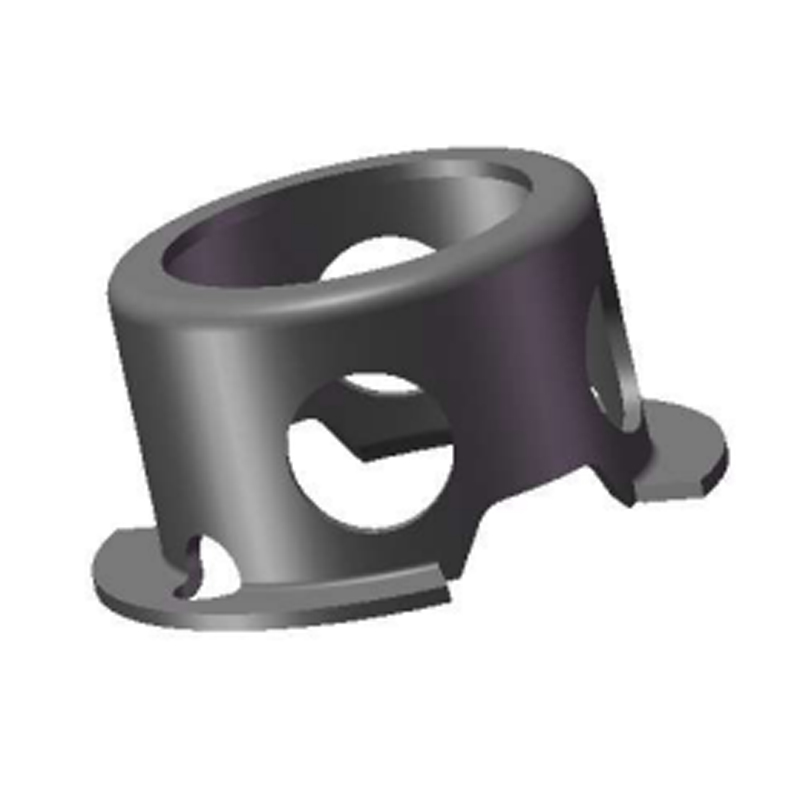
Non-standard Stamping Parts represent a critical manufacturing solution for industries requiring components that deviate from conventional specifications. Unlike mass-produced standard parts, these custom-engineered components undergo tailored stamping processes where metal sheets are precisely formed using specialized dies and punches to achieve unique geometries, tolerances, and functional features. The production workflow begins with comprehensive client specifications, including detailed CAD drawings and performance requirements, which guide the design and fabrication of custom tooling. Modern progressive die stamping technology enables the creation of complex features—such as embossed ribs, flanged edges, or integrated fastener points—in a single press cycle, reducing secondary operations and ensuring dimensional consistency across production runs. Precision control extends to material handling systems that maintain consistent feed rates and alignment, preventing micro-variations that could compromise fitment in tight-tolerance assemblies.
Quality assurance protocols for non-standard components incorporate in-process inspection techniques like laser scanning and coordinate measuring machines (CMM) to verify critical dimensions against design intent. Statistical process control (SPC) charts track key parameters such as tonnage pressure, die clearance, and material springback, enabling real-time adjustments that maintain part conformity throughout extended production batches. For high-stress applications, manufacturers often perform finite element analysis (FEA) during the design phase to simulate material flow and identify potential weak points before tooling fabrication begins. This proactive engineering approach minimizes trial-and-error iterations and accelerates time-to-market for custom components that must integrate seamlessly into existing mechanical systems.
Industry Applications: Automotive, Aerospace, Electronics, Machinery
The versatility of Non-standard Stamping Parts makes them indispensable across diverse industrial sectors, each with distinct performance demands. In the automotive industry, custom stamped components include bracket assemblies for electric vehicle battery systems, sensor mounts with vibration-dampening features, and lightweight structural reinforcements that optimize crash energy management. Aerospace applications prioritize weight reduction and extreme environmental resistance, driving demand for titanium or high-strength aluminum stamped parts with tight tolerances for avionics housings and actuator linkages. Electronics manufacturing leverages precision stamped contacts, EMI shielding enclosures, and heat-dissipating fins that require micron-level accuracy to ensure reliable signal transmission and thermal management. Within heavy machinery, non-standard stamped wear plates, hydraulic valve bodies, and custom linkage components must withstand abrasive conditions and cyclic loading while maintaining dimensional stability over extended service life.
Material Selection for Performance Optimization
Material choice directly influences the functionality and longevity of Non-standard Stamping Parts across automotive, aerospace, electronics, and machinery applications. High-strength low-alloy (HSLA) steel provides optimal strength-to-weight ratios for automotive structural components, while austenitic stainless steels offer corrosion resistance for aerospace hydraulic systems exposed to de-icing fluids. Electronics applications frequently utilize copper alloys or phosphor bronze for stamped connectors due to their superior electrical conductivity and spring properties. For machinery components subject to abrasive wear, tool steels with carbide coatings extend service intervals by resisting surface degradation. Manufacturers must also consider formability characteristics: materials with higher elongation percentages accommodate complex bends without cracking, while those with consistent grain structure ensure uniform springback behavior during die release. Collaborative material testing— including bend tests, hardness profiling, and salt-spray corrosion evaluation—validates performance before full-scale production commences.
| Industry Sector | Typical Materials | Key Tolerances | Critical Features |
| Automotive | HSLA Steel, Aluminum | ±0.05mm | Crash energy absorption |
| Aerospace | Titanium, Inconel | ±0.02mm | Fatigue resistance |
| Electronics | Copper Alloy, Brass | ±0.01mm | Electrical conductivity |
| Machinery | Tool Steel, Stainless | ±0.08mm | Wear resistance |
Custom Tooling and Design Collaboration Process
Successful production of Non-standard Stamping Parts hinges on close collaboration between client engineering teams and stamping specialists during the tooling development phase. Initial design reviews focus on manufacturability assessments that identify potential challenges such as excessive draw depths, sharp internal corners, or features prone to material thinning. Digital prototyping tools enable virtual tryouts of die designs, simulating material flow and stress distribution to optimize punch geometry before physical tool fabrication begins. This iterative process reduces costly rework and ensures the final tooling produces parts that meet functional requirements on the first production run. For complex geometries, manufacturers may employ multi-stage progressive dies that perform blanking, forming, and piercing operations in sequence within a single press, maximizing efficiency while maintaining precision across all features.
Prototyping and Validation Protocols
Before full-scale production, prototype samples undergo rigorous validation to confirm performance under real-world conditions. First-article inspection (FAI) reports document dimensional compliance against all critical features, while functional testing verifies assembly fitment and operational behavior. For automotive components, this may include salt-spray corrosion testing and vibration fatigue analysis; aerospace parts often require non-destructive testing like dye penetrant inspection to detect micro-cracks. Electronics applications prioritize electrical continuity testing and thermal cycling validation to ensure reliability across operating temperature ranges. This comprehensive validation approach minimizes field failures and provides documented evidence of quality for regulatory compliance in highly regulated sectors like aerospace and medical machinery.
Cost Optimization Strategies for Custom Stamping Projects
While Non-standard Stamping Parts inherently involve higher initial tooling costs compared to standard components, strategic engineering decisions can optimize total lifecycle value. Designing features that accommodate standard punch and die insert sizes reduces custom tooling expenses, while consolidating multiple functions into a single stamped component eliminates assembly steps and associated labor costs. Material utilization strategies—such as nesting parts efficiently on coil stock or implementing scrap-reduction die designs—minimize waste and lower per-part material costs. For medium-volume production runs, manufacturers may recommend modular tooling systems that allow feature modifications without complete die rebuilds, providing flexibility for design iterations while controlling capital expenditure. Transparent cost modeling that separates tooling amortization from piece-part pricing helps clients make informed decisions about production volumes and design trade-offs.
- Engage stamping specialists during early design phases to leverage manufacturability insights that reduce complexity without compromising function.
- Specify tolerances only where functionally critical; relaxing non-essential dimensions can significantly reduce tooling costs and production cycle times.
- Request material certification documentation and process validation reports to ensure compliance with industry-specific quality standards for automotive, aerospace, electronics, or machinery applications.