English
 中文简体

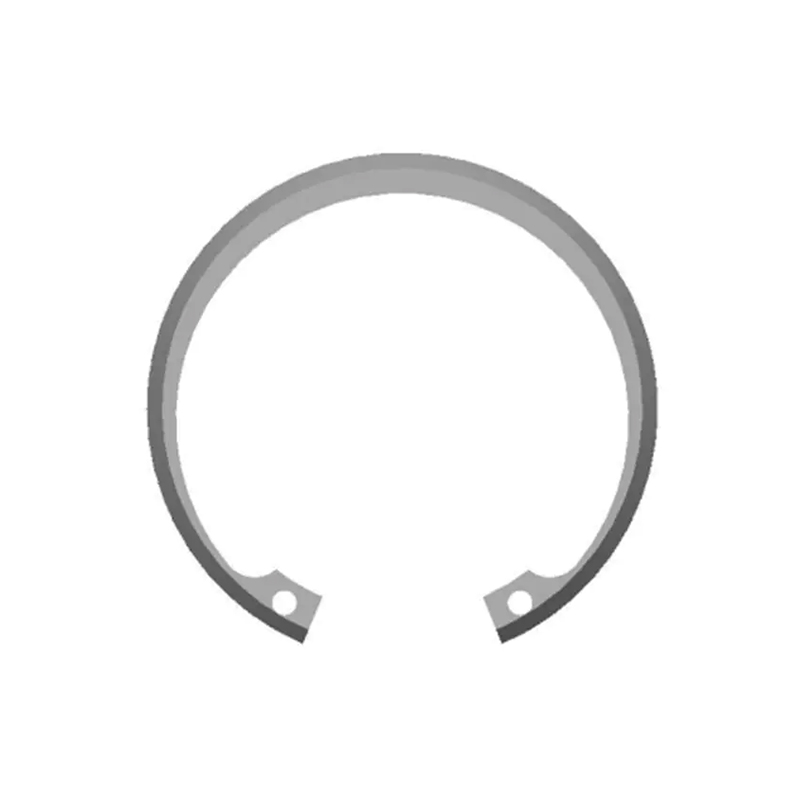
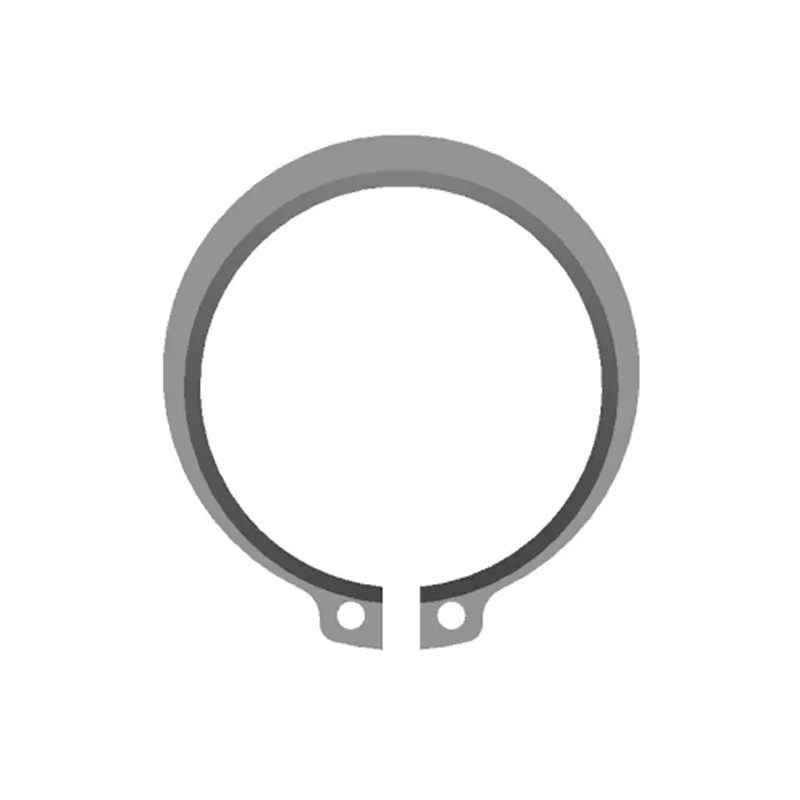
A procurement engineer emails the same DIN 471 circlip drawing to three stamping suppliers and receives quotes that differ by 40%. The drawing is identical, the press tonnage is comparable, and none of the quotations is a clerical error. The gap sits in the material line that was never pinned down: one supplier quoted 65Mn strip with commercial thickness tolerance, one quoted 50CrV4 with tight temper control, and one quoted 301 stainless because that coil was already in stock.
On axial retaining rings, spring washers, and stamped brackets, material selection decides springback, fatigue life, corrosion behaviour, and roughly half of the piece price. It is an engineering decision that has to be made before the die is cut, because correcting it later means new tooling, new first-article approval, and new delivery dates.
- Carbon spring steel 65Mn or SAE 1060/1070 covers most DIN 471 and DIN 472 axial retention duties at the lowest coil cost.
- Step up to 50CrV4 or SAE 6150 only when the joint sees shock loads, high cycle counts, or needs through-hardness above HRC 47.
- Stainless 301 or 304 solves corrosion, but adds 25 to 35 percent springback that must be designed into the die, not corrected at the press.
- The grade name alone does not define a part. Temper, thickness tolerance, and burr limit belong in the purchase order.
Content
Material Properties That Actually Move the Part
Four strip properties do most of the work in a precision stamping programme. Press tonnage is rarely the constraint; the coil is.
Yield strength and springback
A strip with 1,400 MPa yield needs roughly 8 to 12 percent more overbend than a 900 MPa strip to reach the same free gap. That figure is built into the die geometry, not left to an operator's judgement.
Work hardening
Austenitic 301 hardens as it is formed. A progressive die that runs 304 comfortably may need different punch clearance and a slower strip feed when switched to half-hard 301.
Temper and thickness tolerance
On a 0.8 mm circlip, coil thickness of plus or minus 0.02 mm against plus or minus 0.05 mm changes installed radial force measurably and multiplies gap-opening complaints.
Edge and burr condition
A burr above 5 percent of material thickness becomes a fatigue crack starter on a vibrating shaft. Deburring and edge conditioning belong on the drawing, not in a verbal agreement.
Suppliers who control these variables under one roof hold an advantage, because a temper change can be validated against the finished ring rather than negotiated between a mill, a stamper, and a heat treater. A vertically integrated manufacturing chain that includes raw material rolling, die making, stamping, heat treatment, phosphating, ultrasonic cleaning, and automated optical sorting shortens that feedback loop considerably.
Precision Metal Stamping Materials Compared
Five material families cover the overwhelming majority of precision stamped fasteners, retaining rings, and structural clips. The figures below are indicative working ranges, not specification limits, and every order should be confirmed against a mill certificate.
The cost index column is the one most often skipped during quoting. A 40 percent cheaper coil can add more than 40 percent to total cost if it forces a second die revision, higher scrap, or a supplementary coating step. Compare landed cost per accepted piece, not cost per kilogram.
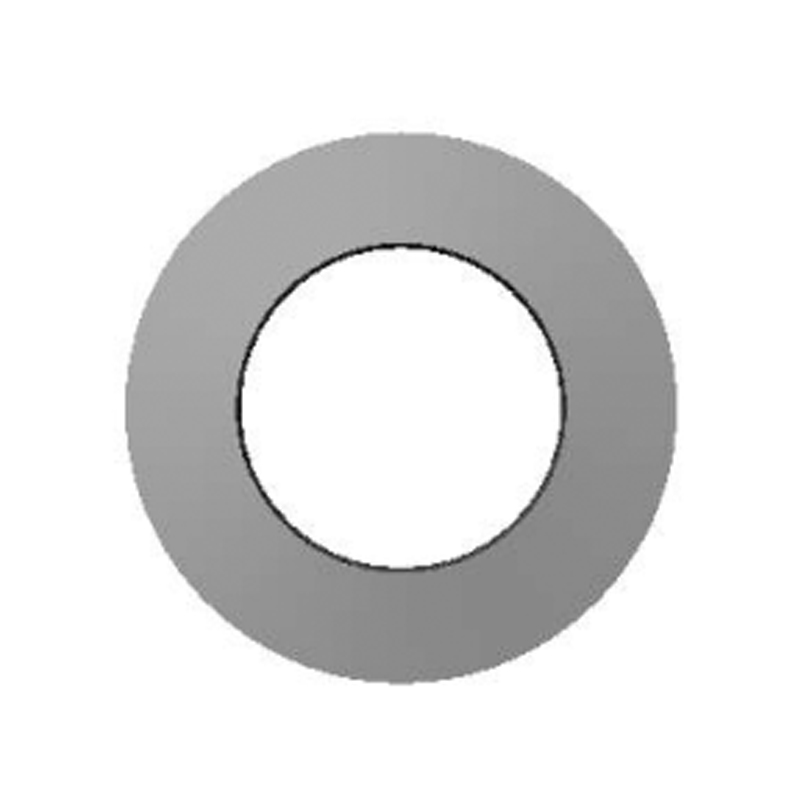
Standard catalogue parts such as DIN 471 shaft circlips and DIN 2093 high-load Belleville washers are normally specified from the first two families, and both are produced in volume from carbon and alloy spring steel.
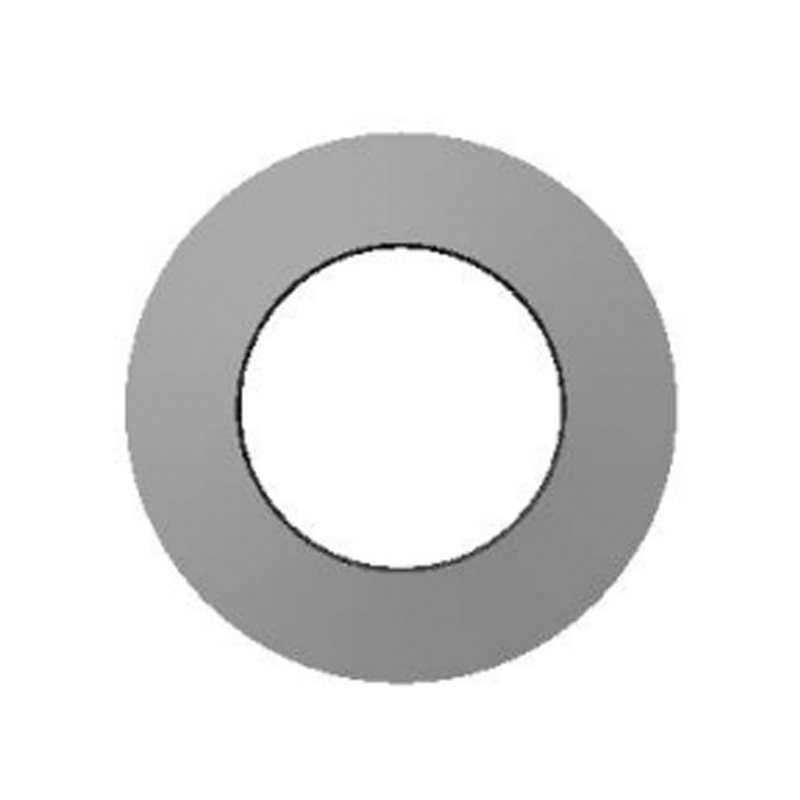 High-load Belleville Spring Washer-DIN2093 SuppliersHome Products Belleville Spring Washer High-load Belleville Spring Washer-DIN2093View Product →
Hidden Metrics: Springback, Scrap, and Die Life
Springback is the number most often underestimated at the quotation stage. Using carbon spring steel as the baseline of 100, the chart below shows how the same nominal geometry behaves when the strip is changed without touching the tool.
Relative springback index, 65Mn = 100
Two further numbers rarely appear on a quotation. First, scrap rate: a well-run carbon steel progressive die typically holds 1.5 to 2 percent, while an unchanged die switched to stainless can drift to 4 to 6 percent until clearances and radii are revised. Second, die maintenance interval: carbide punches running carbon steel may last 800,000 strokes between regrinds, while the same tool on stainless or bronze often drops to around 300,000.
Coating and heat treatment add another layer of hidden risk. Understanding how heat treatment and surface coating affect stamped circlip properties helps avoid specifying a bright zinc finish on a part whose hardness already sits above 1,000 MPa without a hydrogen embrittlement relief step.
Where Each Material Family Ends Up
Across retaining rings, washers, and stamped structural parts, demand is concentrated in a small number of industries. The distribution below reflects typical order patterns for axial fastening components rather than any single customer mix.
- Automotive, 42 percent
- Wind energy, 18 percent
- Construction machinery, 14 percent
- Industrial machinery and other, 26 percent
Automotive work favours 65Mn and 50CrV4 in transmission and wheel bearing assemblies, where cycle counts are high and cost pressure is constant. Wind applications push toward alloy steel and stainless because maintenance access is expensive and service intervals run into years. Construction equipment tolerates thicker sections and heavier coatings, while general industrial machinery is where non-standard stamped parts, brackets, and limit cages replace machined components at lower weight and cost.
A Six-Step Selection and Qualification Workflow
- Define the load and cycle life. Axial retention force, vibration level, expected cycles, and operating temperature range come before any grade discussion.
- Fix the interface standard. DIN 471, DIN 472, DIN 983, or an internal drawing determines groove dimensions and therefore the installed stress level.
- Choose material and temper. Match corrosion exposure and hardness target, then specify thickness tolerance and burr limit explicitly.
- Design the die around springback. Overbend, clearance, and radii are set from the actual strip properties, not from a generic table.
- Validate with first articles. Dimensional layout, hardness profile, and a functional fit test on the real shaft or bore.
- Lock the process for volume. Document the heat number, heat treatment cycle, and inspection frequency before ramp-up.
When the geometry falls outside catalogue standards, the same workflow applies with one addition: the stamping route itself becomes a design variable. Parts such as brackets, shims, and limit cages are commonly produced as custom stampings where material grade and forming sequence are developed together.
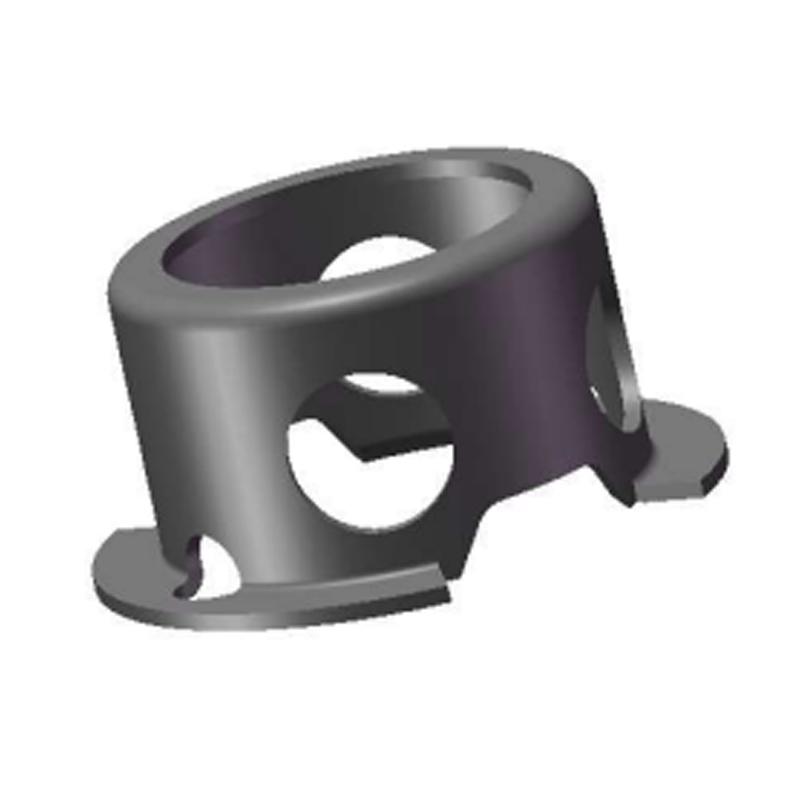 Wear-Resistant Limit Cage SuppliersHome Products Non-standard Stamping Parts Wear-Resistant Limit CageView Product →
Maintenance, Traceability, and Compliance Checks
Material performance in the field depends on documentation and handling as much as on chemistry. The following checks prevent most disputes and field returns.
- Mill certificates to EN 10204 3.1 for every heat number, retained with the production lot.
- RoHS and REACH declarations for plated and phosphated finishes, renewed with each process change.
- Salt spray testing to ISO 9227, typically 96 hours for trivalent zinc and 480 hours or more for stainless grades.
- Hydrogen embrittlement relief within four hours of plating for parts above 1,000 MPa tensile strength.
- Lot traceability from coil to carton, supported by barcode labelling and first-in-first-out inventory control.
- Incoming inspection covering thickness, hardness, temper, and surface defects before the coil reaches the press.
- Dry storage and VCI packaging for unplated carbon steel, since rust on the shelf is a delivery defect even when the part is correct.
Automated optical sorting and final performance testing close the loop. When every ring is inspected for gap, flatness, and cracks after heat treatment, material deviations are caught before shipment rather than during assembly.
Choosing precision metal stamping materials is a short list of decisions made in the right order: standard and load first, grade and temper second, tolerances and finish third. Suppliers who can hold all three steps inside one quality system, from coil to sorted carton, remove the most common source of variation in stamped retaining rings and custom stamped parts. Bring the material question to the table before the die is cut, and the 40 percent spread between quotations usually collapses into a single defensible number.