English
 中文简体
中文简体
Content
- 1 What Are Snap Rings and Why They Matter in Mechanical Assemblies
- 2 How Snap Rings Prevent Axial Movement
- 3 Spring Steel Snap Rings: Why Material Selection Is Critical
- 4 Internal vs External Snap Rings: Choosing the Right Type
- 5
- 6 Installing and Removing Snap Rings Correctly
- 7 Common Applications Across Industries
What Are Snap Rings and Why They Matter in Mechanical Assemblies
Snap rings — also commonly referred to as retaining rings or circlips — are compact, circular mechanical components engineered to hold parts securely in place on a shaft or within a housing bore. Despite their small size, they play a structurally critical role in a wide range of machinery, automotive systems, and industrial equipment. Their primary function is to act as a mechanical shoulder or stop that prevents components from shifting along the axis of a shaft or bore — a phenomenon known as axial movement. Without an effective restraint, components like bearings, gears, pulleys, and bushings would be free to migrate under load or vibration, leading to misalignment, accelerated wear, and eventual mechanical failure.
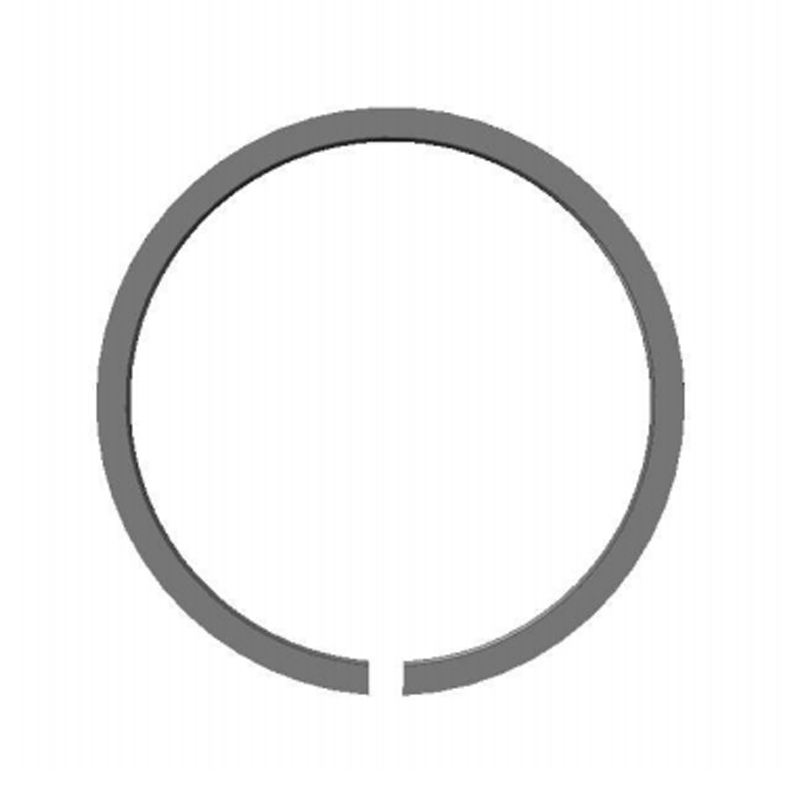
The design of a snap ring is elegantly simple: a circular band of metal featuring a radial or tangential gap that allows the ring to be compressed or expanded for installation into a precision-machined groove. Once seated in that groove, the ring's natural spring tension holds it firmly in place, providing a reliable axial stop without the need for threading, welding, or adhesives. This simplicity makes snap rings one of the most efficient and cost-effective fastening solutions in modern mechanical engineering.
How Snap Rings Prevent Axial Movement
Controlling axial movement is the central mechanical purpose of a snap ring. In rotating assemblies, components mounted on a shaft are constantly subjected to thrust forces — loads that push or pull parts along the shaft's longitudinal axis. If these forces go unrestrained, even a small degree of axial displacement can cause bearings to run out of alignment, gears to disengage, or seals to fail. Snap rings address this challenge by locking components into a fixed axial position with minimal footprint and maximum reliability.
When correctly installed, a snap ring sits inside a machined groove on a shaft or inside a bore. The groove depth and width are precisely dimensioned to match the ring's cross-section, ensuring the ring cannot be pushed out under normal operating loads. The exposed face of the ring then acts as a rigid mechanical stop against which the adjacent component rests. This configuration transfers axial thrust forces from the component directly into the shaft or housing structure, bypassing the ring itself and ensuring the assembly remains dimensionally stable throughout its service life.
In high-vibration environments — such as automotive drivetrains or industrial gearboxes — the prevention of axial movement becomes even more critical. Vibration can gradually work components loose from other fastening methods, but a properly seated snap ring maintains its grip continuously, even under cyclic loading and thermal expansion cycles.
Spring Steel Snap Rings: Why Material Selection Is Critical
The material from which a snap ring is manufactured determines its mechanical performance, longevity, and suitability for specific environments. Spring steel snap rings are by far the most widely used in general industrial and automotive applications, and for good reason. Spring steel — typically high-carbon steel alloys such as 1060, 1075, or equivalent grades — provides an exceptional combination of high yield strength, elasticity, and fatigue resistance. These properties are essential for a component that must be repeatedly compressed for installation and then maintain constant outward pressure within its groove over thousands of operating hours.
The elastic recovery of spring steel is particularly important. When snap ring pliers compress the ring for installation, the material deforms elastically — meaning it stores energy and returns precisely to its original shape once released into the groove. A material with insufficient elasticity would either take a permanent set (losing clamping force over time) or crack during installation. Spring steel's carefully balanced carbon content and heat treatment ensure neither outcome occurs under normal use conditions.
Beyond standard spring steel, manufacturers may offer snap rings in alternative materials for specialized environments:
- Stainless steel (e.g., 302, 316): Offers superior corrosion resistance for marine, food processing, or chemical environments where carbon steel would corrode rapidly.
- Beryllium copper: Used in non-magnetic applications or where electrical conductivity is required, such as certain aerospace or instrumentation assemblies.
- Phosphor bronze: A cost-effective option for moderate corrosion resistance and good spring properties in lighter-duty applications.
- High-strength alloy steel: For heavy-duty applications requiring higher load capacity than standard spring steel can provide.
For the majority of machinery and automotive applications, however, spring steel snap rings remain the standard — offering the best balance of cost, availability, and mechanical performance.
Internal vs External Snap Rings: Choosing the Right Type
Snap rings are divided into two fundamental configurations, each designed for a distinct installation geometry. Understanding the difference is essential for selecting the correct component for any given assembly.
Internal Snap Rings
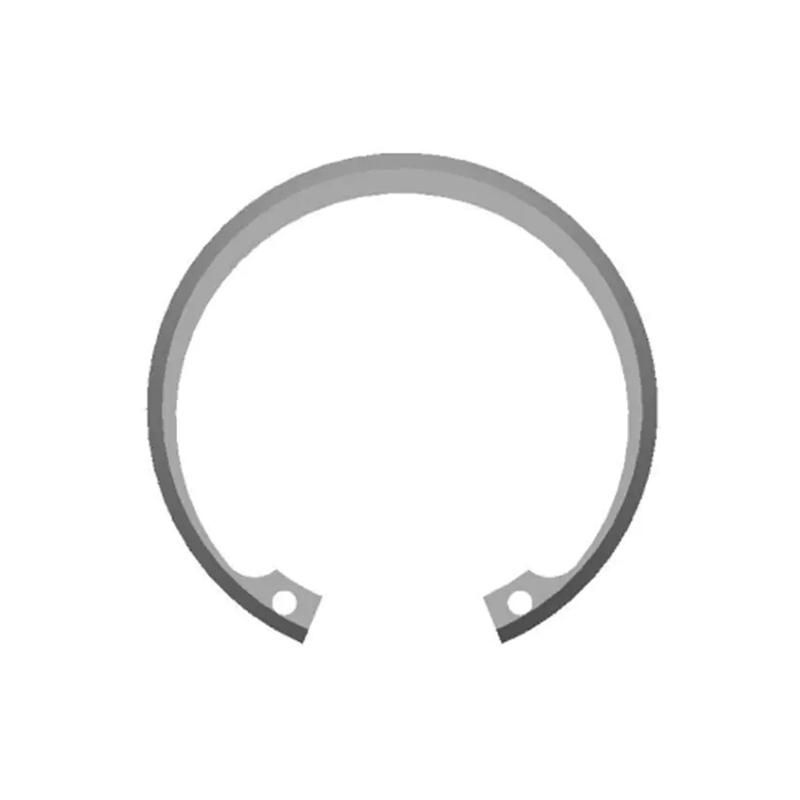
Internal snap rings — also called internal retaining rings — are installed inside a bore or cylindrical housing. The ring sits in a groove cut into the inner wall of the bore and, when installed, its outer diameter presses against the groove walls while its inner face creates an axial stop for components seated within the bore. Internal rings are compressed inward using snap ring pliers with inward-closing tips, reducing the ring's outer diameter enough to clear the bore and seat into the groove. They are commonly used in applications such as wheel bearing housings, hydraulic cylinder bores, and gearbox cases.
External Snap Rings
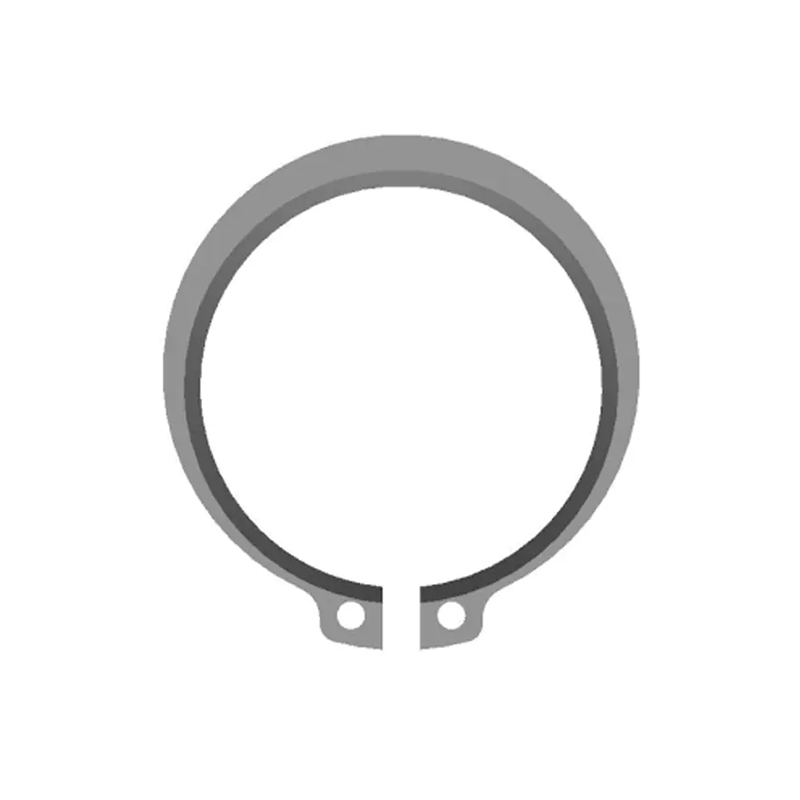
External snap rings — also called external retaining rings — are designed to fit around the outside of a shaft or cylindrical component. A groove is machined into the shaft's outer diameter, and the ring is expanded outward using pliers with outward-spreading tips, then released to snap into the groove. The ring's inner diameter contracts around the groove, and its exposed face retains components mounted on the shaft against axial forces. External rings are frequently found on drive shafts, axles, piston pins, and motor spindles.
The table below summarizes the key differences between the two types:
| Feature | Internal Snap Ring | External Snap Ring |
| Installation Location | Inside a bore or housing | Around a shaft or pin |
| Plier Action | Compress inward | Expand outward |
| Groove Location | Inner wall of bore | Outer surface of shaft |
| Typical Applications | Bearing housings, cylinders | Drive shafts, axles, spindles |
Installing and Removing Snap Rings Correctly
The installation of snap rings is straightforward, but precision and the correct tooling are essential to avoid damaging either the ring or the mating components. The primary tool required is a dedicated pair of snap ring pliers, available in internal (inward-closing) and external (outward-spreading) variants to match the ring type. Using standard pliers or improvised tools risks slipping, which can scratch precision surfaces or, more dangerously, cause the ring to spring free at high speed — a significant safety hazard.
The correct installation procedure follows these steps:
- Inspect the groove: Verify the groove dimensions match the ring specification. Burrs, dirt, or dimensional errors in the groove will prevent proper seating and reduce axial load capacity.
- Select the correct pliers: Use snap ring pliers sized for the ring diameter. Undersized pliers overstress the ring; oversized pliers provide insufficient control.
- Compress or expand the ring: Apply only enough force to clear the groove diameter. Over-compression of spring steel snap rings can cause permanent deformation or cracking, especially in thicker cross-sections.
- Seat and verify: Release the ring into the groove and visually confirm it is fully seated around its entire circumference. A partially seated ring will fail under load.
Removal follows the same procedure in reverse. Once the ring is compressed or expanded clear of the groove walls, it can be lifted free. It is good practice to inspect removed snap rings for signs of deformation, corrosion, or fatigue cracking before reusing them. Spring steel snap rings that have been over-compressed or show visible damage should always be replaced with new components rather than reinstalled.
Common Applications Across Industries
The versatility of snap rings means they appear across virtually every sector of mechanical engineering. Their ability to prevent axial movement in confined spaces — without adding significant weight or bulk — makes them particularly valuable in applications where design envelope is restricted. Key industries and use cases include:
- Automotive: Transmission assemblies, constant-velocity joints, differential gears, and suspension components all rely heavily on snap rings to maintain precise axial positioning of internal parts under high dynamic loads.
- Industrial machinery: Electric motors, gearboxes, conveyor systems, and hydraulic actuators use snap rings to retain bearings and seals in their housings, ensuring consistent alignment and sealing performance over extended service intervals.
- Aerospace: Where weight and reliability are paramount, spring steel snap rings provide a lightweight yet robust retention solution for control linkages, actuator assemblies, and structural joints.
- Consumer electronics and appliances: Smaller-diameter snap rings are used in power tools, washing machine drums, and precision instruments to retain rotating components within compact housings.
Across all these applications, the consistent value proposition of snap rings remains unchanged: a fast-to-install, highly reliable, and economical method for controlling axial movement and securing critical components — qualities that have made them a foundational element of mechanical design for decades.